
Design Spark — The Art of Motorcycle Helmet Design
A motorcycle helmet is not just protective gear. It is a canvas. Every curve of the shell, every vent line, every square inch of surface area offers an opportunity for visual expression. From the screaming racing stripes of MotoGP to the bold geometric patterns of modern street riders, helmet design is one of the most vibrant and technically demanding fields in product design.
At Gropicture, we have motorcycle helmet design images available for free download — covering racing liveries, custom paint jobs, brand collaborations, and bold graphic experiments. In this Design Spark feature, we break down the visual language of helmet design and explore what makes a great helmet graphic.
Why Helmet Design Matters
A motorcycle helmet is arguably the most personal piece of gear a rider owns. Unlike a bike — which can look identical between two models — a helmet sits inches from the rider’s face. It becomes their identity on the road. This is why helmet manufacturers invest heavily in graphic design, partnering with professional artists, racing teams, and even fashion brands to create striking visual identities.
For designers, motorcycle helmets represent a unique challenge: how do you create a compelling design on a three-dimensional, curved, asymmetrical surface that must look good from every angle? The answer lies in understanding the fundamental design patterns that have evolved in this field over decades.
The 5 Core Styles of Helmet Design
1. Racing Stripes — Speed Made Visible
Racing stripes are the most iconic helmet design language. Born on the MotoGP and Formula 1 circuits, stripes communicate one thing: speed. The eye follows the lines, creating a sense of forward motion even when the helmet is stationary. Racing stripes typically run front-to-back, following the aerodynamic flow of the shell.
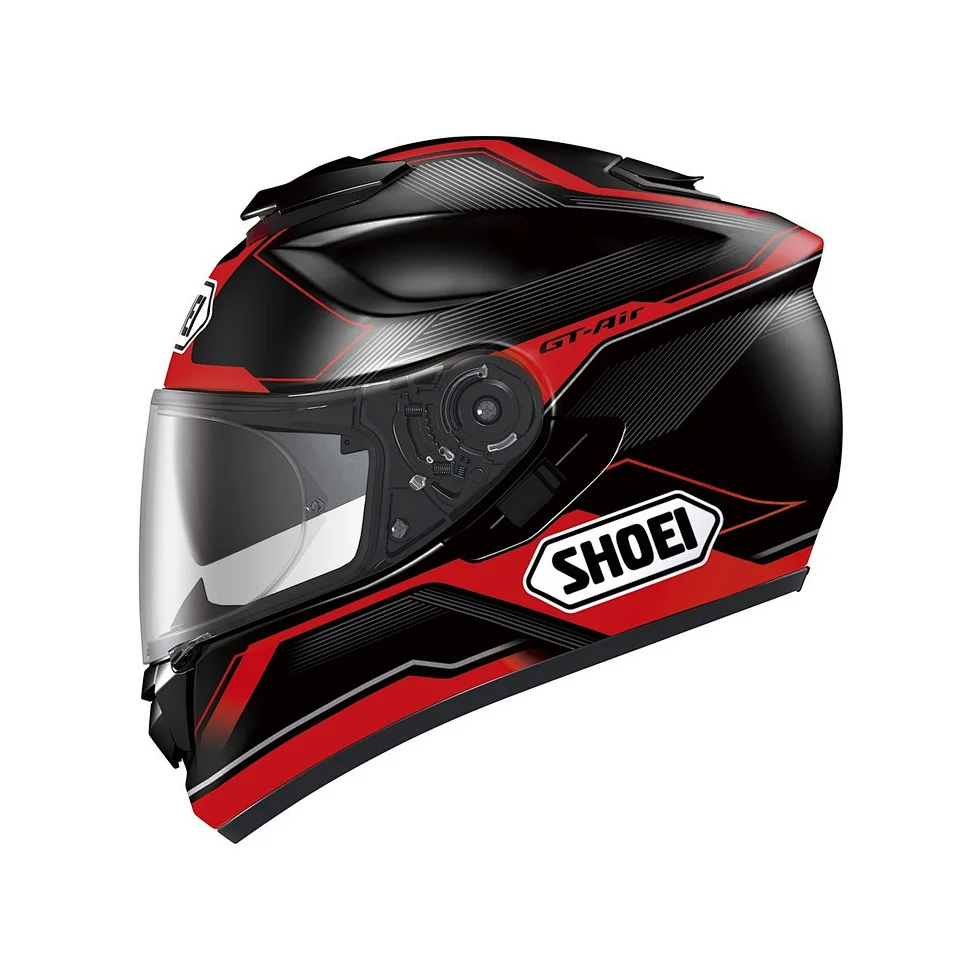
What makes a great racing stripe design? Contrast and direction. The most effective stripes use high-contrast color combinations — black and red, white and blue, yellow and black — to maximize visual impact. The lines should follow the natural curves of the helmet shell, guiding the eye from the chin bar up and over the top to the rear spoiler. A stripe that ignores the aerodynamic shape feels wrong, even if you can’t articulate why.
The Shoei helmet above demonstrates this perfectly: a clean black base with sharp red stripes that trace the helmet’s aerodynamic contours. The design is bold but disciplined — exactly what you want at 200 mph.
2. Geometric Patterns — Modern Precision
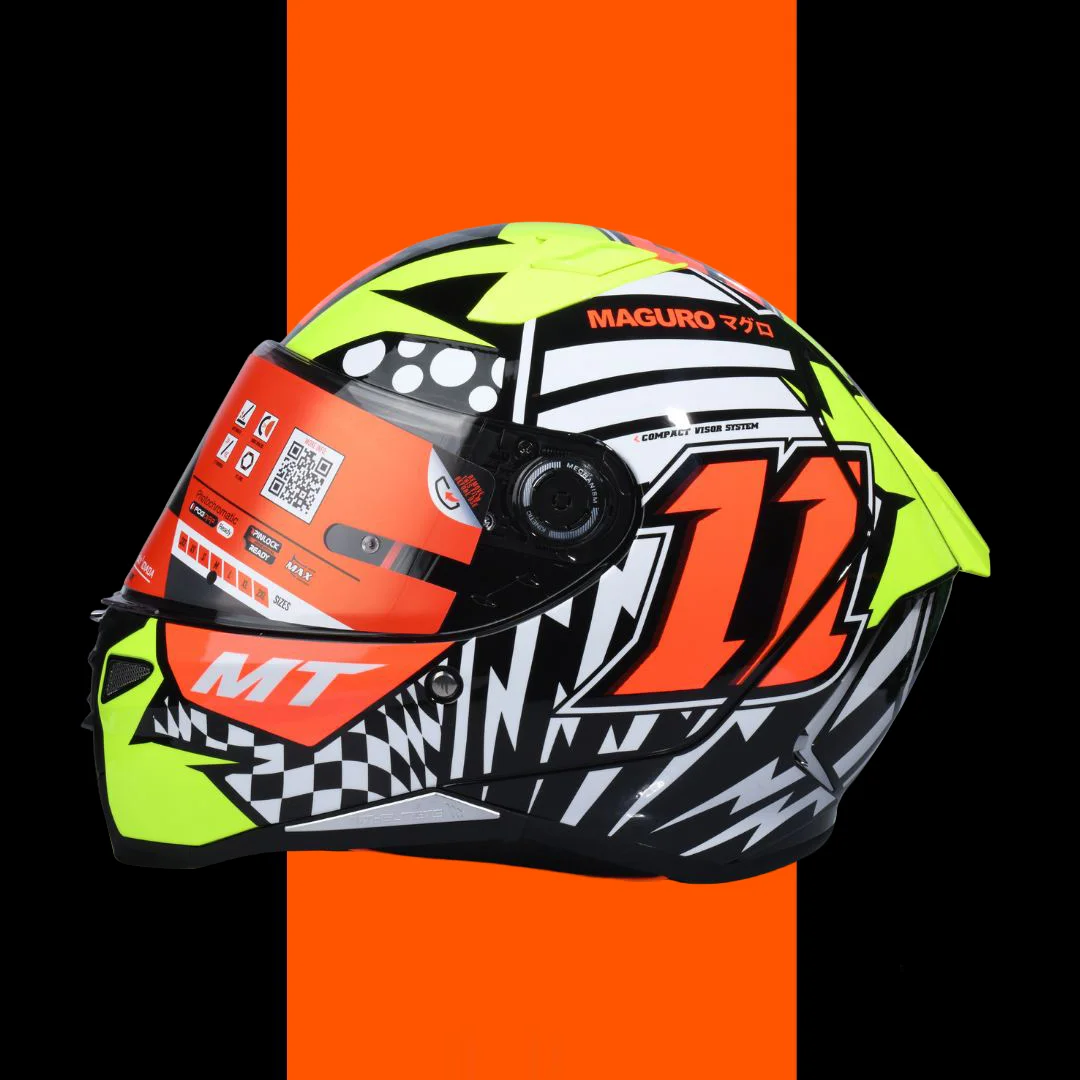
Geometric helmet designs represent the cutting edge of contemporary helmet graphics. Instead of figurative imagery like animals or flames, geometric patterns use faceted shapes, angular lines, and polygonal forms to create visual energy. This style draws inspiration from digital art, architectural faceting, and the “low poly” aesthetic popular in modern game design.
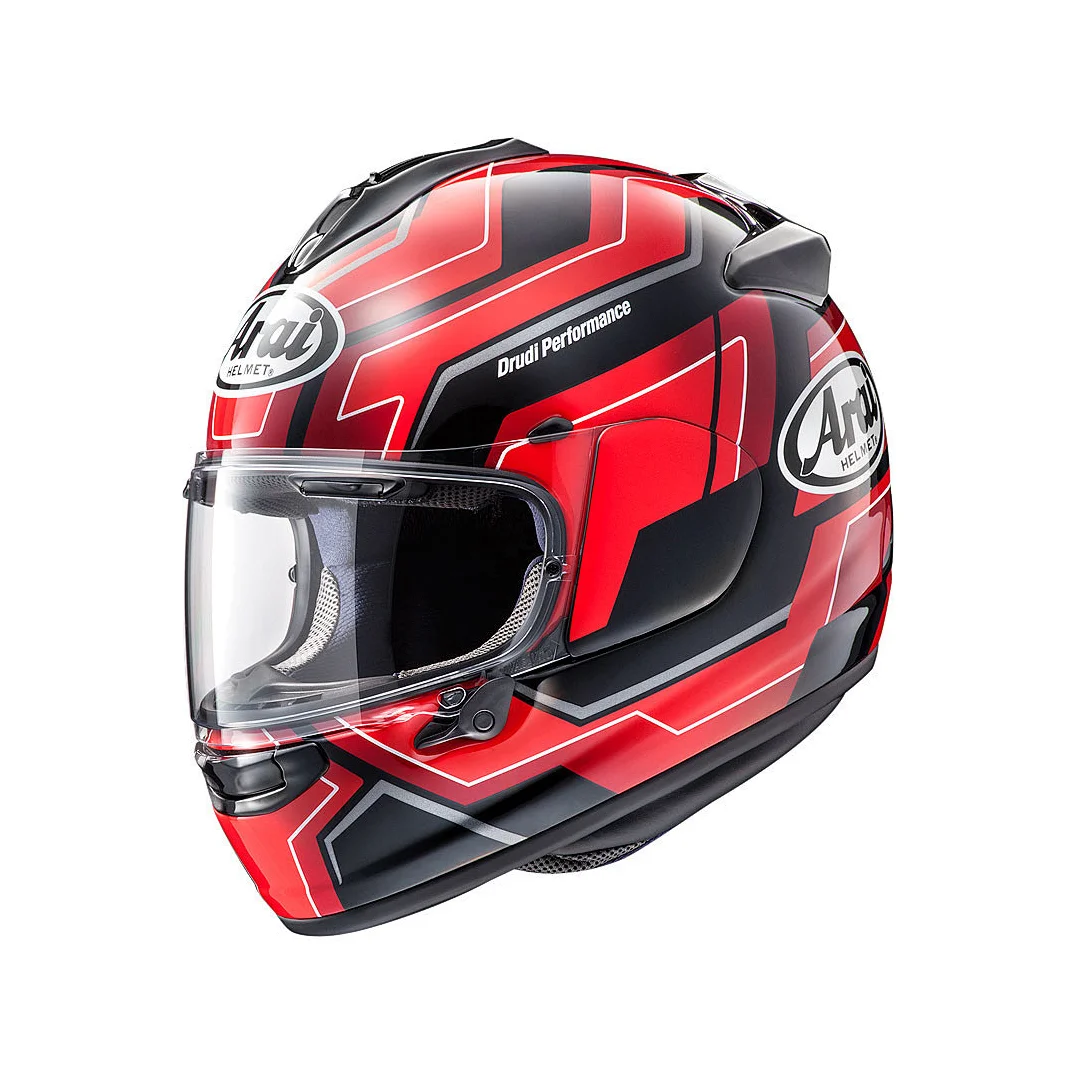
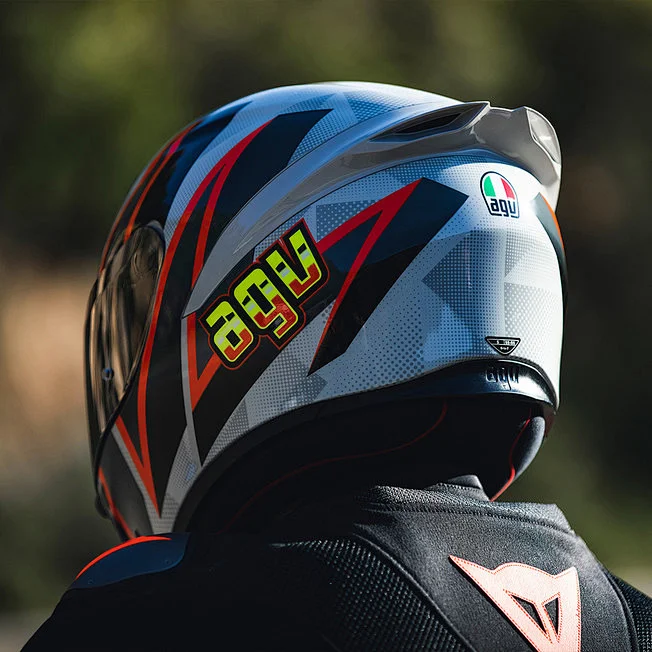
What makes geometric patterns so effective on helmets? Structure and energy. The angular shapes create a sense of fragmentation and motion — like the helmet is breaking through the air at high speed. The red-and-black Arai above demonstrates this beautifully: the faceted shapes catch light differently on each surface, giving the helmet a constantly shifting appearance as it moves. Geometric designs also age well — they don’t feel tied to a specific era the way figurative graphics do.
3. Brand Racing Liveries — Corporate Identity on a Shell
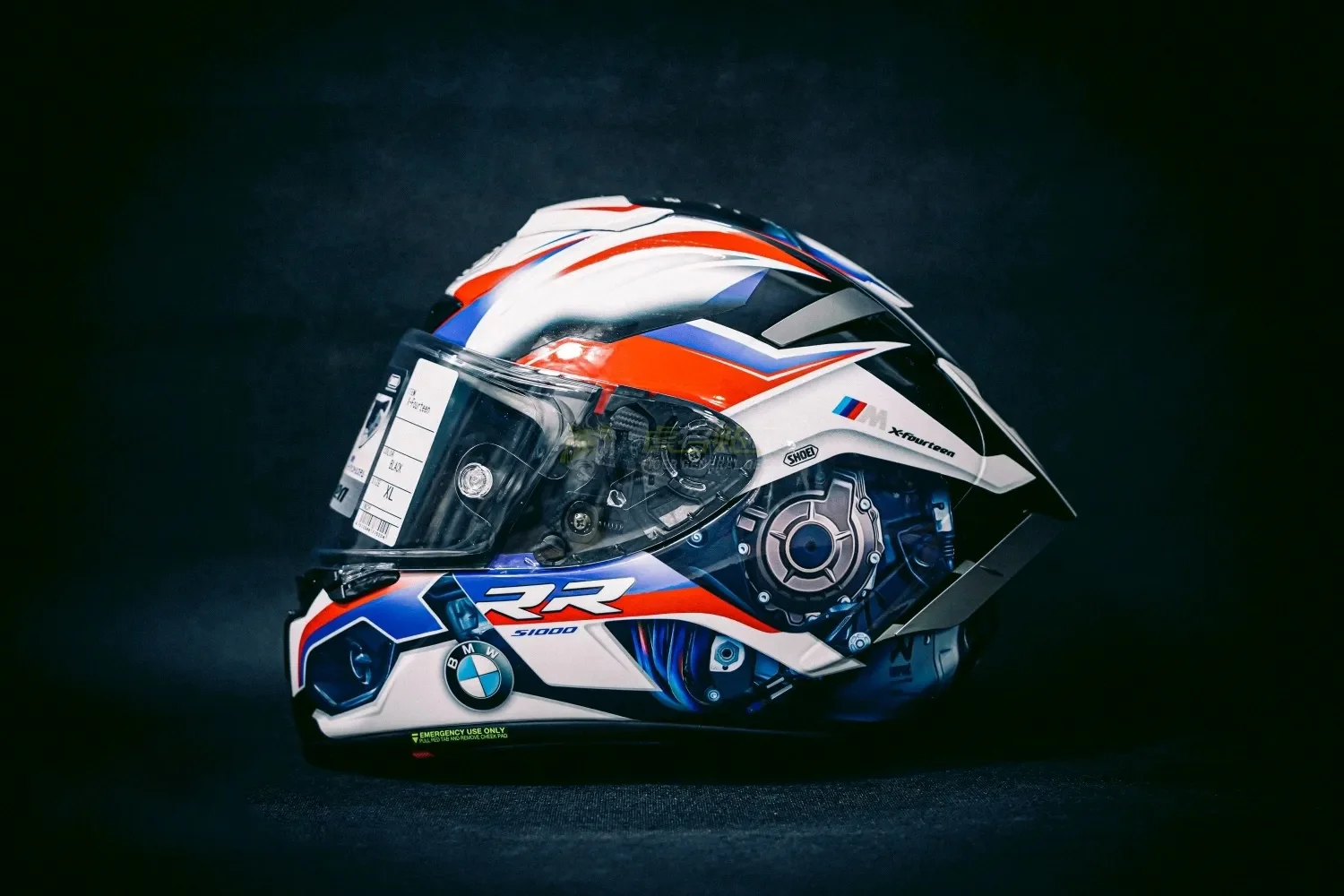
Professional racing teams and motorcycle brands have their own visual languages. KTM’s orange-and-black aggression. BMW’s blue-white-red precision. Alpinestars’ flame motifs. These brand liveries are among the most recognizable helmet designs because they leverage existing brand equity into a new format.
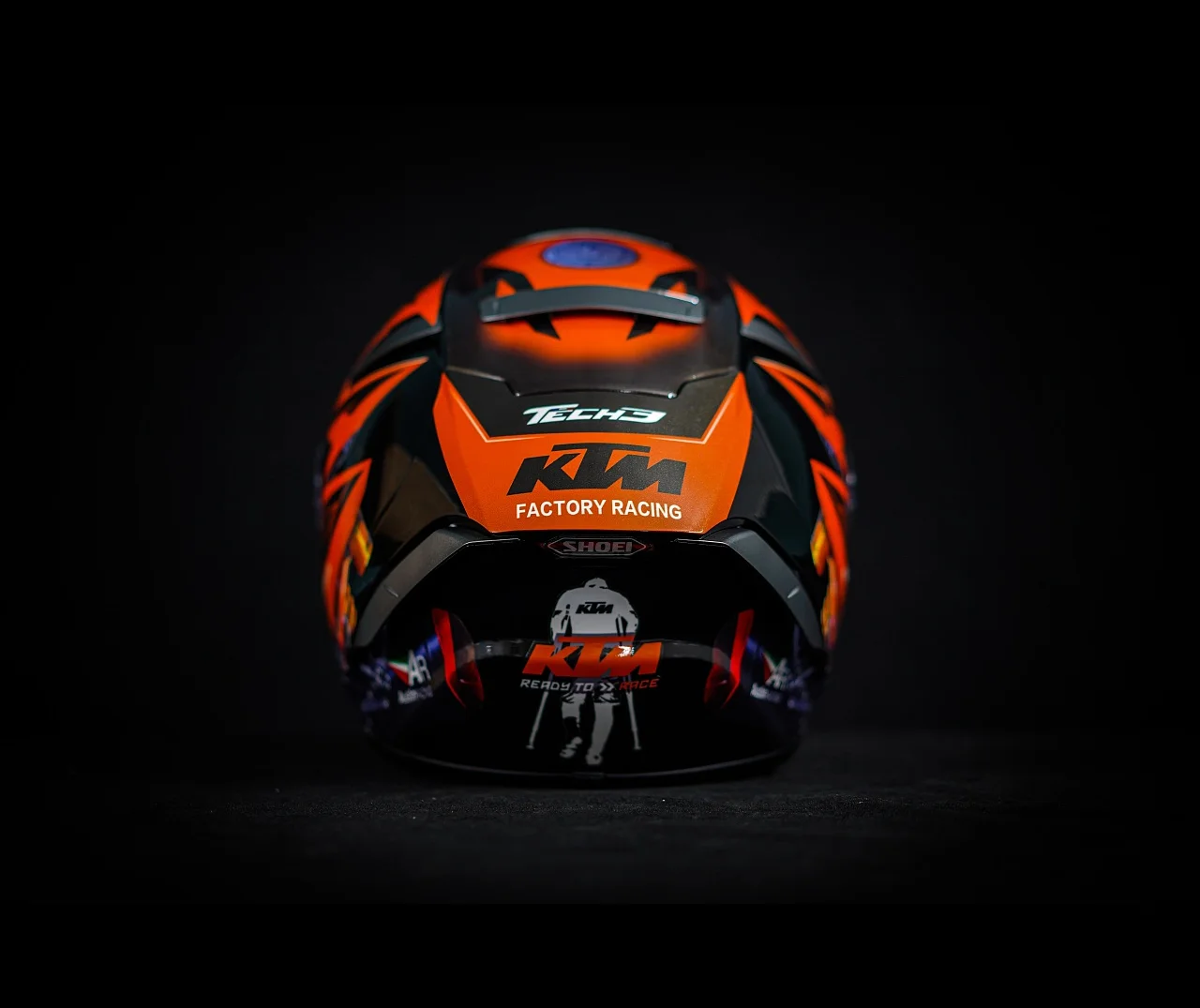
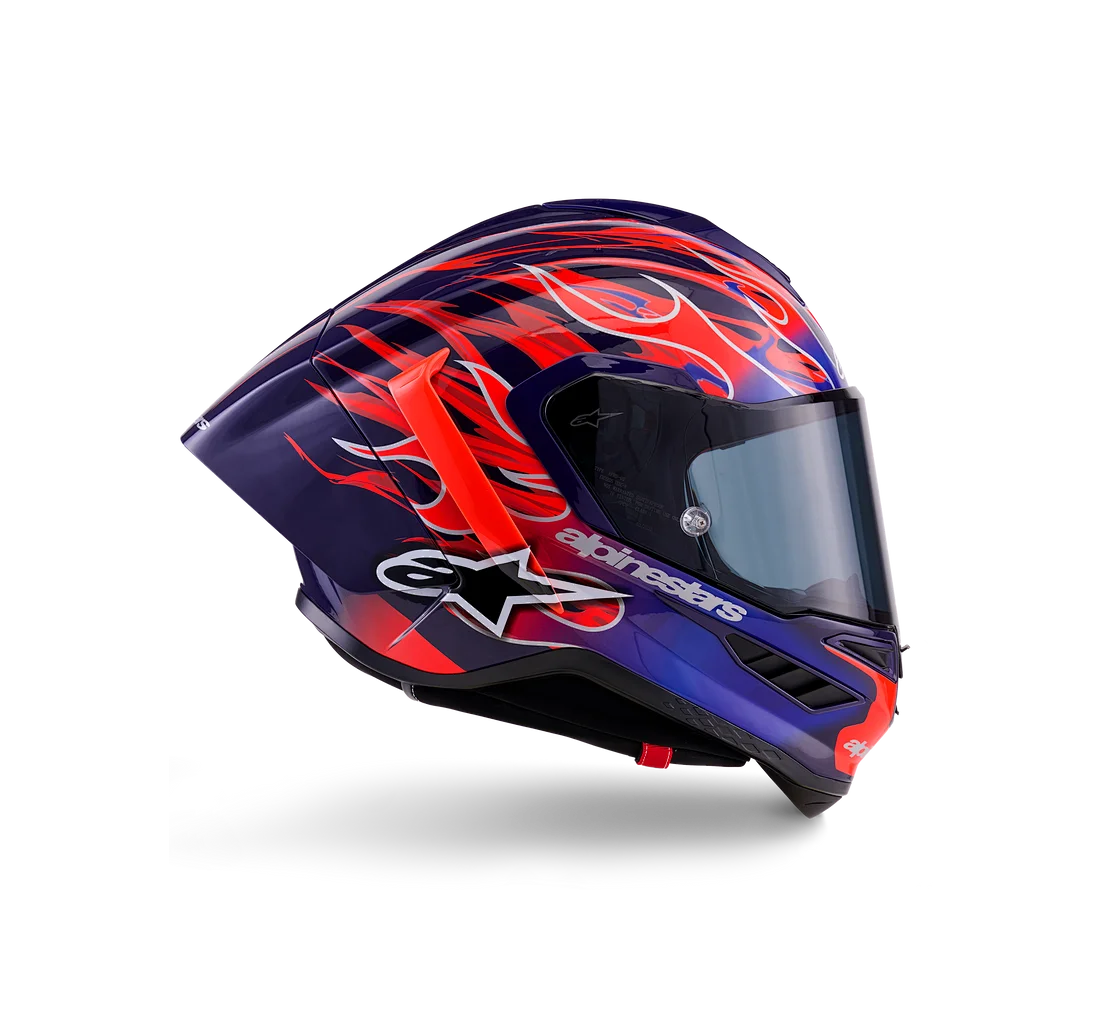
Brand liveries teach a crucial lesson in design: consistency builds recognition. KTM’s orange is not just any orange — it’s a specific shade that appears on every KTM product, from motorcycles to apparel to helmet designs. When a rider sees that orange on the road, they instantly recognize the brand. This is color psychology applied to product design at the highest level.
4. Animal and Predator Themes
Sharks, tigers, eagles, wolves — predatory animals are a recurring theme in helmet design. These motifs tap into primal psychology, projecting aggression, dominance, and fearlessness. The most effective animal helmets use the creature’s form to interact with the helmet’s shape.
5. Bold Color Blocks — Minimalism at Speed
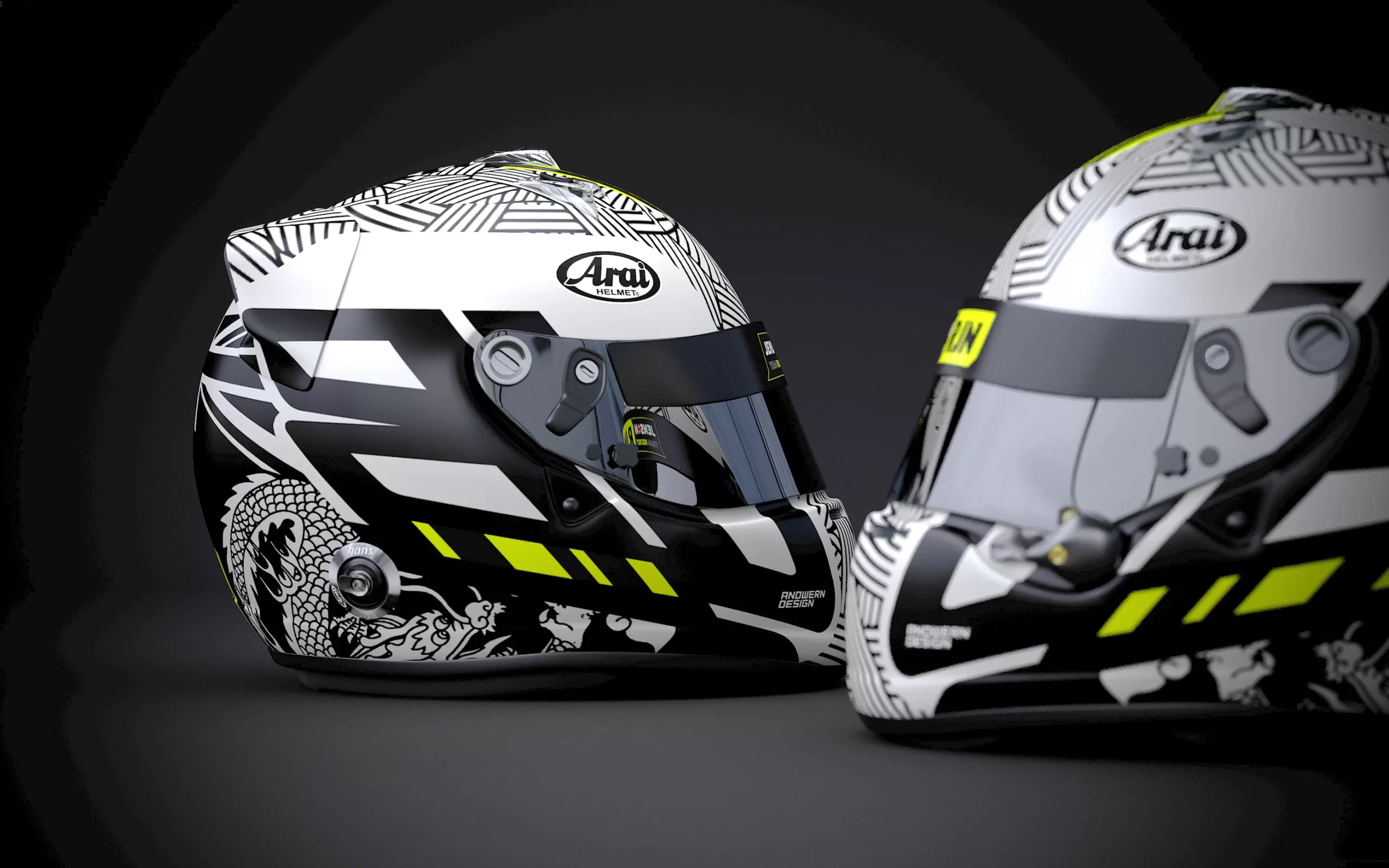
Not all great helmet designs rely on complex graphics. Some of the most striking helmets use nothing more than bold color blocks — clean geometric shapes in high-contrast colors. This style is popular among riders who want maximum visibility on the road without the visual noise of complex graphics or stripes.
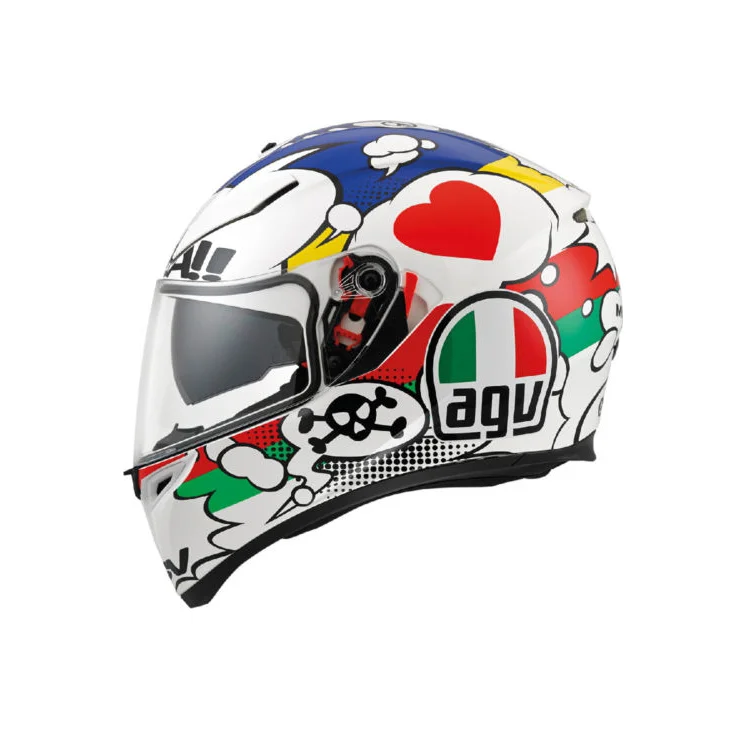
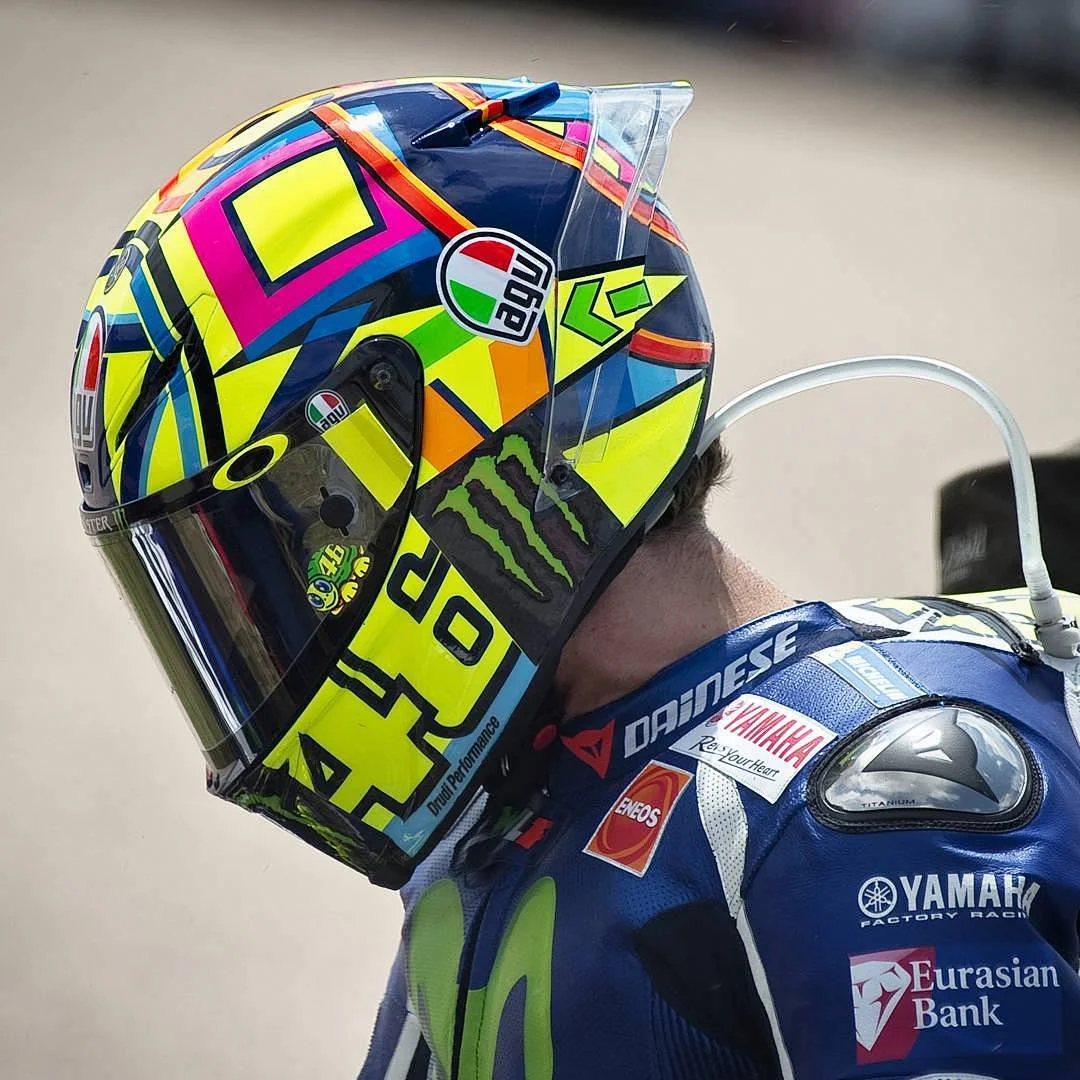
This four-color design demonstrates the power of simplicity. White base, with blue, red, and yellow geometric sections, creates a helmet that’s visible from a quarter mile away. For designers studying color theory, this is a masterclass in how to use a restricted palette on a complex three-dimensional surface.
The Color Rules of Helmet Design
After studying hundreds of helmet designs, clear color patterns emerge:
- Black + one bright accent: The most popular formula. Black provides a neutral, aggressive base, while a single bright color (red, orange, yellow) creates focal points. This combination works because the human eye is drawn to bright colors against dark backgrounds — a principle known as the isolation effect.
- Tri-color national palettes: Many racing helmets use national color schemes: Italian (green-white-red), German (black-red-gold), British (green), American (blue-red-white). These palettes carry emotional weight and instant recognizability.
- High-visibility fluorescent: Neon yellow, orange, and green are increasingly popular for safety-conscious riders. These colors reflect more light than any other, making the rider visible in fog, rain, and low light.
How to Use These Reference Images
The motorcycle helmet designs in our collection are valuable references for a wide range of creative professionals:
- Custom paint artists: Study how professional designers handle curves, vents, and asymmetrical surfaces. Use the designs as inspiration for your own custom paint jobs.
- Product designers: Helmet design is a case study in working with complex 3D surfaces. The way graphics interact with form provides lessons applicable to automotive, industrial, and packaging design.
- Graphic designers: The bold, high-contrast color combinations and graphic techniques translate directly to 2D work — posters, branding, sports graphics, and more.
- 3D artists and game designers: Use the reference images to create realistic helmet textures and liveries for games, animations, and concept art.
Designing for a 3D Surface: Lessons from Helmet Art
The most important lesson from helmet design is how to compose for a curved, three-dimensional surface. Unlike a poster or a logo, a helmet is viewed from multiple angles. A design that looks stunning from the front might be a jumbled mess from the side or rear. This forces designers to think in the round.
The best helmet designs solve this problem by:
- Establishing a primary view: The front or three-quarter view is where the design makes its strongest statement. This is where you place your hero graphic.
- Creating secondary interest: The sides and rear should offer new visual discoveries without competing with the primary view.
- Respecting the vent lines: Vents, visors, and chin bars are structural elements that interrupt graphics. Great designs incorporate them rather than ignoring them.
- Testing in motion: A helmet is seen while moving. Graphics that are too detailed become blur at speed. This is why the most iconic designs are bold and simple.
Explore the Full Helmet Design Collection
Browse all motorcycle helmet designs and download them for free:
- Motorcycle Helmet Designs — 350+ reference images
- Motorcycle — broader motorcycle imagery
- Helmet Designs — all helmet types