
Free Stipple Art Illustrations: How Dots Create Movement and Form
Stand close to a stipple art illustration and all you see are dots. Step back, and those dots resolve into a galloping horse, a howling wolf, a sprinter frozen mid-stride. This is stipple art — also called pointillism or dot art — one of the most labor-intensive and visually striking illustration techniques in existence. Every image is constructed entirely from individual dots, with density and spacing controlling light, shadow, texture, and depth.
This week’s free collection features stipple art illustrations spanning wildlife, equestrian motion, and human athleticism — all available for free download. Below, we explore how the technique works, what makes it so visually powerful, and why designers continue to use stippling in modern branding, editorial illustration, and decorative art.
The Technique: Density Is Everything
Stipple art has one fundamental rule: the darker the area, the denser the dots. That’s it. There are no lines, no cross-hatching, no gradients — only dots placed with varying density. In shadow areas, dots are packed tightly together. In highlight areas, dots are scattered sparsely. The transition between dense and sparse creates the illusion of form, volume, and three-dimensional depth.
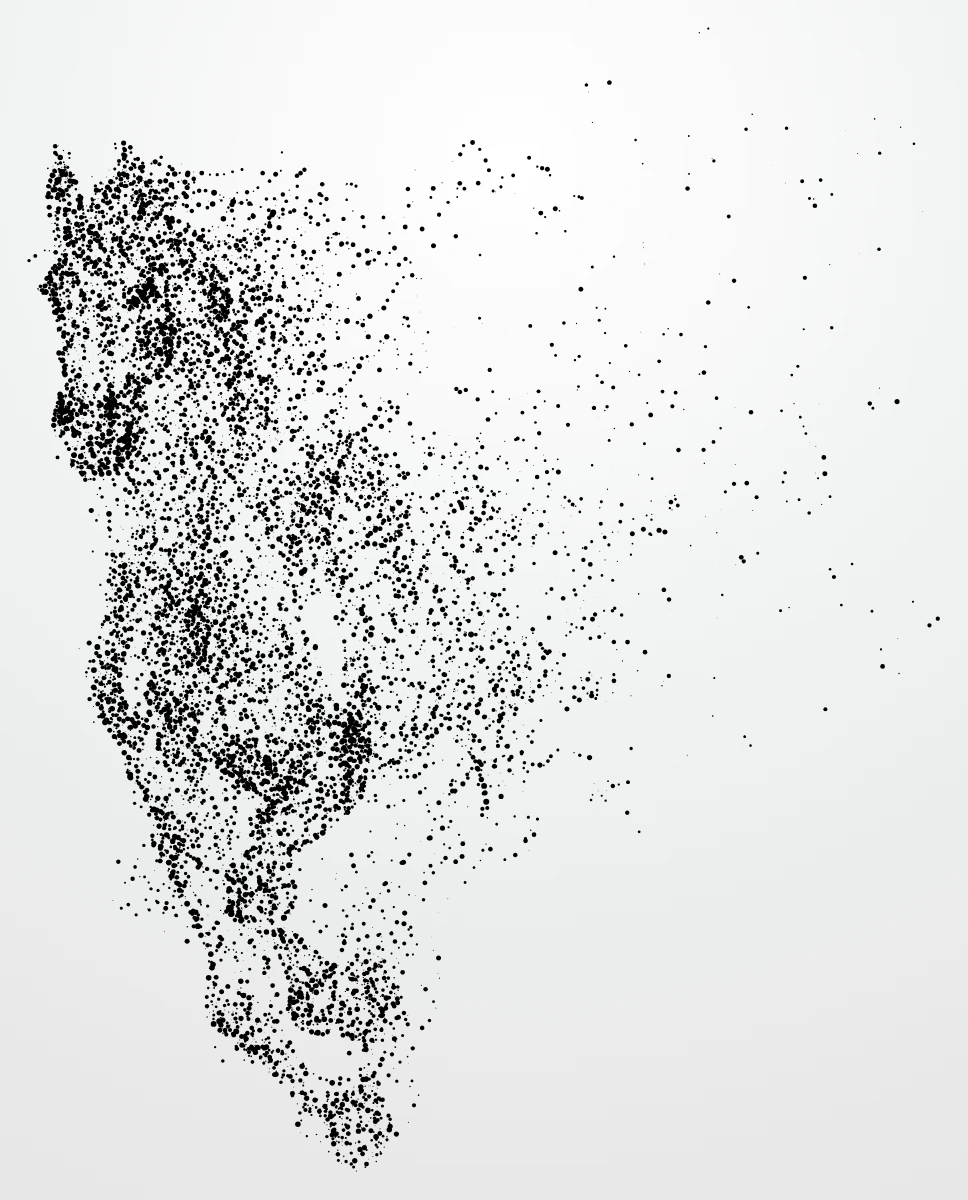
The beauty of stippling lies in its restraint. The artist cannot hide behind bold strokes or smooth blends. Every tonal value must be earned through the patient accumulation of individual marks. A single stipple illustration can contain tens of thousands of dots, each placed deliberately to contribute to the overall form. The result is an image with a unique texture — granular, organic, and alive in a way that no digital gradient can replicate.
A Brief History: From Engraving to Modern Illustration
Stipple engraving emerged in the 15th century as a printmaking technique. Engravers used a tool called a stipple burin to punch thousands of tiny holes into metal plates. Ink was applied, paper pressed on top, and the resulting print was an image built entirely from dots. The technique reached its peak in the late 18th century with artists like Francesco Bartolozzi, whose stipple prints were prized for their soft tonal transitions.
In the 19th century, stippling crossed into fine art through Georges Seurat and the Pointillist movement. Seurat’s A Sunday on La Grande Jatte proved that dots of pure color could create complete compositions — not through blending on a palette, but through optical mixing in the viewer’s eye. Today, digital tools have made stippling accessible to every illustrator, but the principle remains unchanged: density controls tone.
Subject Gallery: What Stipple Art Does Best
Capturing Motion: Horses in Gallop
Horses are the most popular subject in stipple art, and it’s easy to see why. The equine form — powerful muscles, flowing manes, dynamic legs — translates beautifully into dot patterns. Stippling captures the energy of a galloping horse better than any other medium because the dots themselves seem to vibrate with motion.
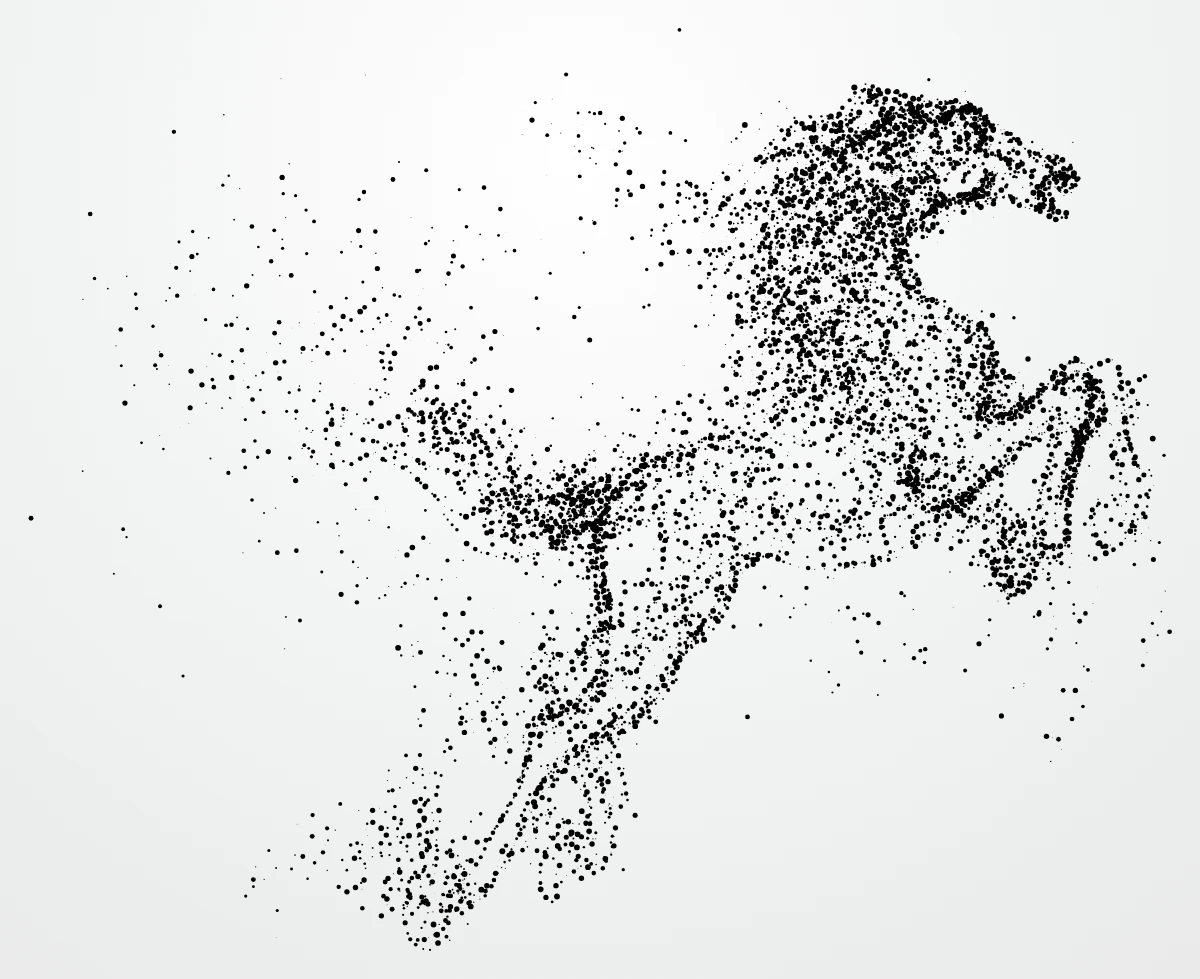
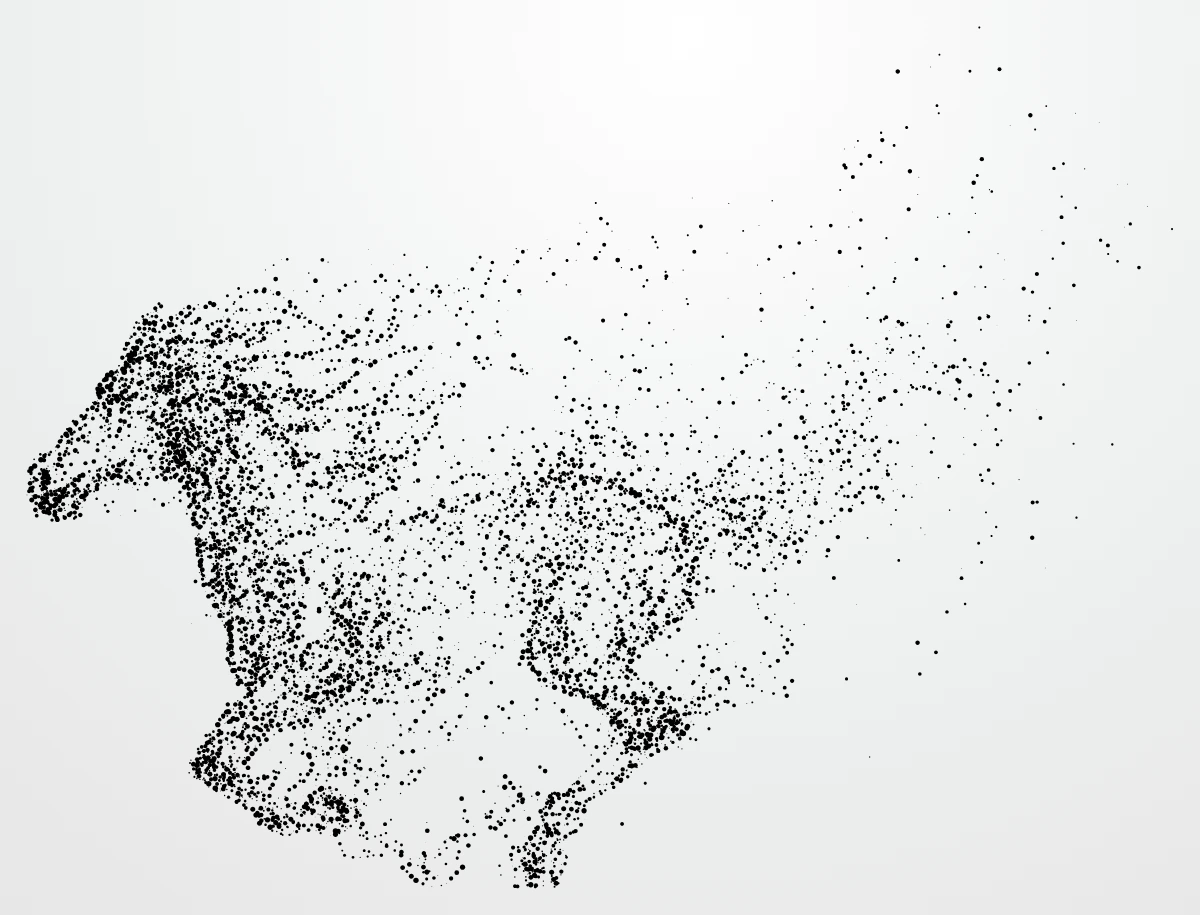
Notice how the mane and tail dissolve into scattered dots at their edges — this is where stippling excels. The boundary between solid form and empty space becomes a gradient of dots, suggesting wind, speed, and the blur of motion. No line-based illustration can achieve this dissolving-edge effect.
Wildlife Portraits: Wolf and Eagle
Stipple art brings a unique quality to wildlife portraits. The fur of a wolf, the feathers of an eagle — these textures are naturally granular, making them ideal subjects for dot-based illustration. The stippling technique mimics the organic randomness of natural textures in a way that smooth digital shading cannot.
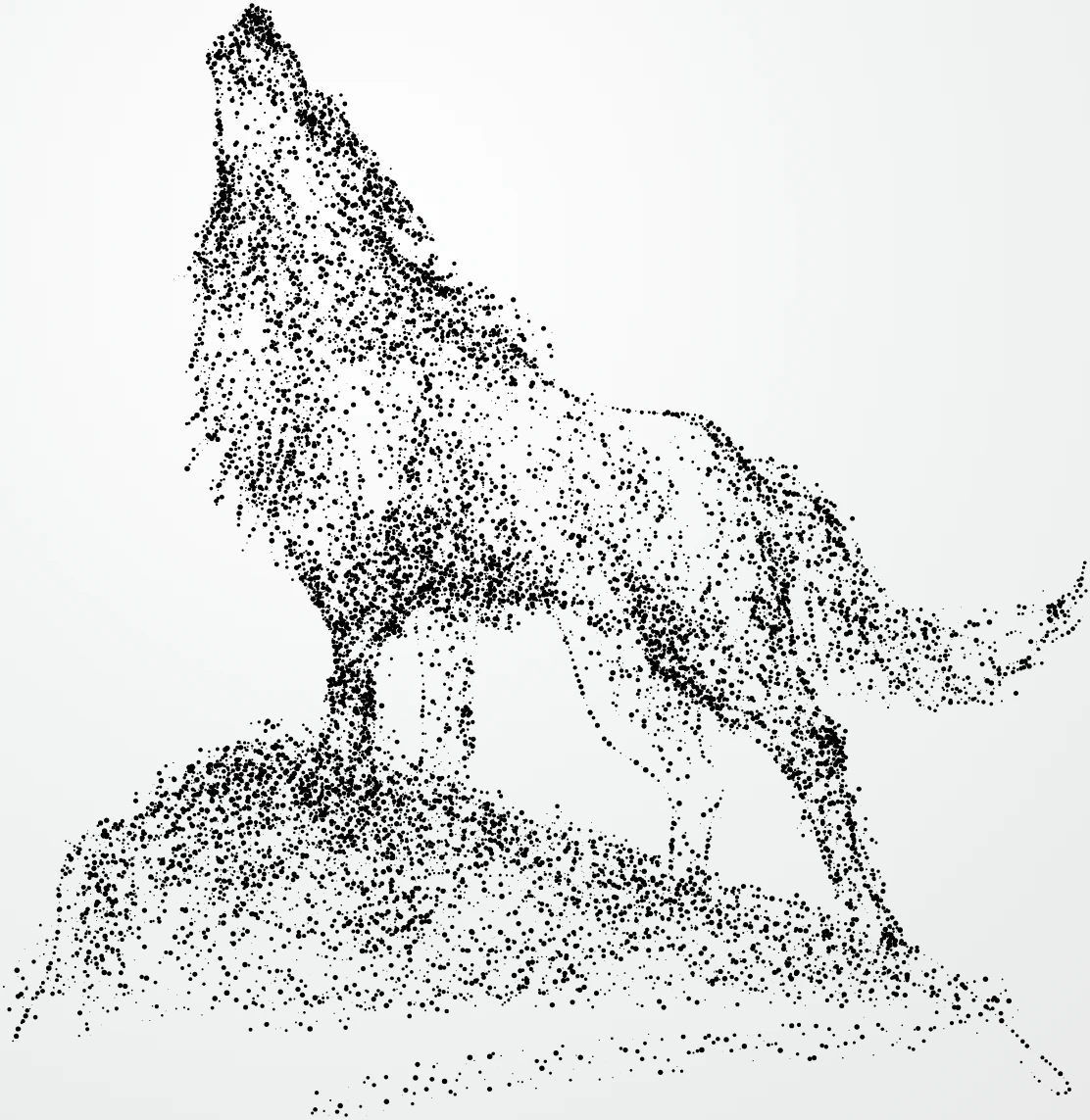
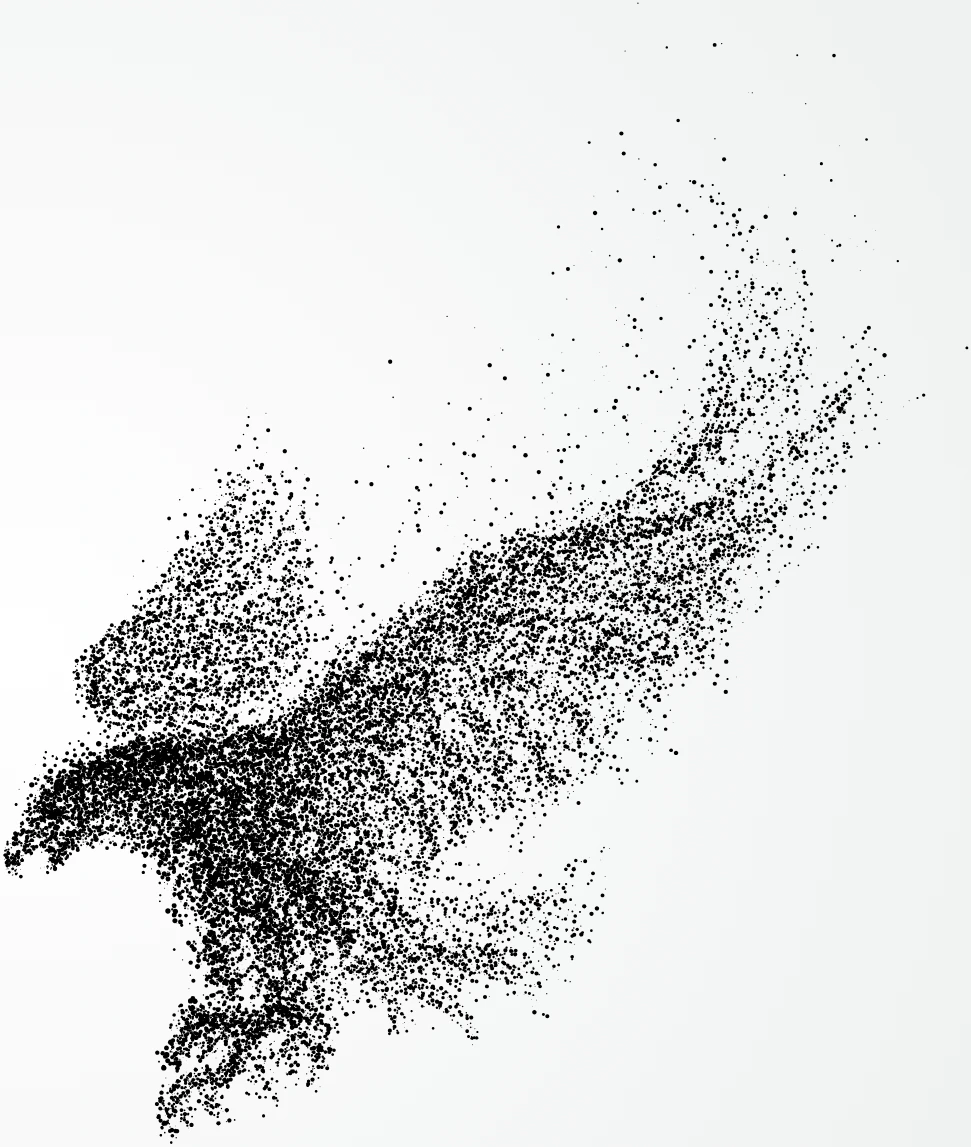
The howling wolf above demonstrates stippling’s strength in depicting fur texture. Dense dots in the face create deep shadows around the eyes and muzzle, while sparser dots along the neck suggest thick fur catching light. The eagle’s wing feathers dissolve into pure dot patterns at the tips — a visual metaphor for flight itself.
Human Motion: Sprinters and Athletes
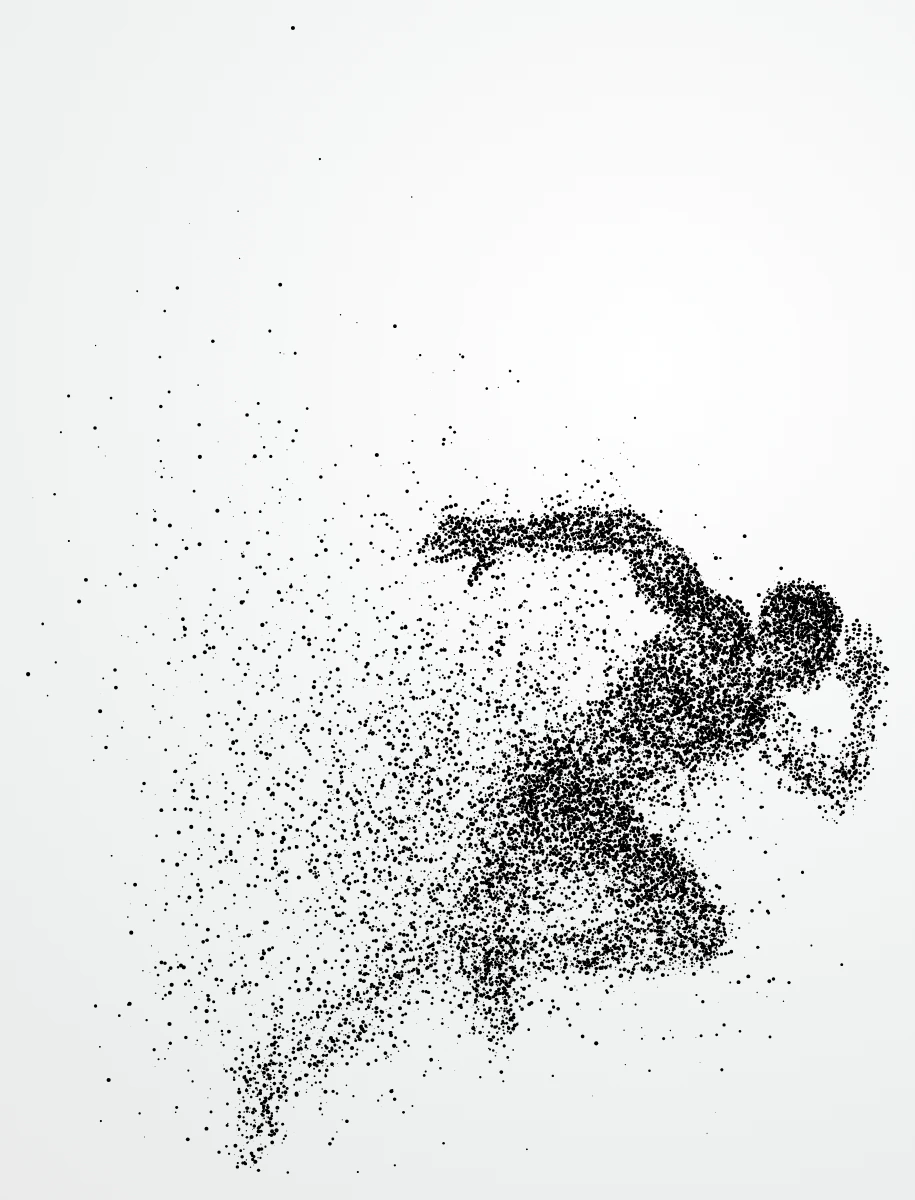
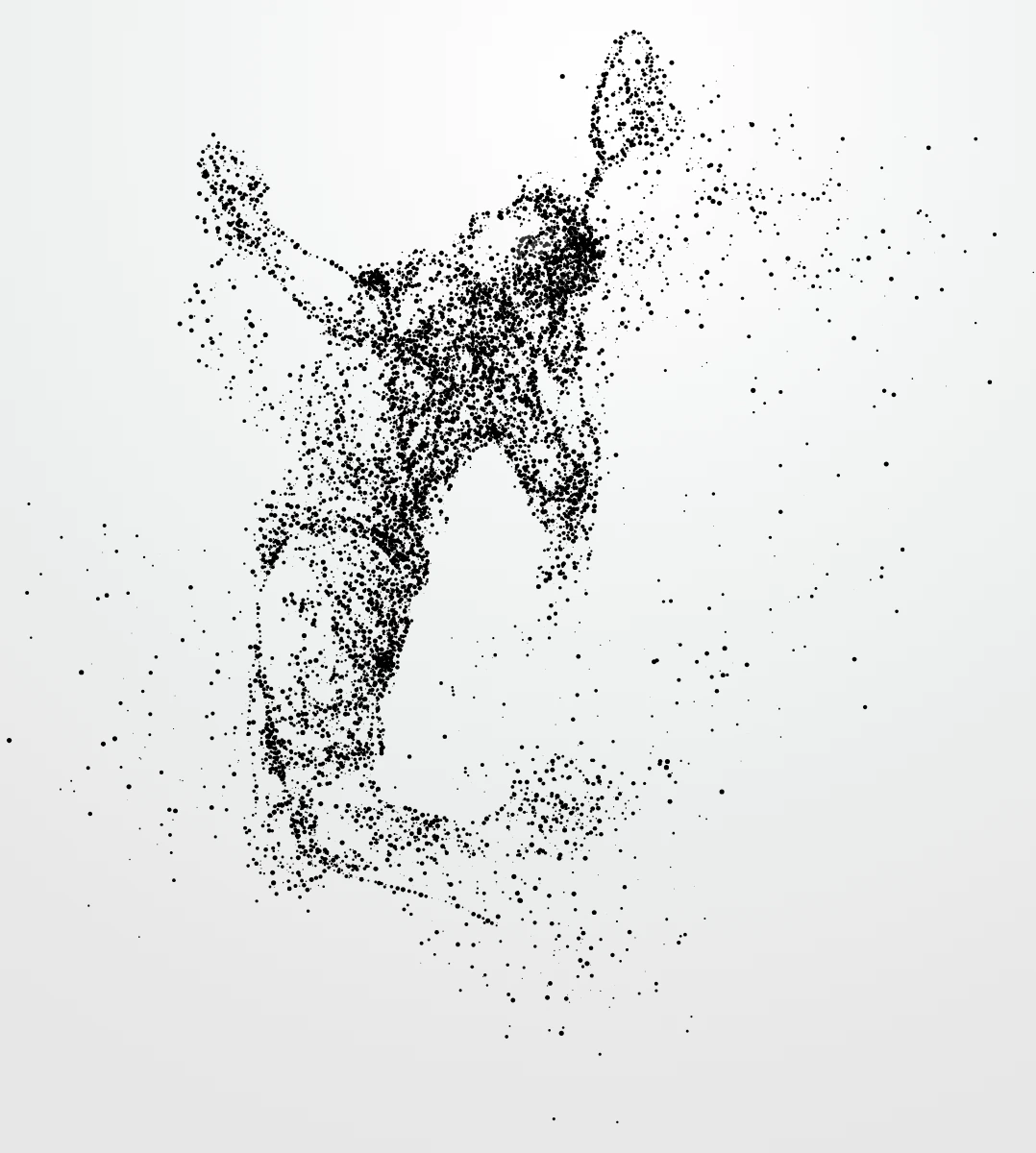
Stipple art excels at capturing the human body in motion. Sprinters, tennis players, martial artists — the dynamic tension of athletic movement translates into dramatic dot patterns. The muscles, tendons, and gestures of sport are rendered through density shifts that feel almost photographic from a distance but reveal their dot structure up close.
Equestrian: Horse and Rider
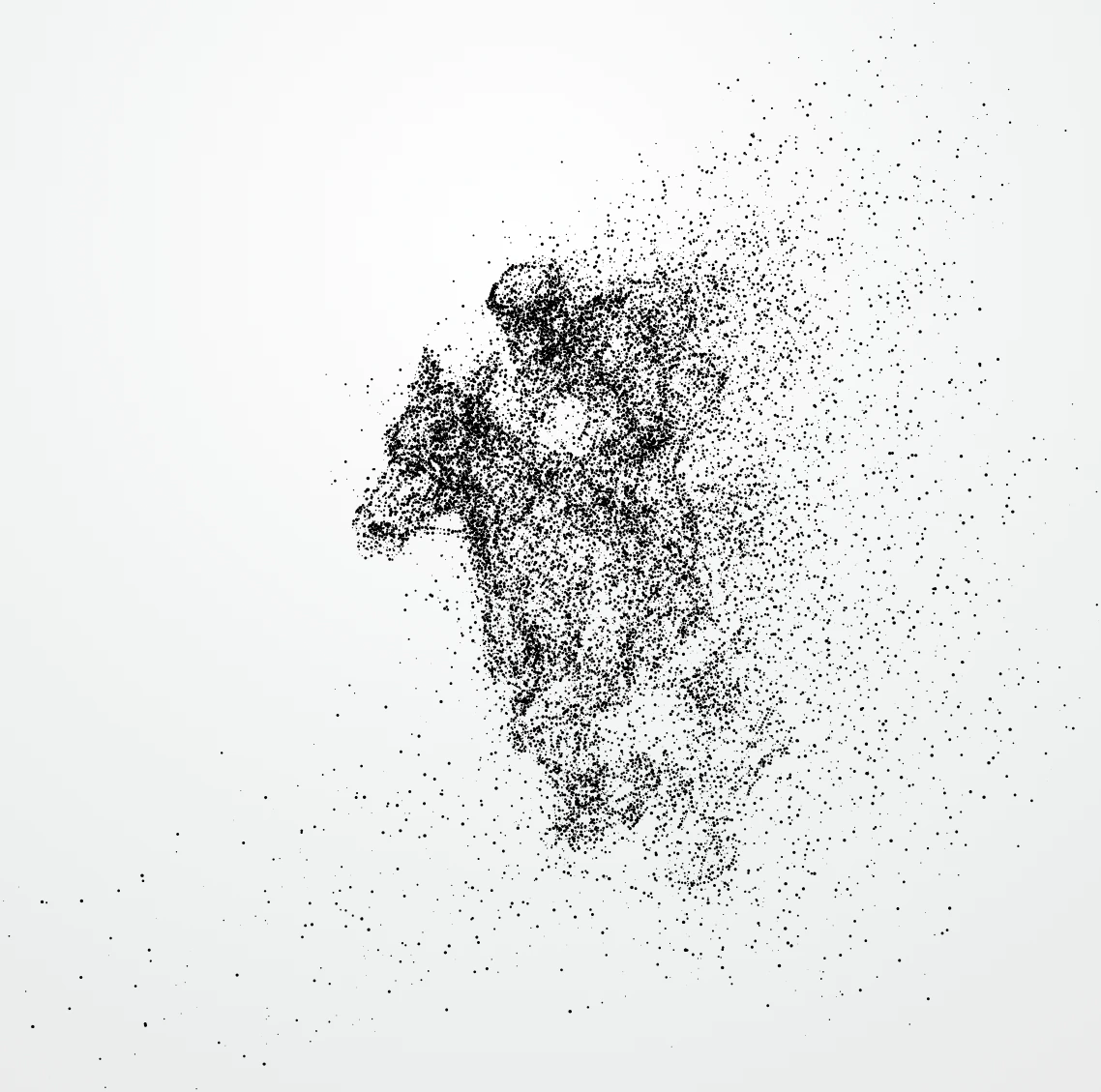
When a horseback rider is depicted in stipple art, the technique reveals the relationship between human and animal through shared dot language. The rider’s clothing, the horse’s musculature, and the ground beneath them are all rendered in the same medium — thousands of dots — creating a visual unity between horse and rider.
Why Stipple Art Works: The Psychology of Dots
There’s a psychological reason stipple art is so visually compelling. The human brain is wired to find patterns, and when presented with thousands of dots, the visual cortex actively works to assemble them into a recognizable image. This means the viewer participates in creating the image — their brain fills in the gaps between dots.
This is why stipple art feels different from photography or smooth digital illustration. A photograph is complete information — every pixel is filled. Stipple art is incomplete information that the brain completes. That participatory quality makes stipple illustrations inherently more engaging. The viewer leans in, squints, steps back — the image rewards interaction.
How Designers Use Stipple Art Today
- Logo design — stippled logos communicate craftsmanship and detail. They work especially well for outdoor brands, sports teams, and artisanal products.
- Editorial illustration — magazines and newspapers use stipple portraits to add gravitas and visual interest that photography cannot.
- Apparel and merchandise — stipple illustrations reproduce beautifully on t-shirts, posters, and tote bags because the dot patterns create natural half-tone effects.
- Tattoo design — stippling is one of the most popular tattoo styles, as dots translate directly to needle work.
- Brand identity — a single stippled animal portrait (wolf, eagle, lion) can become the cornerstone of a brand’s visual identity, communicating strength, wildness, and precision.
Explore More Stipple Art
Browse stipple art and dot illustration collections for design reference:
- Stipple Art — the full collection of stipple and dot illustrations
- Botanical Art — another traditional illustration technique with modern applications