
Free Vector Floral Patterns: Botanical Repeat Designs for Fabric, Wallpaper, and Packaging
Floral patterns never go out of style — they just change their flowers. This week’s free collection of vector floral patterns features botanical repeat designs covering dandelions, poppies, tulips, irises, daffodils, daisies, lavender, wildflower meadows, and even strawberry plants — all available for free download. Each pattern is built as a seamless vector repeat, ready to scale infinitely for fabric printing, wallpaper, packaging, stationery, and digital design.
What makes this collection interesting is its consistency of vision: every pattern uses the same flat vector technique — solid colors, clean shapes, no gradients — while each flower species brings its own personality. The dandelion patterns are whimsical, the poppies are bold, the lavender is soothing, and the tulips are joyfully busy. Together they demonstrate how one design approach can serve many botanical moods.
What Is a Vector Floral Pattern?
A vector floral pattern is a repeating botanical design built from vector shapes — mathematical paths rather than pixels. This gives vector patterns three decisive advantages for professional design work:
- Infinite scalability — the same file works for a phone wallpaper and a building-size banner without quality loss
- Editable colors — every element can be recolored to match a brand palette in seconds
- Seamless repeat — the pattern tiles perfectly in all directions, covering any surface area
The patterns in this collection follow the professional standard for repeat design: elements are distributed with rhythmic balance, no visible seams interrupt the flow, and each tile contains enough variety (buds, blooms, leaves, stems) to avoid mechanical repetition.
The Dandelion: Whimsy in Every Stage
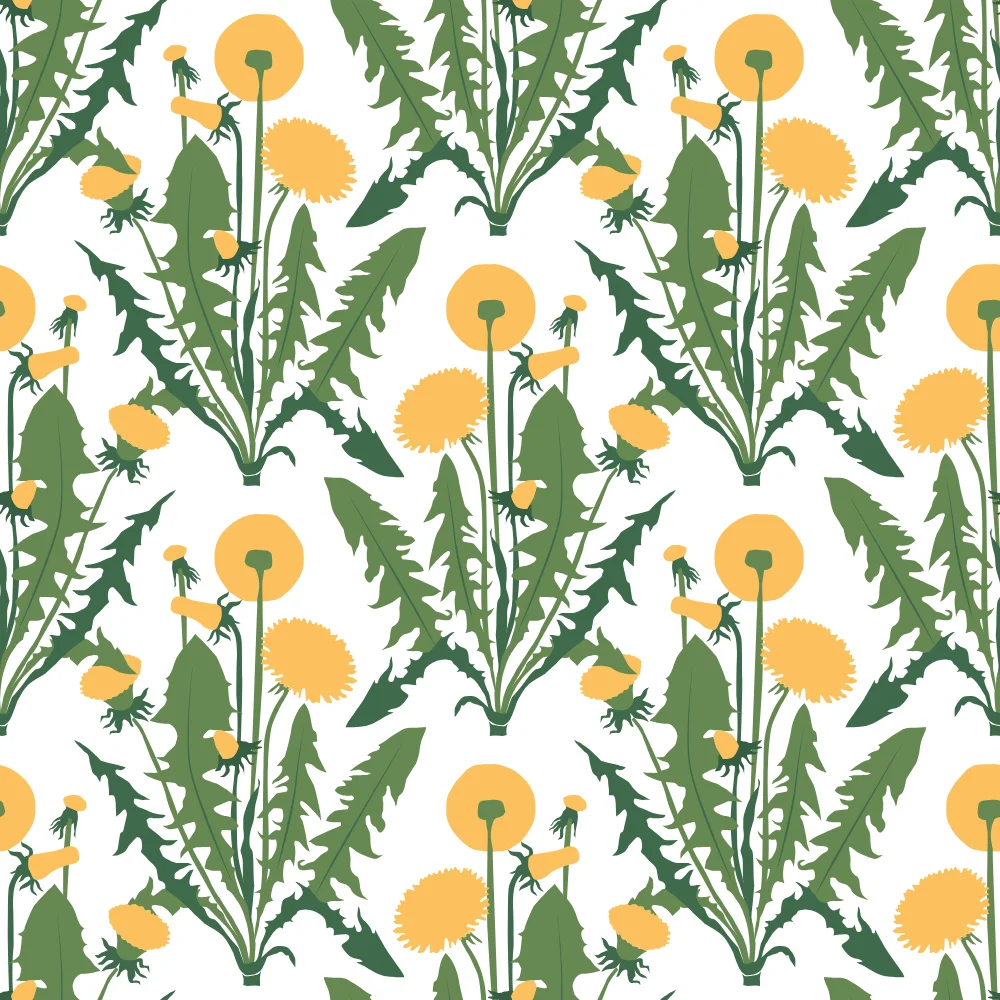
The dandelion pattern is a masterclass in botanical storytelling within a repeat. Instead of showing one flower type, it depicts the plant’s full life cycle: closed buds, open yellow blooms, and the iconic fluffy seed heads. Jagged serrated leaves fill the space between flowers in varied greens. On the soft neutral background, the muted yellow reads as gentle and nostalgic — this is a pattern for spring stationery, children’s textiles, and wellness branding.
Bold Statements: Poppies and Irises
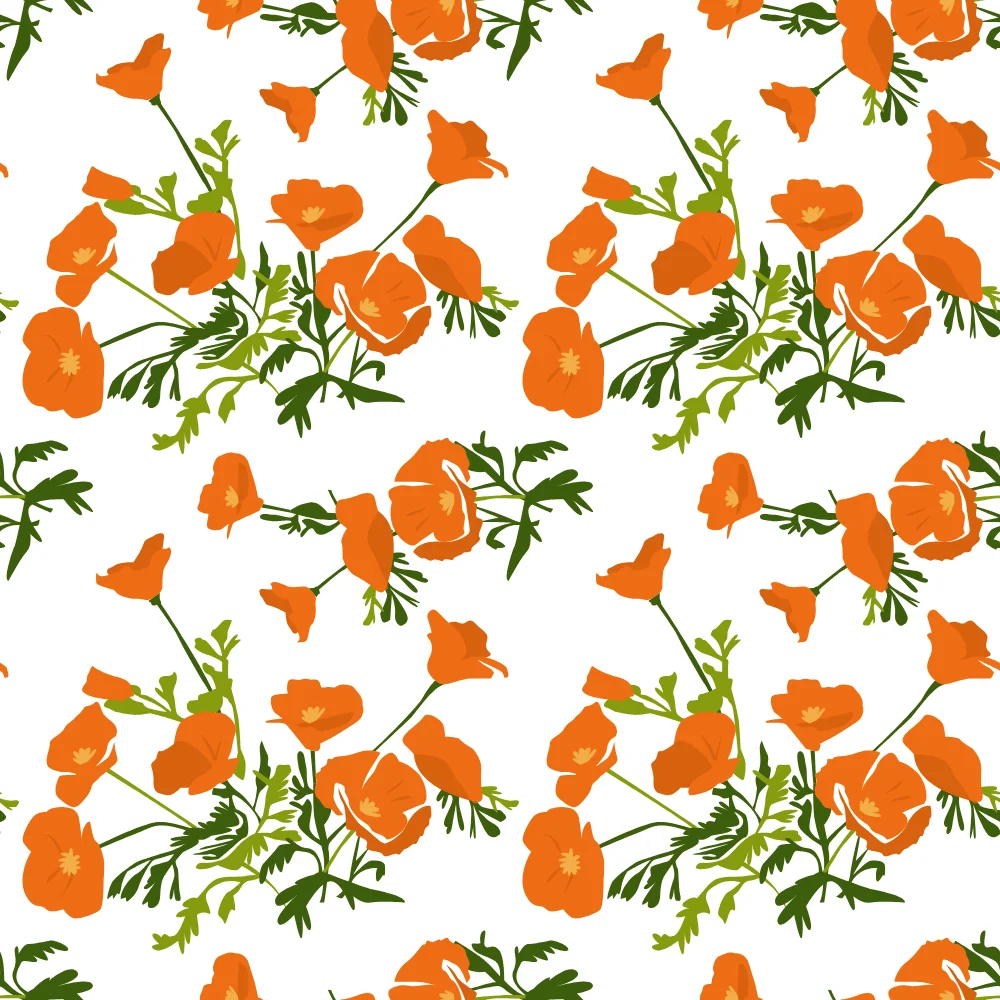
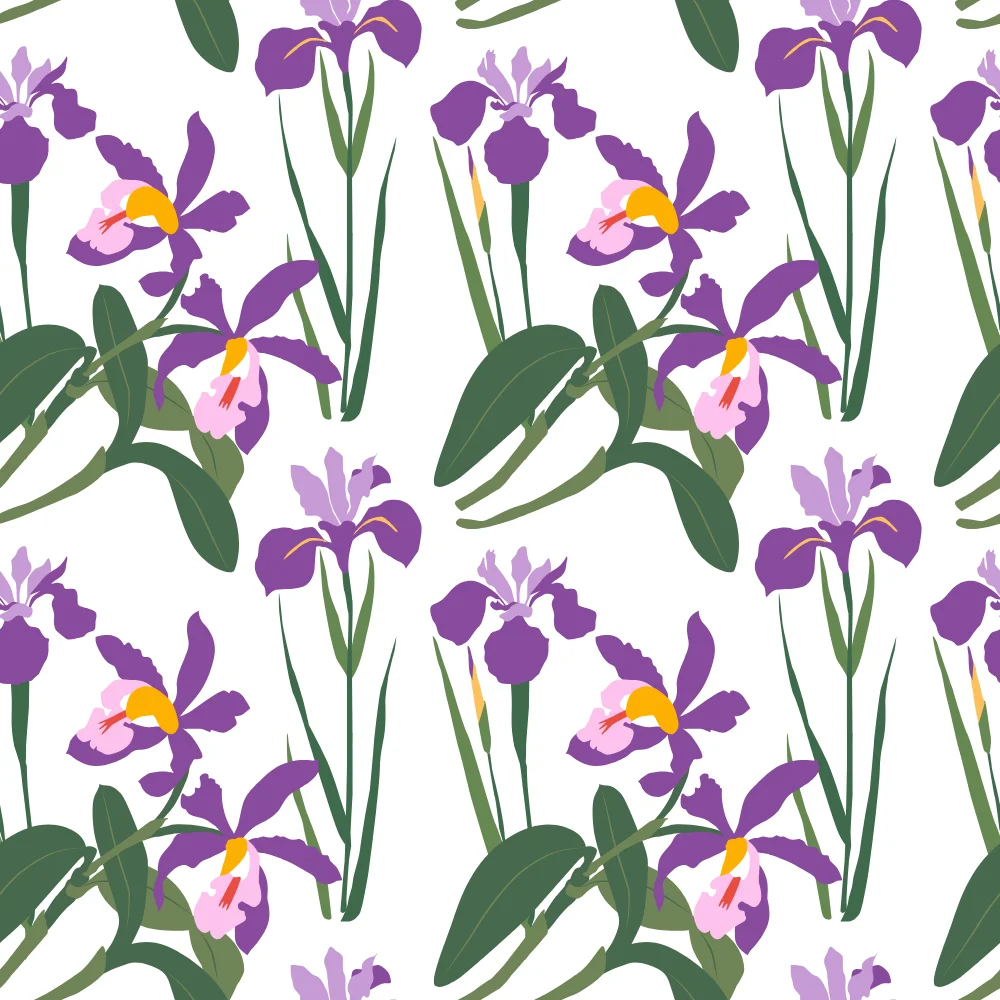
Some flowers demand attention. The orange poppy pattern uses the flower’s wide cup shape and intense saturation to create a design visible from across a room — ideal for statement wallpaper and upholstery. The vibrant iris pattern works differently: its layered petals in graduated purples (lavender to deep violet) with yellow and pink accents create richness rather than volume. Irises were the obsession of Dutch Masters and French Impressionists alike; in flat vector form, they bring that same aristocratic elegance to modern applications.
The Tulip Garden: Pattern as Ecosystem
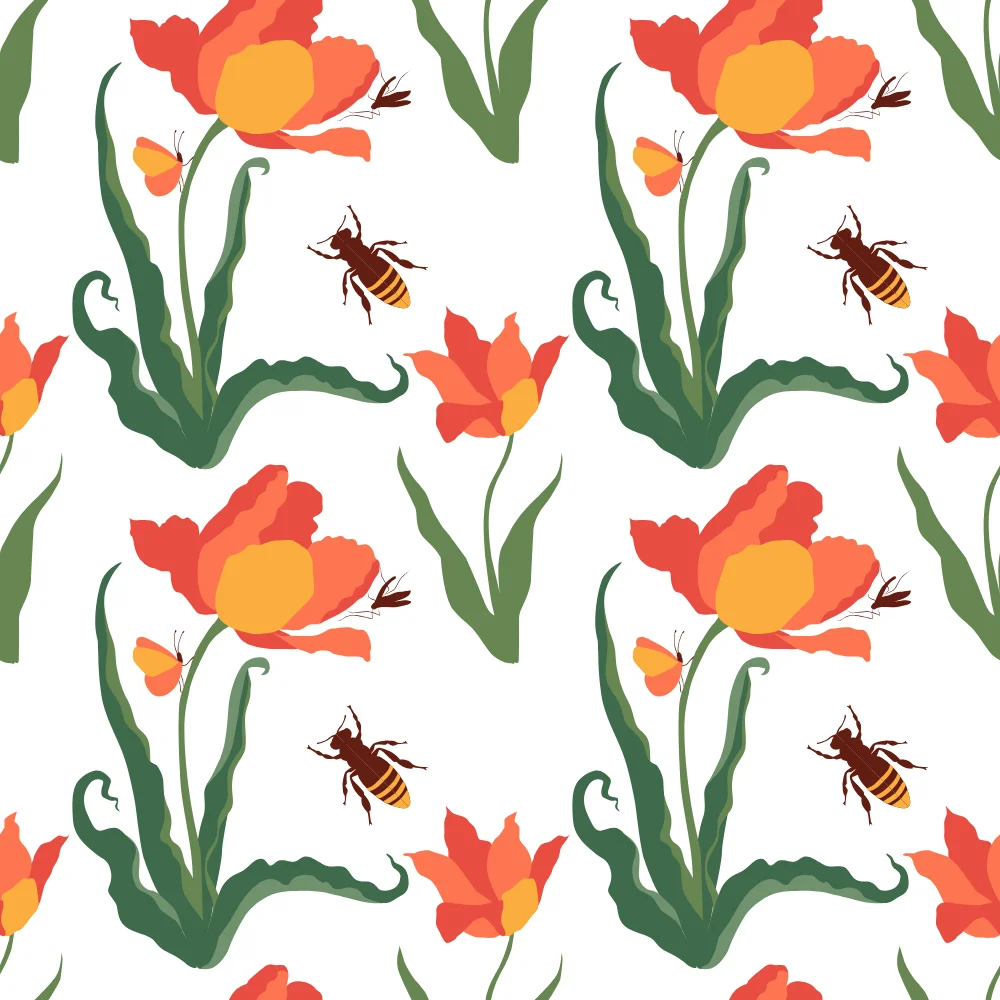
The tulip garden pattern goes beyond flowers — it includes bees and butterflies interacting with the blooms. Two sizes of red-orange tulips with yellow centers appear among wavy green leaves, while striped bees and small butterflies fill the gaps. This is pattern design as ecosystem: the additional creatures add narrative interest and prevent visual monotony. The retro folk-art feel makes it perfect for kitchen textiles, picnic accessories, and farmers market branding.
Edible Botanicals: The Strawberry Plant
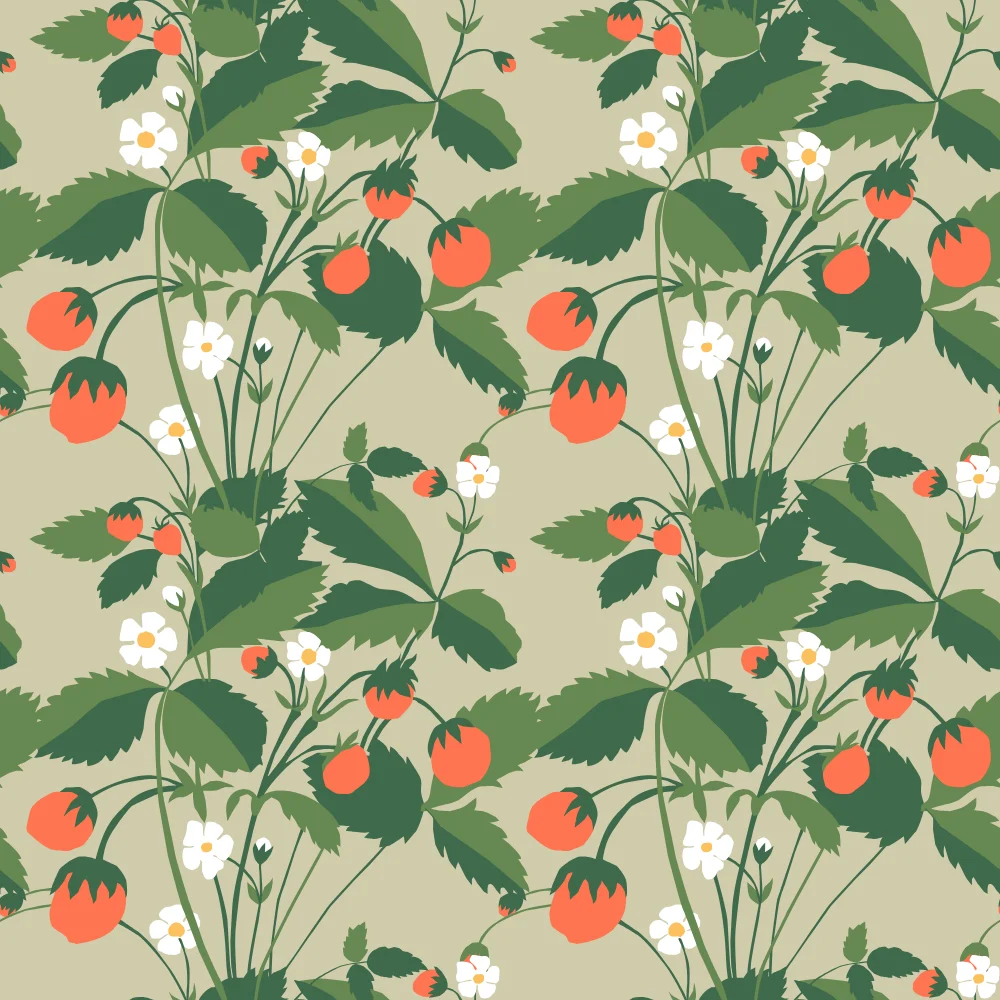
Who says floral patterns need ornamental flowers? The strawberry plant pattern depicts the complete plant — ripe orange-red berries, white five-petal blossoms with yellow centers, and serrated green leaves — on a soft beige background. Like the dandelion pattern, it shows multiple growth stages, but its subject is agricultural rather than wild. This pattern is a natural fit for food packaging, jam labels, bakery branding, and farm-to-table identities.
Soothing Tones: Lavender and Wildflower Meadows
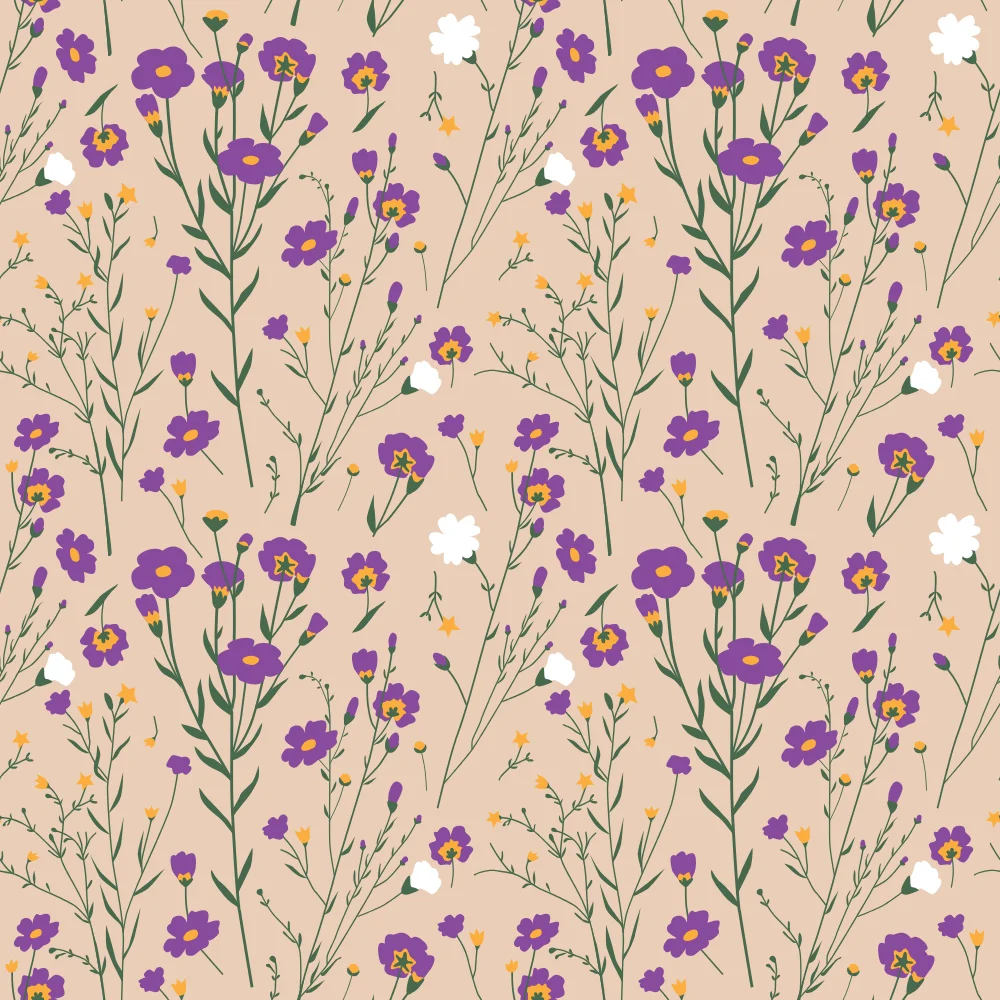
Not every pattern needs to shout. The lavender wildflower meadow pattern uses muted purples and soft greens to create a calming, spa-like atmosphere. Lavender’s association with relaxation and sleep makes these patterns ideal for wellness products, candle packaging, bath textiles, and meditation apps. The meadow approach — many small flowers rather than a few large ones — creates texture rather than drama.
Classic Singles: Daffodils, Daisies, and White Blossoms
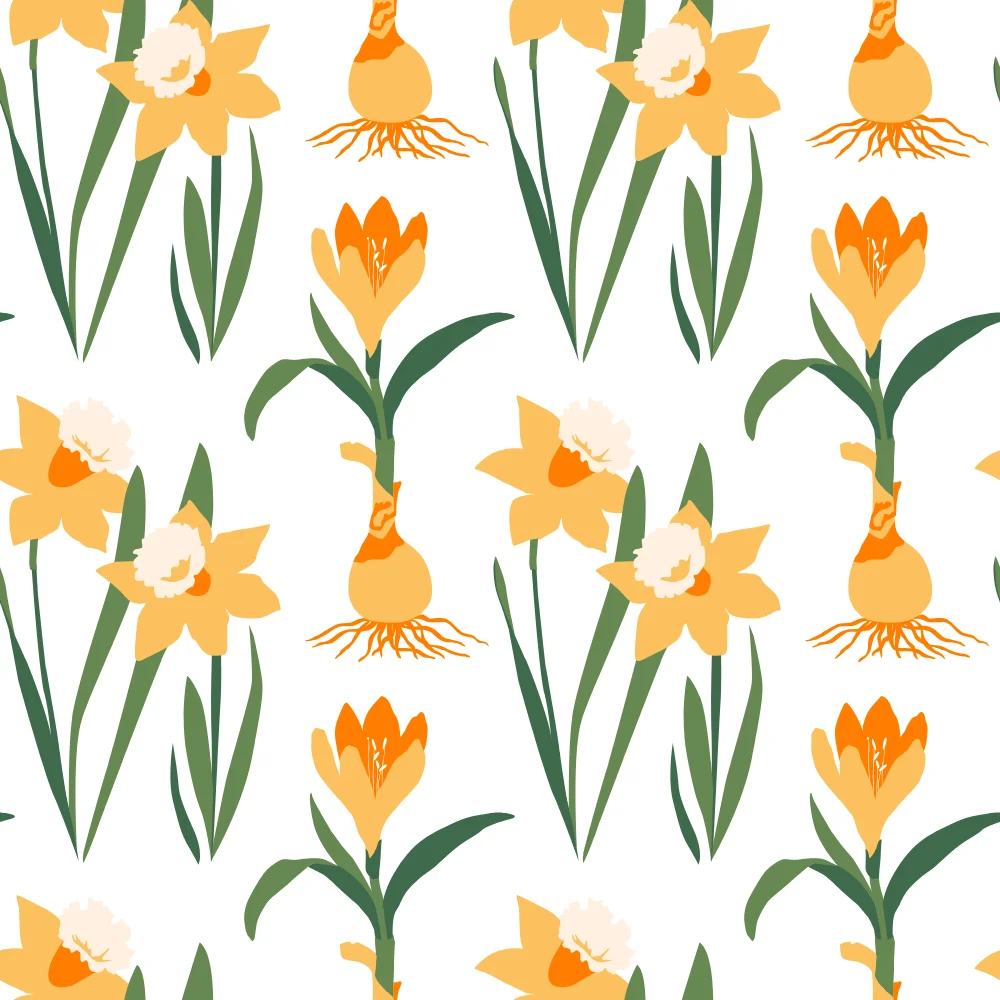
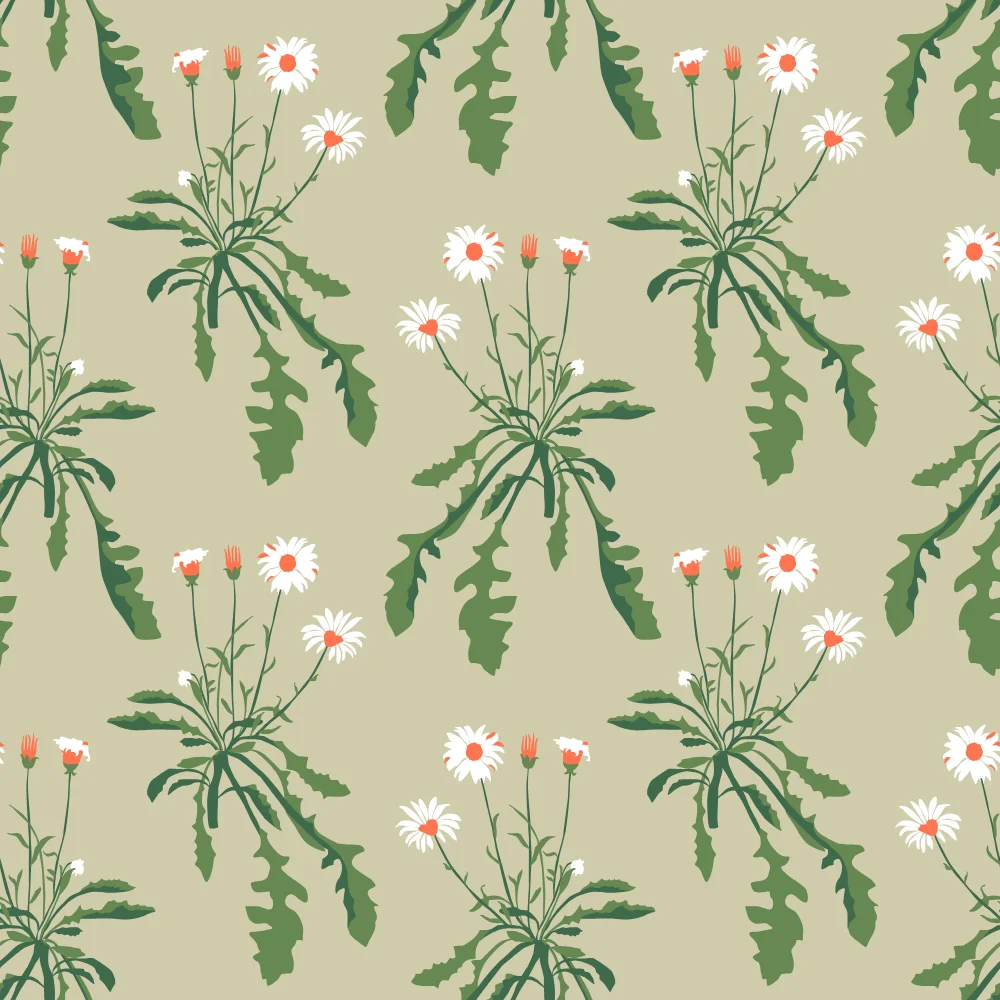
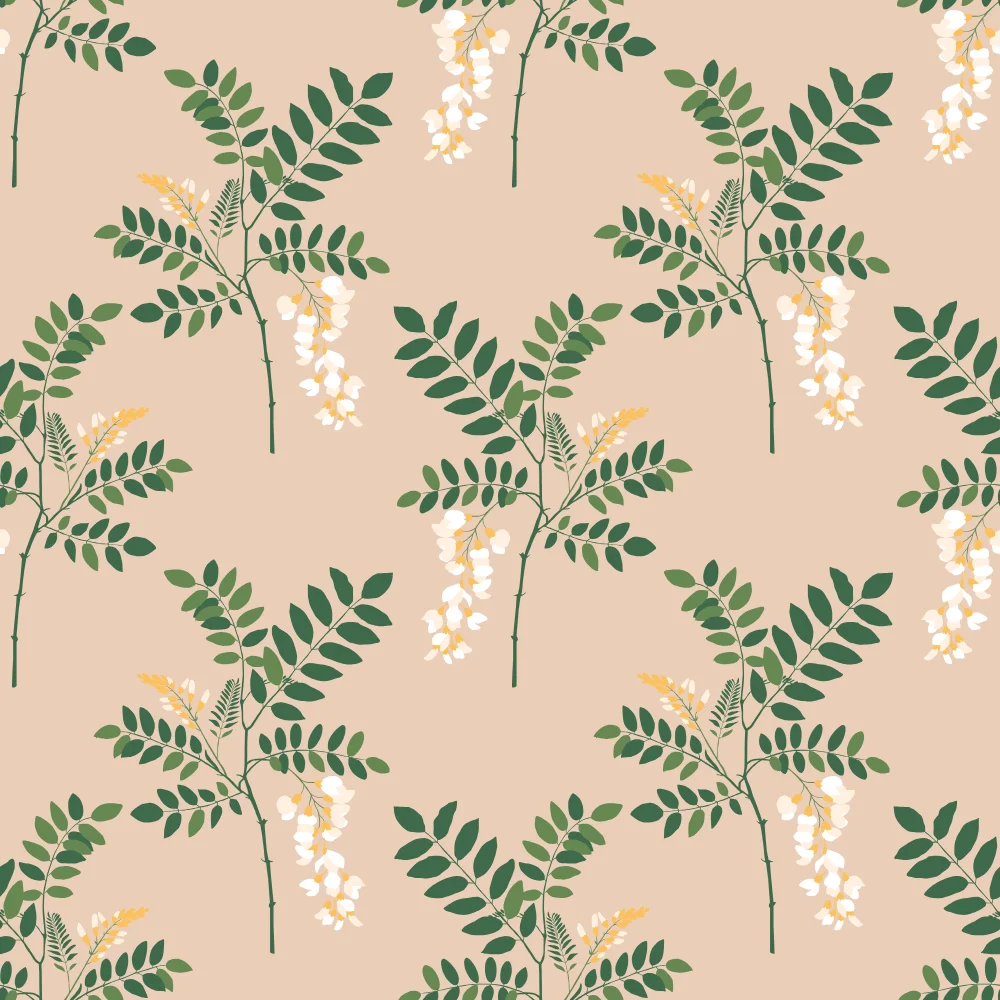
The single-species patterns form the versatile core of the collection. Daffodils announce spring with their trumpet shapes and pure yellows. Daisies — white petals around yellow centers — are the friendliest flower in design, reading as cheerful and unpretentious. White flowers on green foliage offer a fresh, garden-like alternative when you want botanical content without strong color. These three are the workhorses: they adapt to any brand palette, any season, and any product category.
Butterflies in the Garden
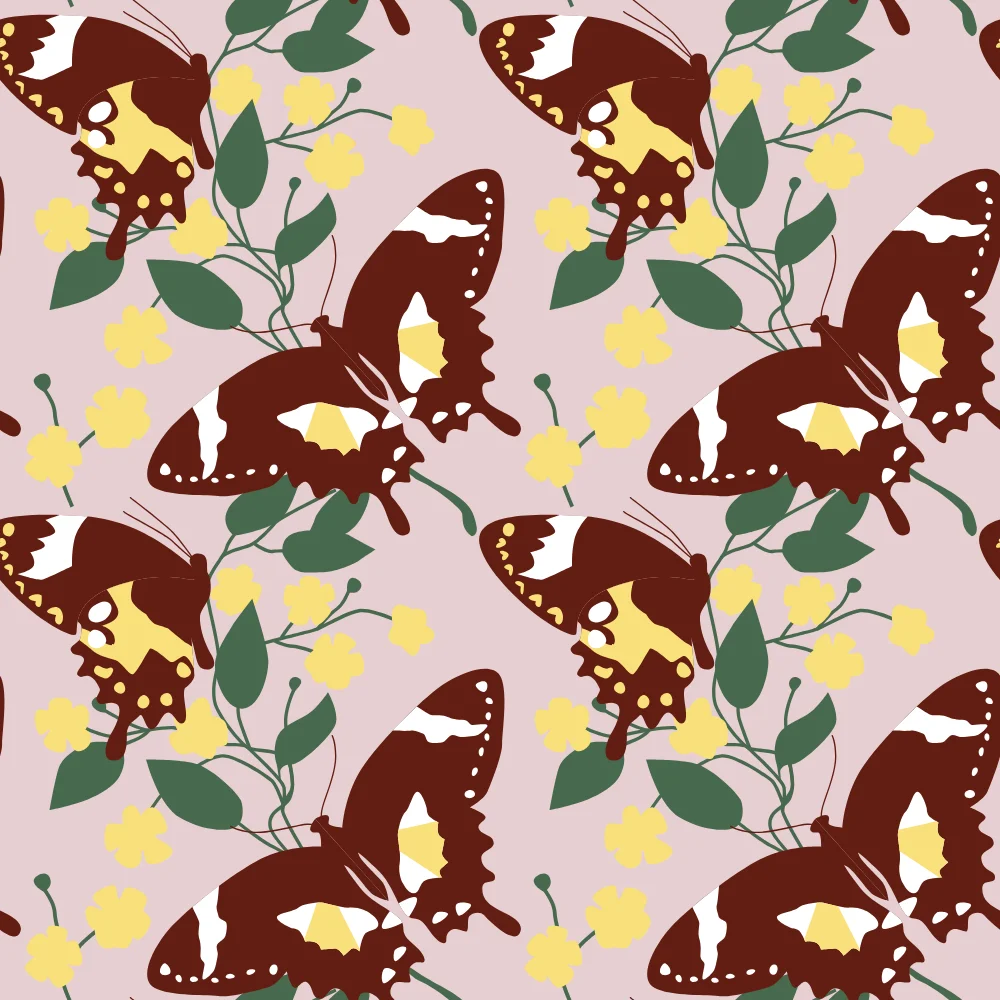
The butterfly garden pattern combines brown butterflies with white-dotted wings, small yellow flowers, and green leaves on a soft pink background. The earthy browns against pastel pink create an unexpected, sophisticated palette — warmer and more grounded than typical pastel florals. Butterflies add movement and life to floral patterns: they draw the eye across the repeat and make static designs feel animated.
Where to Use Vector Floral Patterns
- Fabric and textiles — dresses, scarves, cushions, and quilting cotton are the classic home for floral repeats
- Wallpaper and interiors — accent walls, children’s rooms, and boutique hotel spaces
- Packaging — cosmetic boxes, tea tins, gift wrap, and jam jars (the strawberry pattern was born for this)
- Stationery — notebooks, greeting cards, washi tape, and gift bags
- Digital design — website backgrounds, app interfaces, social media templates, and email headers
- Brand identity — a signature floral pattern can become as recognizable as a logo
Explore More Floral Patterns
Browse floral pattern designs for design reference:
- Vector Floral Pattern — the full collection of botanical repeat designs
- Floral Pattern — broader floral pattern reference gallery