
Ming and Qing Chinese Chairs: Design Lessons from 600 Years of Furniture Mastery
Chinese furniture design reached its zenith during the Ming (1368–1644) and Qing (1644–1912) dynasties. The chairs from this period are not just furniture — they are masterpieces of structural engineering, material respect, and aesthetic philosophy that continue to influence modern furniture design from Scandinavia to Japan. Designers like Hans Wegner drew direct inspiration from Chinese chair forms, creating iconic pieces like the Wishbone Chair from the Ming horseshoe-back prototype.
This collection features traditional Chinese chairs in the Ming and Qing styles — from minimalist horseshoe-back armchairs to intricately carved folding chairs with cloud and mountain motifs. For industrial designers, furniture makers, and anyone passionate about form and craft, these chairs offer timeless lessons in proportion, joinery, and the relationship between structure and beauty.
Ming vs Qing: Two Design Philosophies
The Ming and Qing dynasties produced fundamentally different design philosophies, and this collection includes examples of both. Understanding the difference is essential for any designer drawing inspiration from Chinese furniture.
Ming style is the minimalist’s paradise. Clean lines, unadorned surfaces, slender proportions, and an almost modernist respect for the natural beauty of wood. Ming chairs celebrate the material — the grain, the color, the warmth of hardwoods like huanghuali (yellow rosewood) and zitan (red sandalwood). Decoration is restrained: a subtle curve, a simple circular cutout, a quietly elegant crest rail. The Ming craftsman believed that the wood itself was the decoration.
Qing style embraces opulence. Black lacquer with gold detailing, painted landscape scenes on backrest panels, intricate openwork carvings, and heavier, more imposing proportions. Qing chairs communicate power, status, and artistic ambition. Where Ming design whispers, Qing design declares.
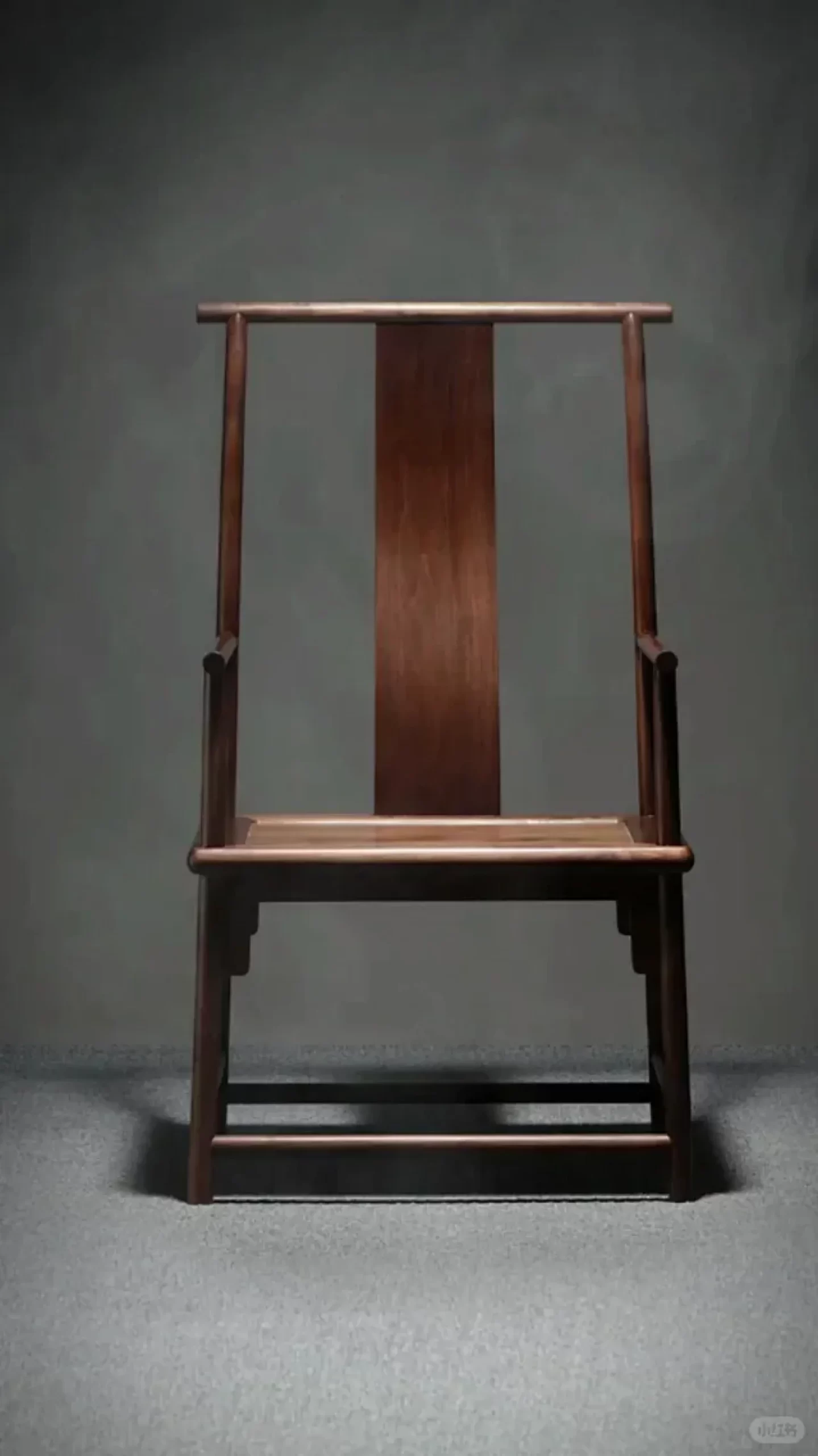
The chair above exemplifies the Ming approach: a horseshoe-shaped backrest flowing seamlessly into curved armrests, slender tapering legs, and mortise-and-tenon joinery without a single nail or screw. The woven rattan seat adds breathability and comfort. Every line serves a structural purpose. Nothing is decorative for decoration’s sake.
The Horseshoe Backrest: A Design Icon
The most iconic element of Chinese chair design is the horseshoe backrest (马蹄椅, mǎtí yǐ) — a curved top rail that sweeps down to form the armrests in a single, continuous arc. This is one of the most elegant structural solutions in furniture history: one curve serves as back support, arm support, and visual identity simultaneously.
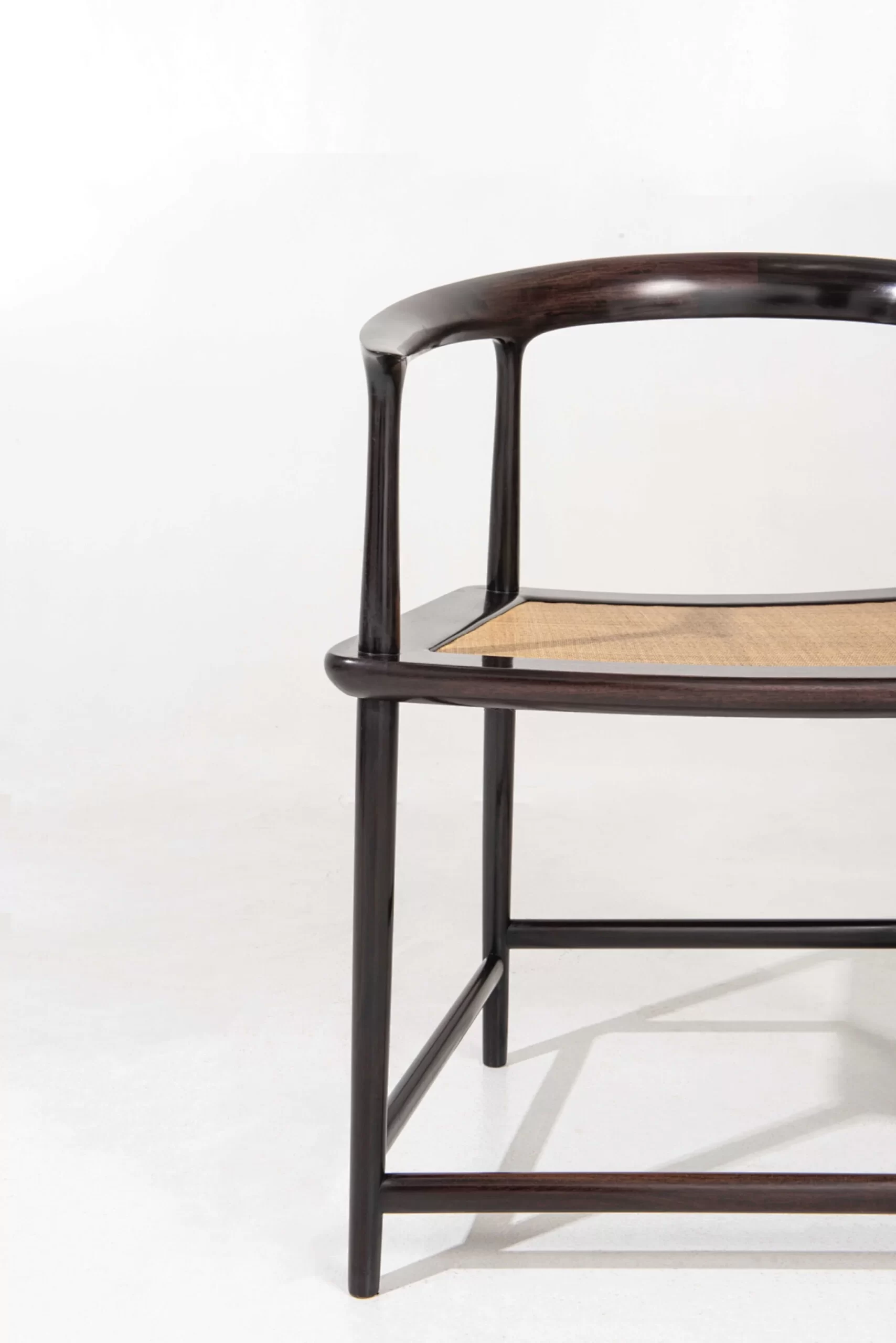
For industrial designers, the horseshoe backrest is a lesson in structural integration. In Western furniture, the backrest and armrests are typically separate components joined together. In the Chinese horseshoe chair, they are one continuous element — stronger, more elegant, and more comfortable. Danish designer Hans Wegner studied this form closely and created his 1949 Wishbone Chair (CH24), one of the most successful chair designs of the 20th century. The lineage from Ming China to mid-century Denmark is direct and undeniable.
Joinery Without Metal: The Mortise-and-Tenon System
Traditional Chinese chairs are assembled entirely through mortise-and-tenon joinery — a interlocking wood-to-wood connection system that requires no nails, screws, or glue. The tenon (a projecting wooden piece) fits precisely into the mortise (a matching recess), creating joints that can last for centuries.
This joinery philosophy is perhaps the most relevant lesson for contemporary industrial design. In an era of sustainability concerns and circular design, the Chinese approach — durable, repairable, fully separable joints using only the primary material — represents an ideal. Modern flat-pack furniture with its metal fasteners and glue represents the opposite philosophy: cheap, disposable, and environmentally costly.
Symbolic Patterns: Clouds, Mountains, and Circles
When Chinese chairs do feature decoration, the patterns are never merely ornamental — they carry symbolic meaning drawn from Chinese cosmology and philosophy.
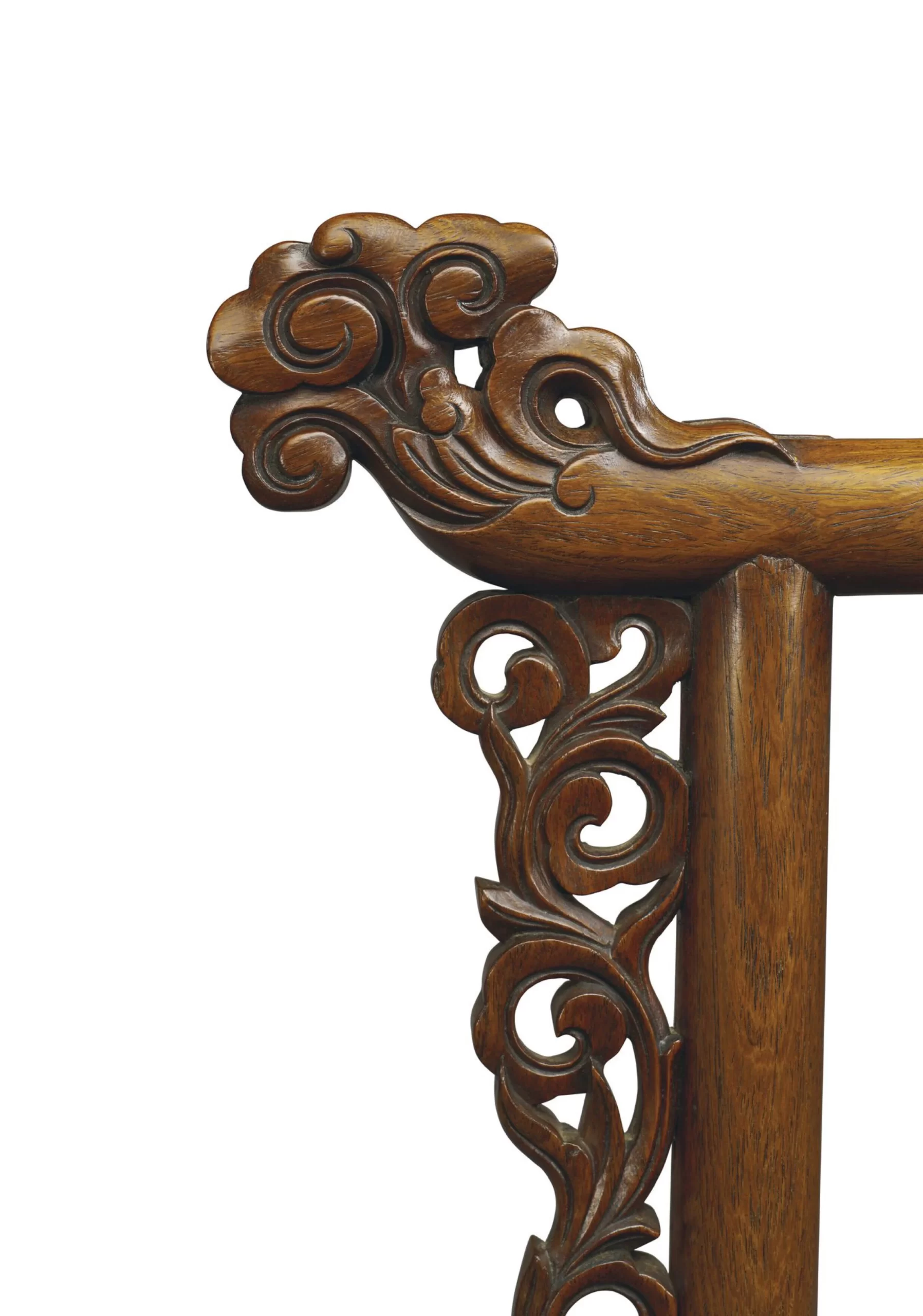
Cloud Patterns (云纹)
Cloud motifs represent good fortune, transcendence, and the flow of qi (energy). On chair backrests, cloud carvings often appear as swirling, organic scrollwork that softens the rigid geometry of the frame.
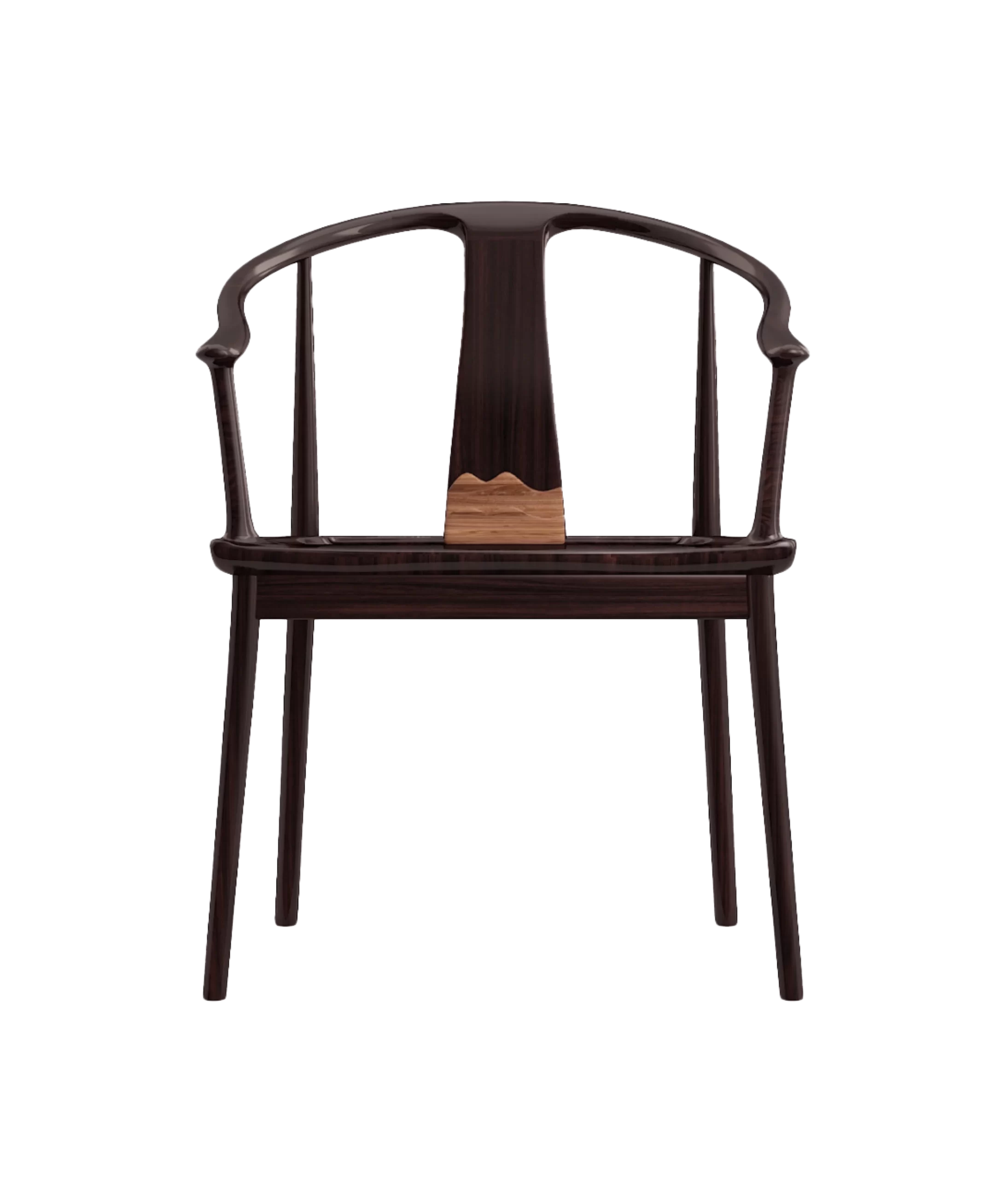
Mountain Patterns (山纹)
Mountain motifs symbolize stability, endurance, and the permanence of the earth. A mountain inlay on a chair backrest communicates quiet strength — the sitter is supported not just physically but symbolically by the most stable element in nature.
The Circle (圆)
The circular cutout is perhaps the most philosophically loaded design element in Chinese furniture. In Taoist thought, the circle represents emptiness, potential, and the cyclical nature of existence. A circular opening in a chair backrest balances solid and void — the same principle found in Chinese garden walls (moon gates) and classical painting composition.
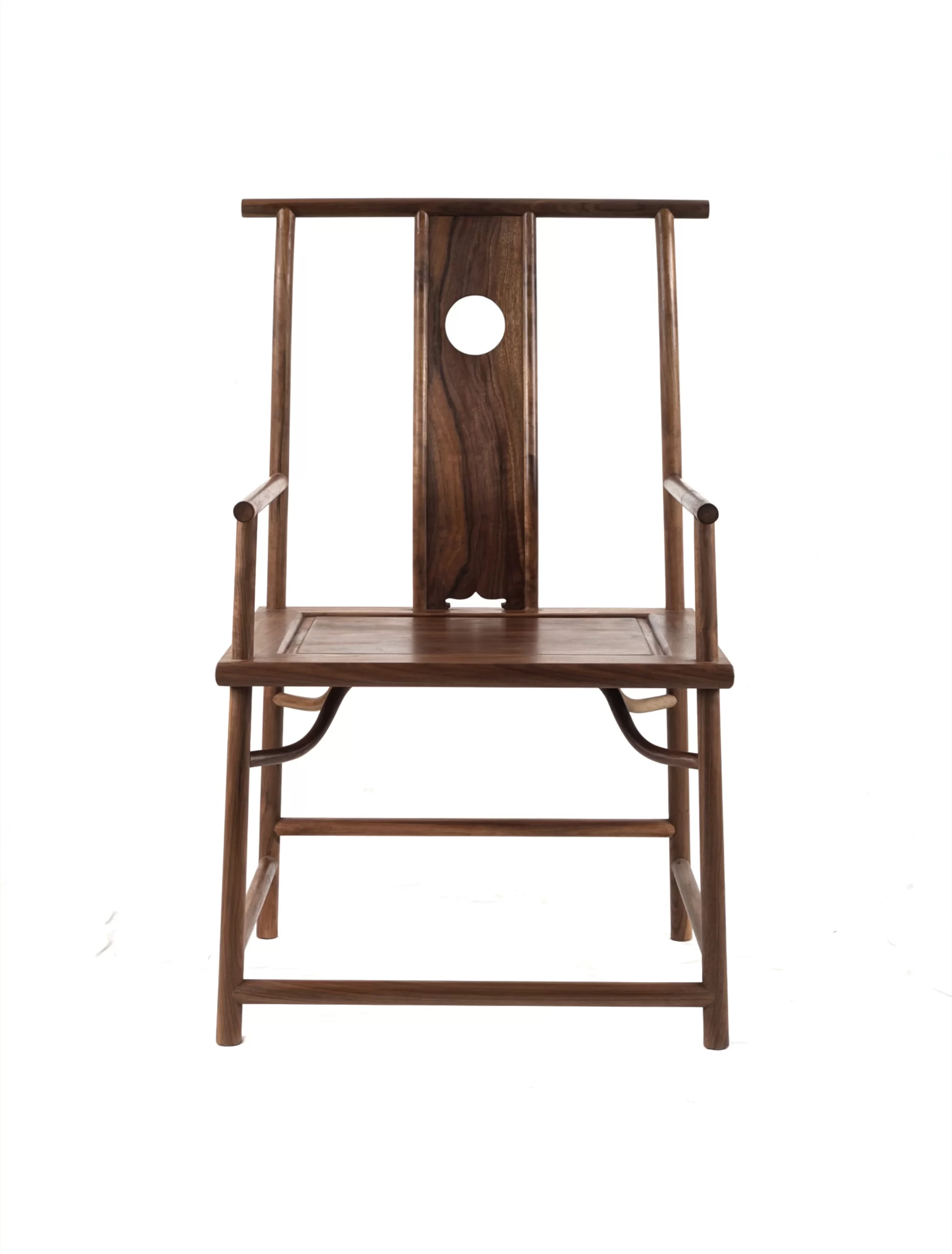
For modern designers, this is a powerful concept: what you remove can be more meaningful than what you add. The circular void creates visual interest, reduces material weight, improves ventilation, and communicates a philosophy — all through absence rather than presence.
The Folding Chair: Portability Meets Craftsmanship
Chinese folding chairs represent a remarkable fusion of portability and structural beauty. The folding mechanism uses an X-shaped leg structure reinforced with brass or copper bands at critical stress points — a design that predates similar European mechanisms by centuries.
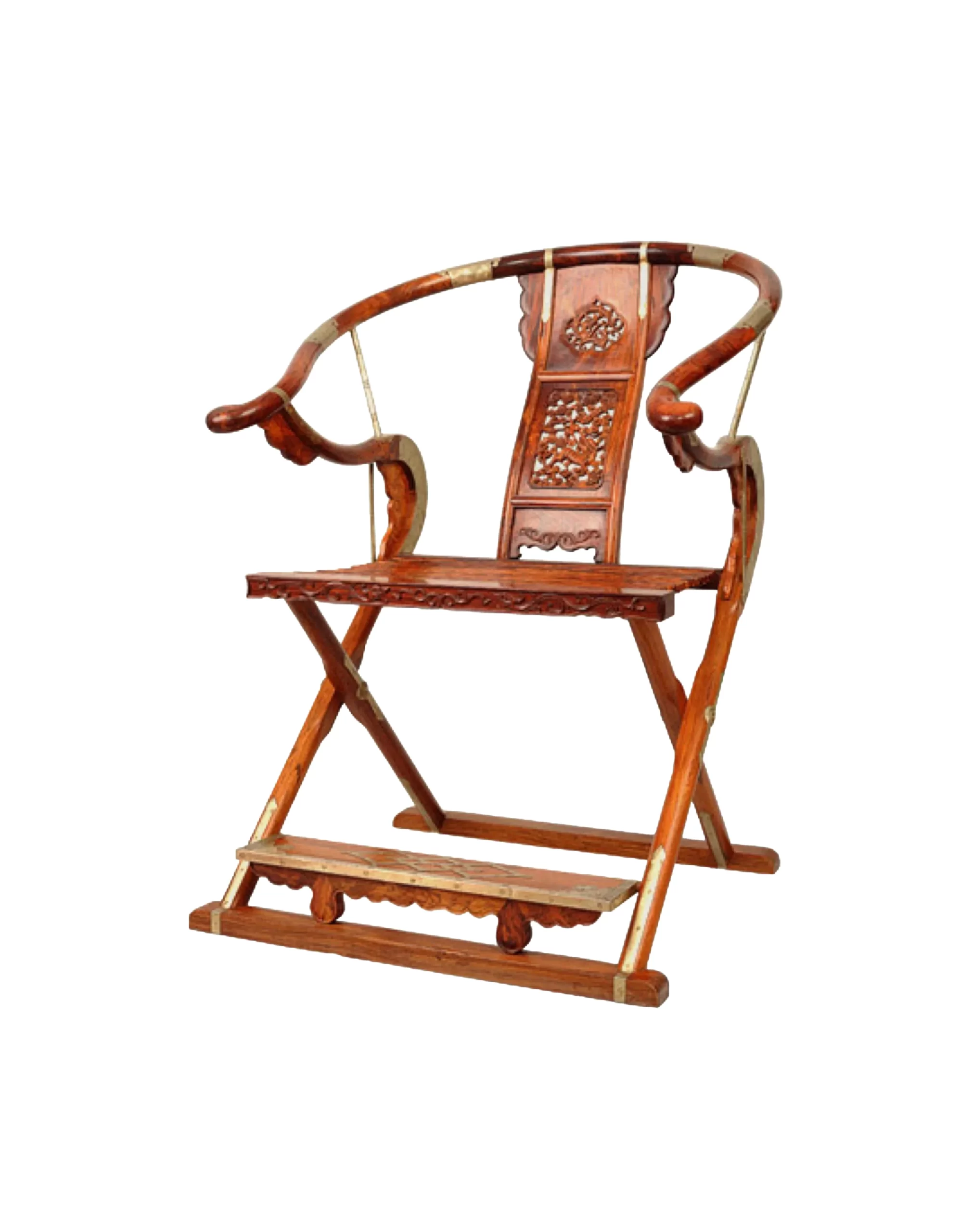
The metal reinforcements serve dual purposes: structural (preventing wood failure at the fold) and decorative (adding warm metallic contrast to the dark wood). This is a classic example of honest design — where a functional necessity becomes a visual feature rather than being hidden. Modern industrial designers could learn from this: instead of concealing structural elements, celebrate them.
Qing Opulence: When Lacquer Meets Gold
At the other end of the spectrum from Ming minimalism, Qing dynasty chairs embrace dramatic decoration. Black lacquer surfaces with gold detailing, painted landscape scenes on backrest panels, and elaborate openwork carvings create furniture that functions as both seating and art object.
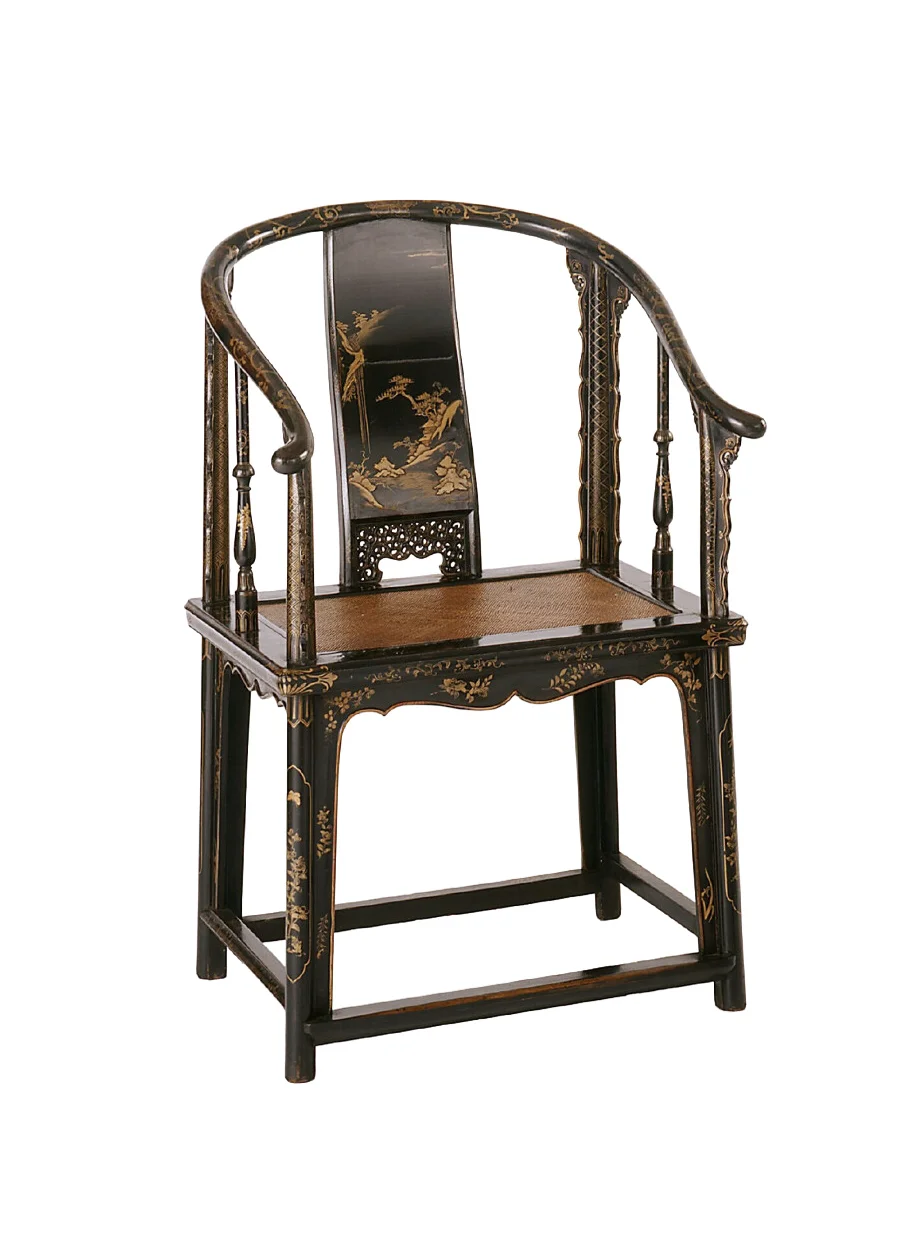
The chair above features a horseshoe backrest with a painted landscape scene — trees, mountains, and birds rendered in gold against black lacquer. The woven rattan seat, curved armrests, and sturdy stretchers maintain structural functionality while the surface decoration transforms the chair into a storytelling object. This is furniture that communicates identity and cultural values through its surface, not just its form.
The Woven Seat: Material Honesty
Many chairs in this collection feature woven rattan or cane seats — a material choice that is both practical and philosophical. Rattan is breathable, lightweight, flexible, and replaceable. When a woven seat wears out, it can be re-woven without replacing the entire chair. The wood frame lasts for generations; the soft, replaceable surface serves the user.
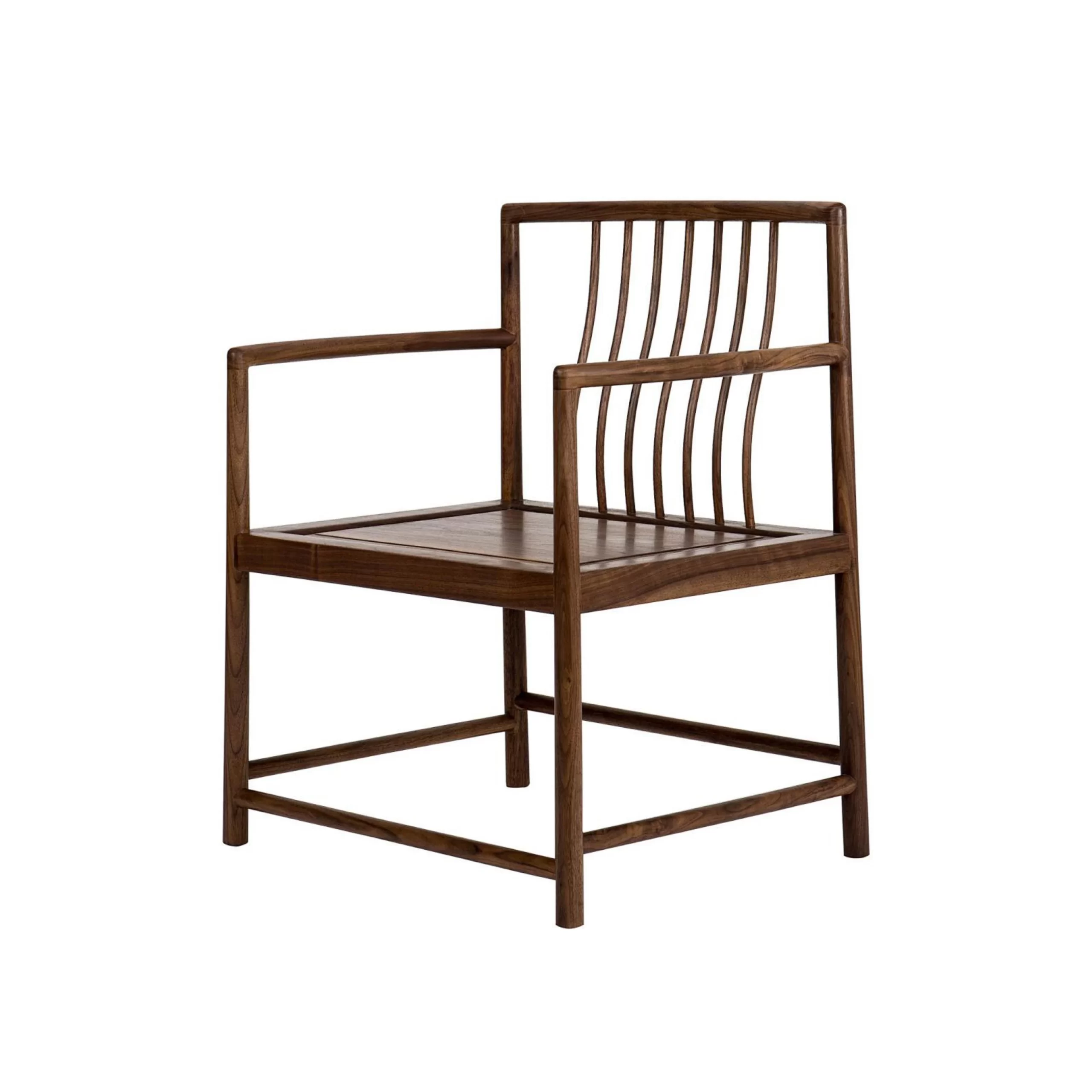
This approach — a durable hard frame with a replaceable soft surface — is directly relevant to modern sustainable design. It’s the same principle behind the Wishbone Chair’s paper cord seat, which can be re-woven after decades of use. Chinese furniture pioneered this material separation centuries ago.
What Modern Designers Can Learn from Chinese Chairs
The chairs in this collection offer lessons that transcend their cultural origin:
- Structural integration over assembly. The horseshoe backrest combines multiple functions in one continuous element. Modern designers should ask: can two components become one?
- Material honesty. Ming chairs celebrate the wood’s grain, color, and texture rather than concealing it under paint or veneer. The material is the finish.
- Symbolic decoration. When Chinese chairs feature patterns, every motif carries meaning — clouds, mountains, circles. Decoration is never arbitrary; it always communicates.
- Modular longevity. Woven seats can be replaced without discarding the frame. This is circular design, practiced for 600 years before the term existed.
- The void as design. Circular cutouts demonstrate that removing material can add more value than adding it — lighter weight, better ventilation, deeper meaning.
- Honest hardware. The folding chair’s brass reinforcements celebrate structural necessity rather than hiding it. Function becomes decoration.
Explore More Chinese Furniture Design
Browse Chinese chair and furniture designs for design reference:
- Chinese Chair — the full collection of traditional Chinese chair designs
- Chinese Furniture — broader traditional furniture reference gallery