Cityscape Shops Buildings Signs Street Mateusz Urbanowicz
DownloadTopics
Details
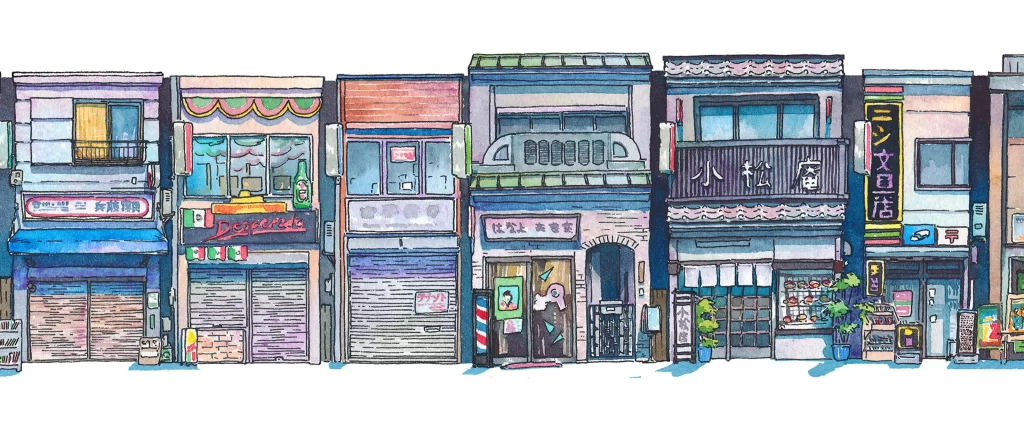
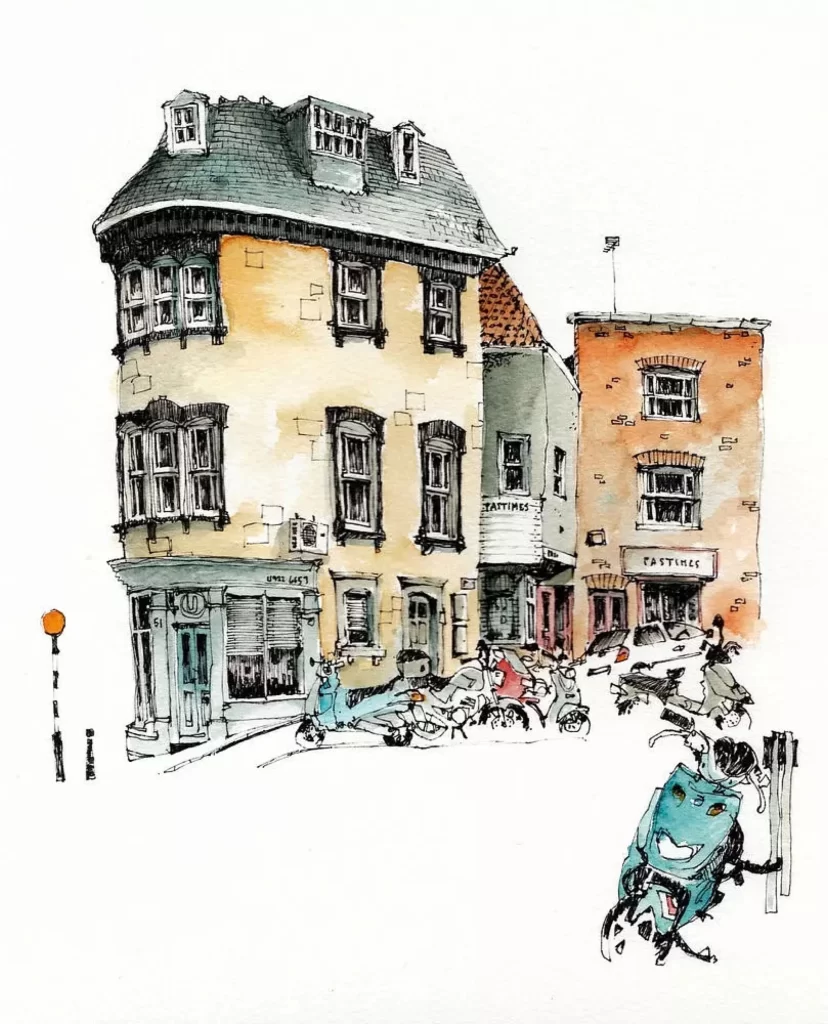
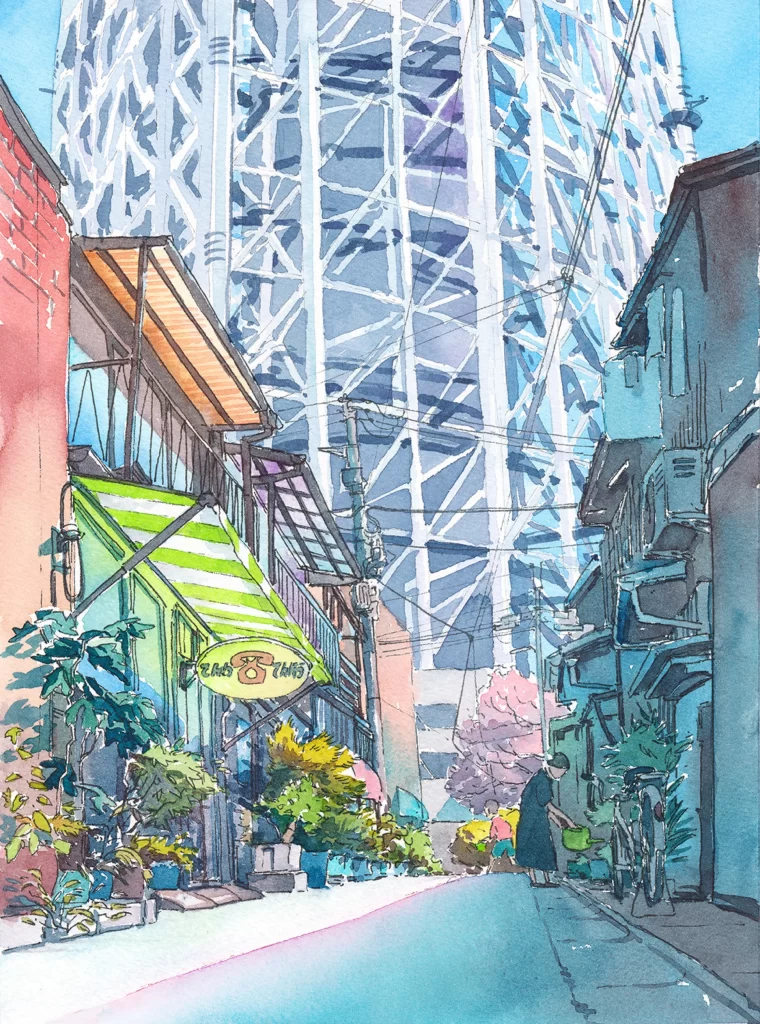
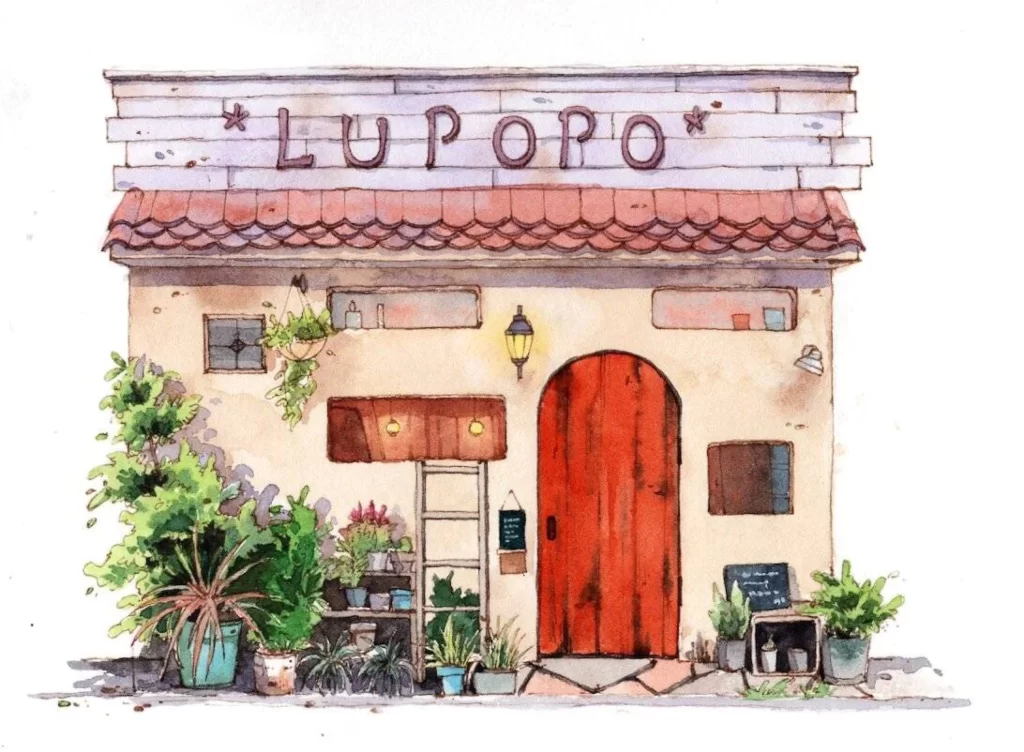
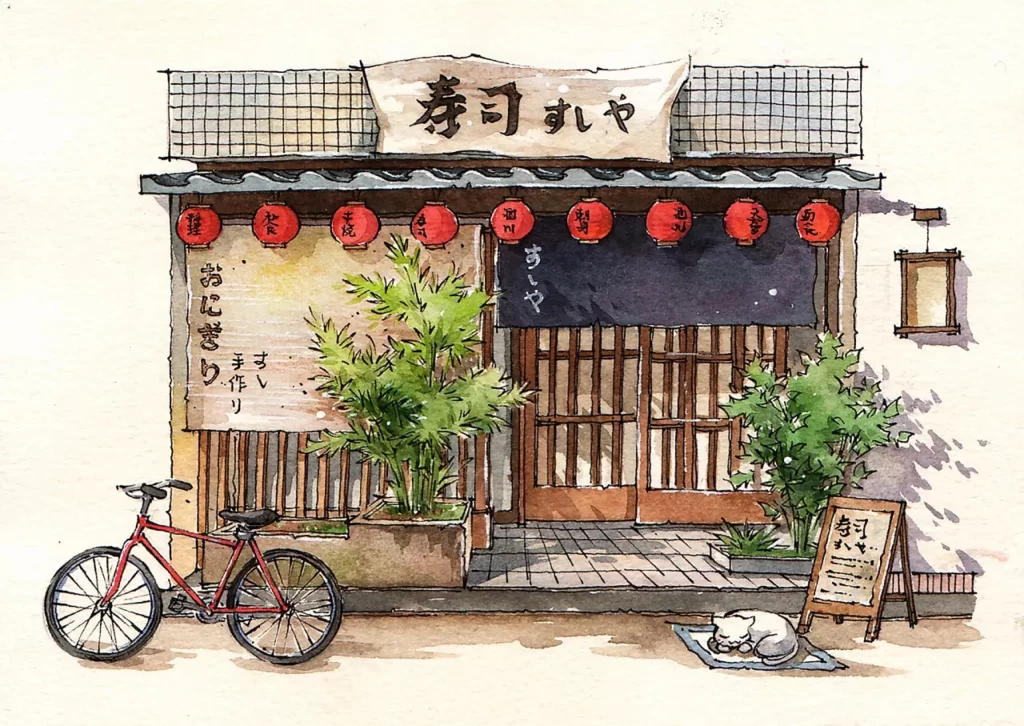
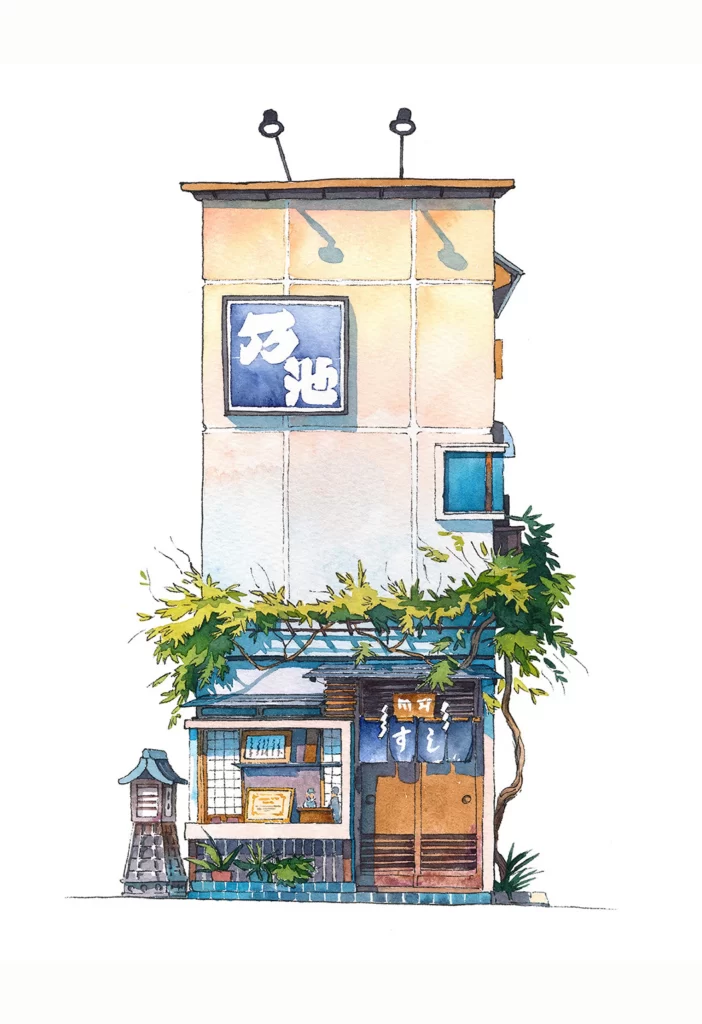
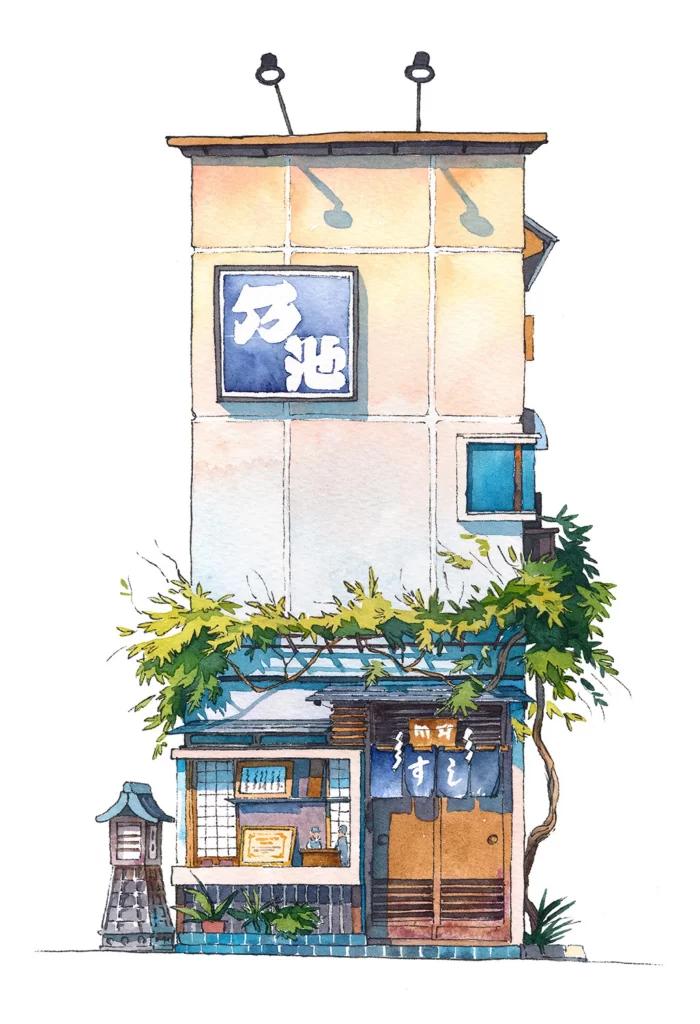
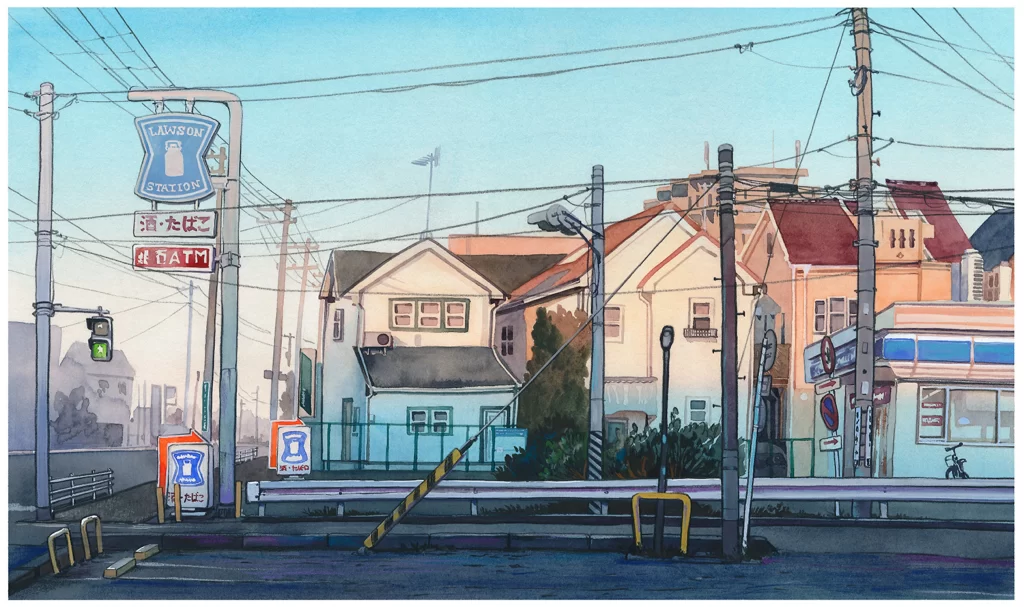
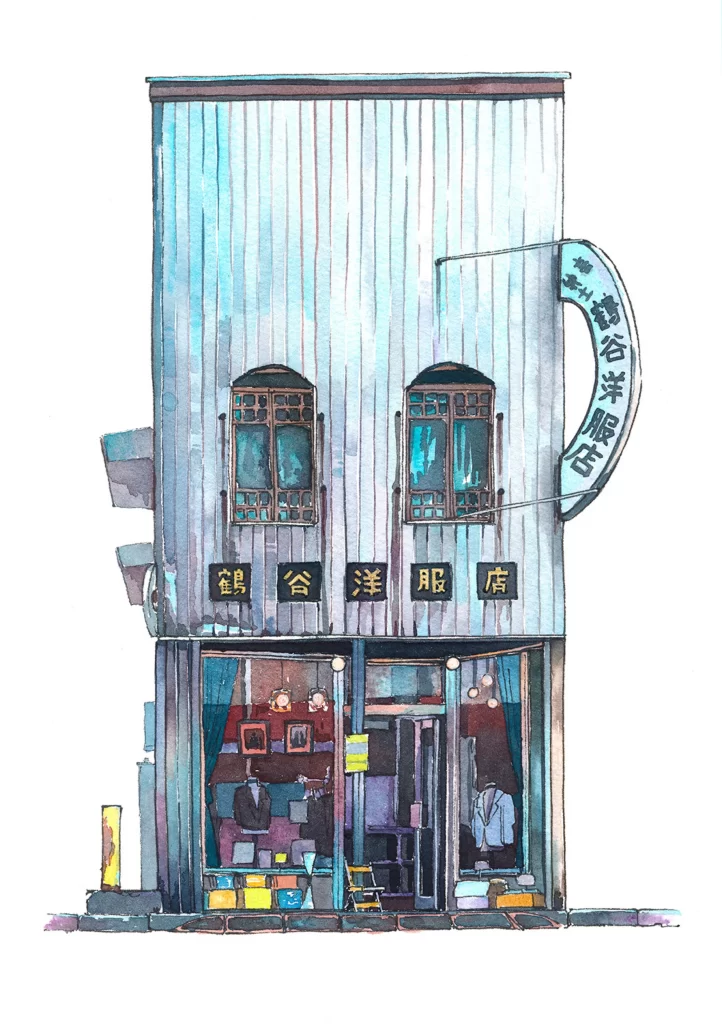
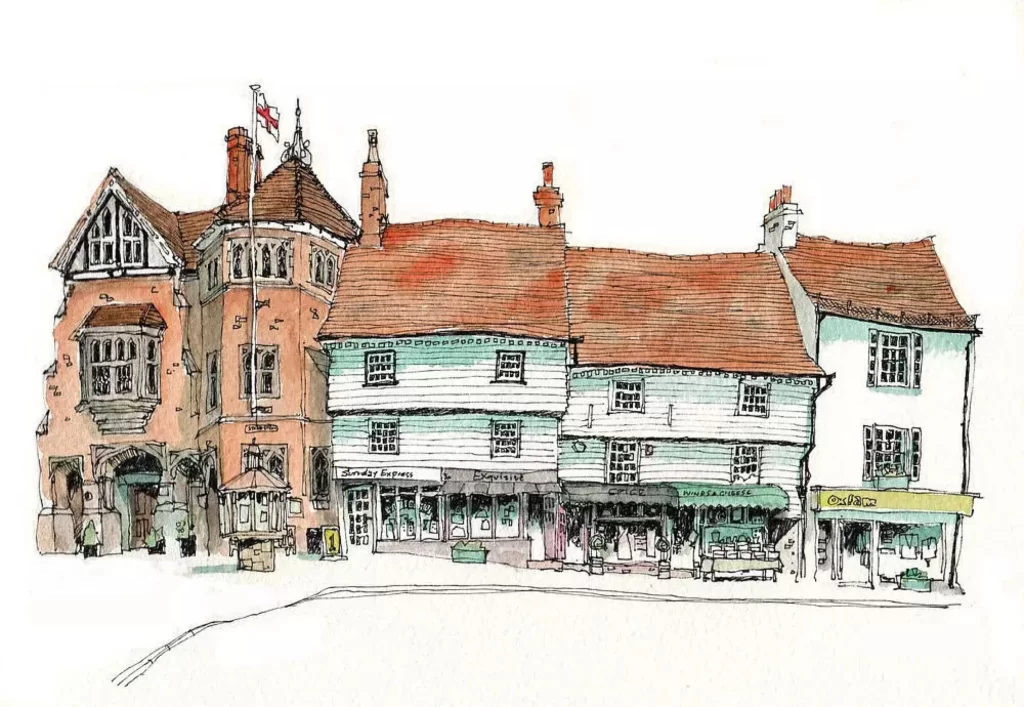
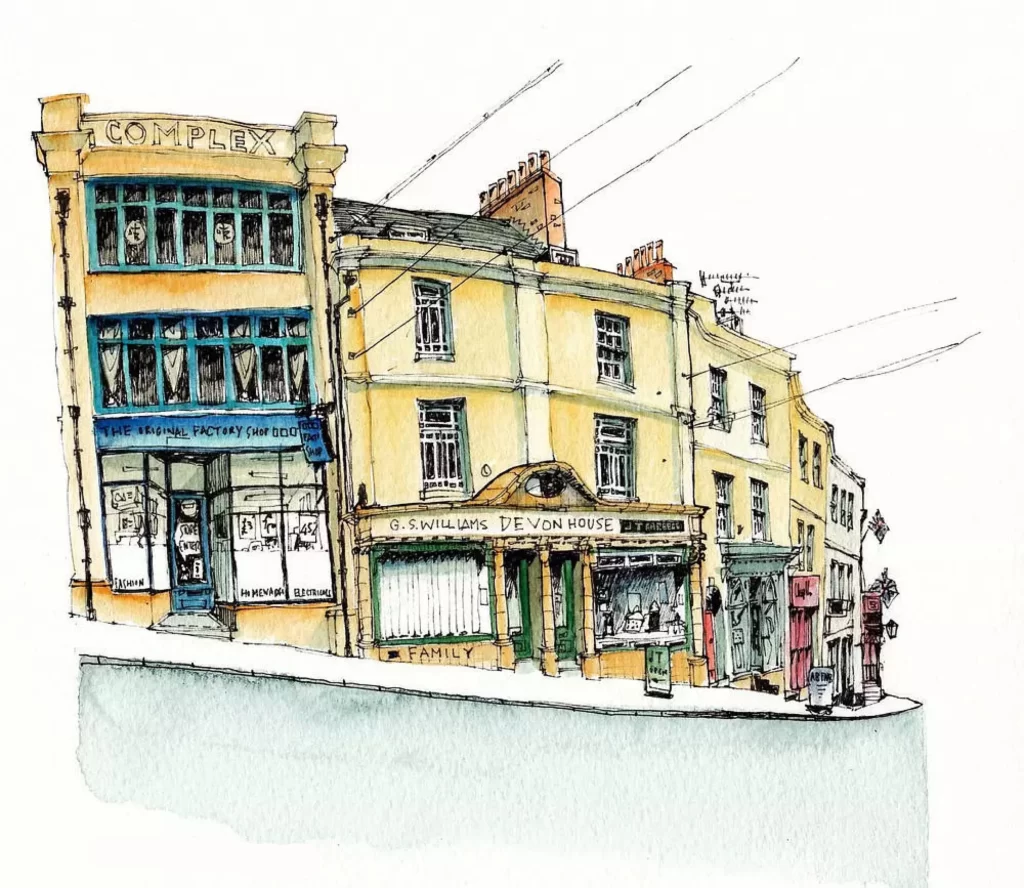
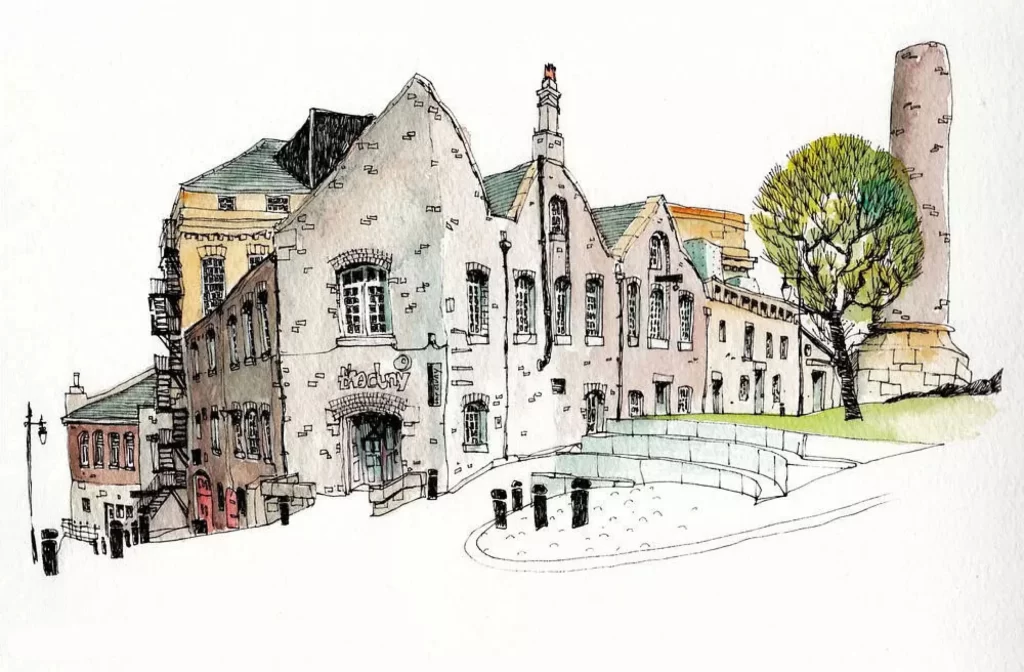
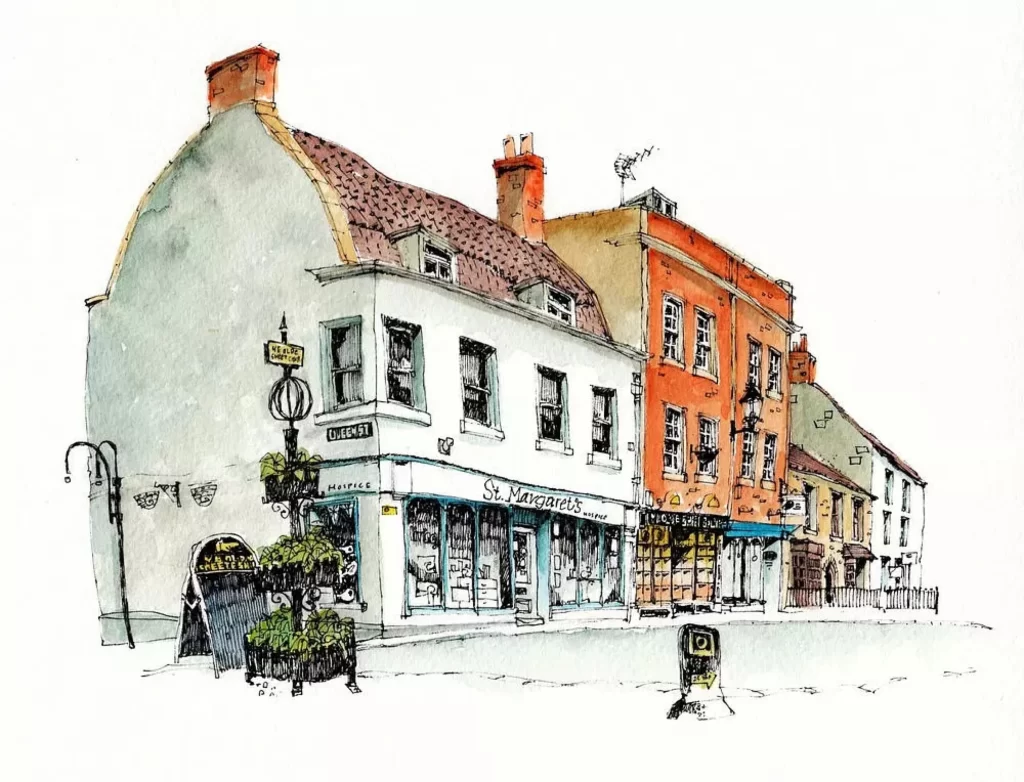
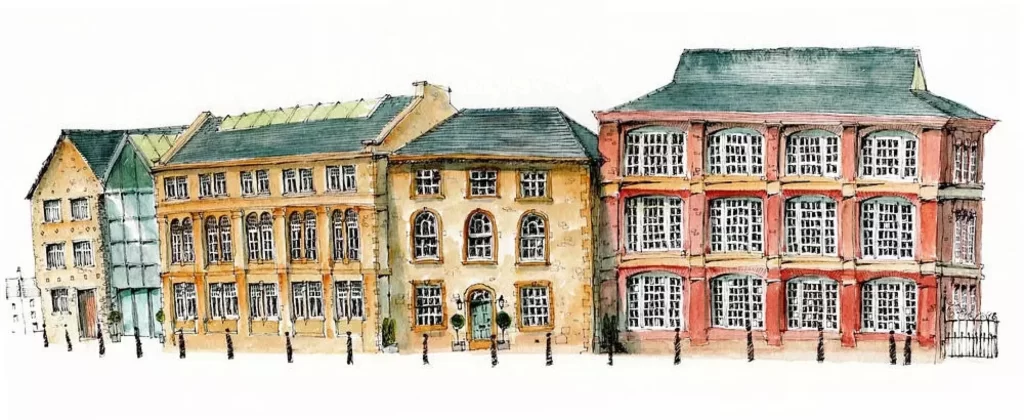
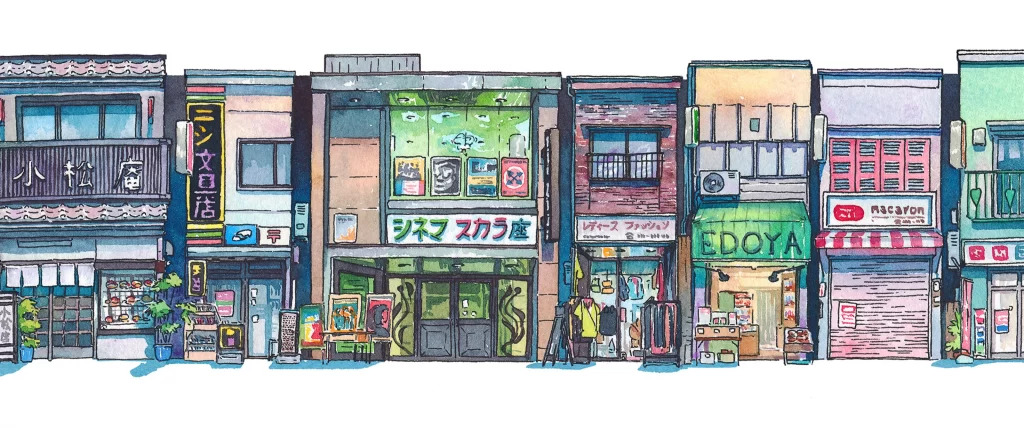
Watercolor washes in muted teal, dusty rose, and ochre define seven contiguous storefronts stretching across the horizontal frame, each facade rendered with architectural precision from corrugated metal shutters to scalloped awnings. Japanese kanji characters appear prominently on vertical signage—小松屋, 文具店—alongside romanized text like EDOYA and nacaron, while interior details such as refrigerated display cases, hanging garments, and stacked merchandise populate the ground-level entrances. The composition employs a straight-on eye-level perspective that flattens depth slightly, allowing the intricate interplay of window frames, air conditioning units, and hand-painted posters to dominate the visual field against a pale, unobtrusive backdrop.
What distinguishes this particular streetscape is its masterful balance between documentary accuracy and artistic interpretation, where visible brushstrokes and bleeding pigments soften the rigid geometry of urban architecture without sacrificing structural clarity. The deliberate color harmonization—cool blues warming into terracotta and sage—creates a nostalgic atmosphere that feels simultaneously specific to Tokyo's back alleys and universally appealing as a study in commercial vernacular design. Artists seeking authentic urban textures can access the complete high-fidelity version at no cost directly from the resource archive.
Environment concept artists working on narrative-driven games or animated features would mine this visual for establishing shot compositions, particularly the rhythm of repeating bays broken by varying signage heights and material shifts. Illustrators developing graphic novels about contemporary Japanese life might reference the specific typographic treatments and storefront clutter patterns to ground their fictional settings in recognizable reality. Urban sketchers practicing architectural rendering could study the economical line work that suggests complex surfaces like brickwork and glass reflections with minimal strokes.