Pixelated Pattern Grid
Topics
Details
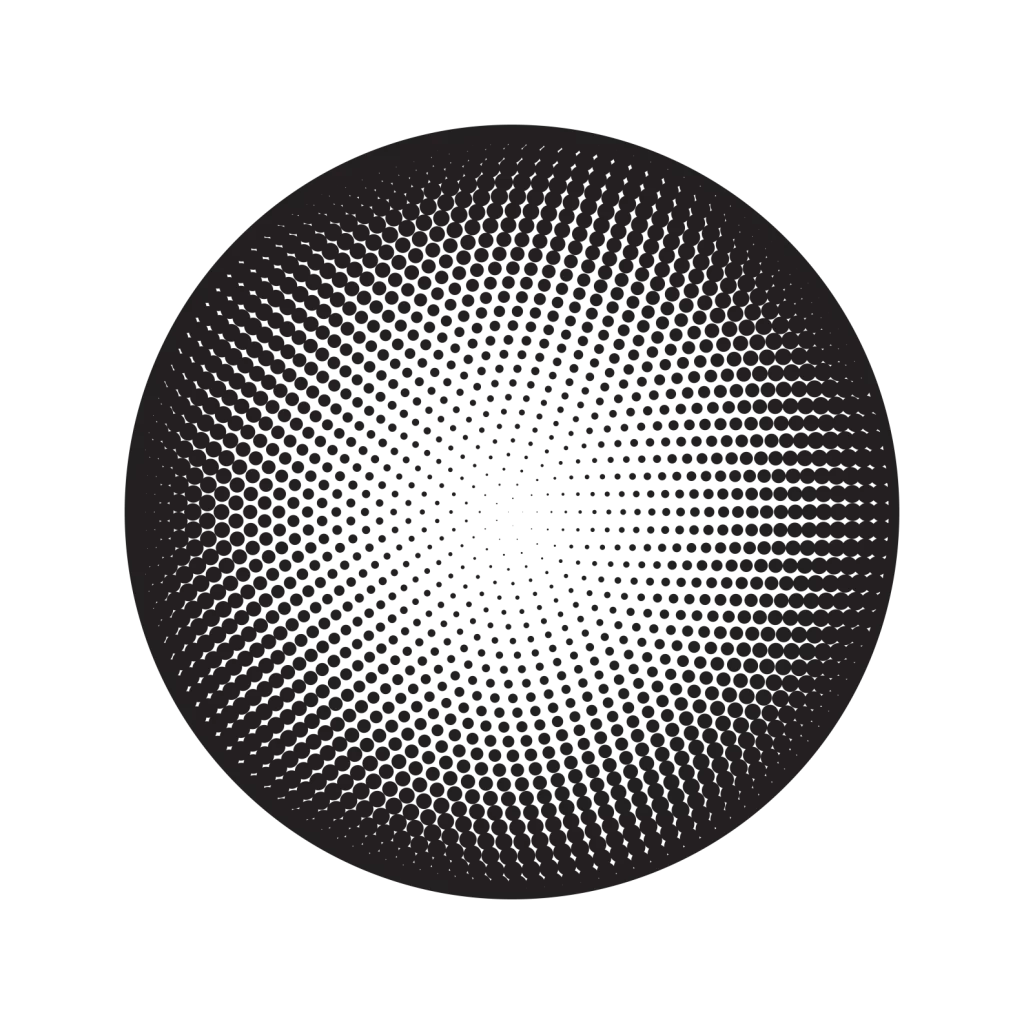
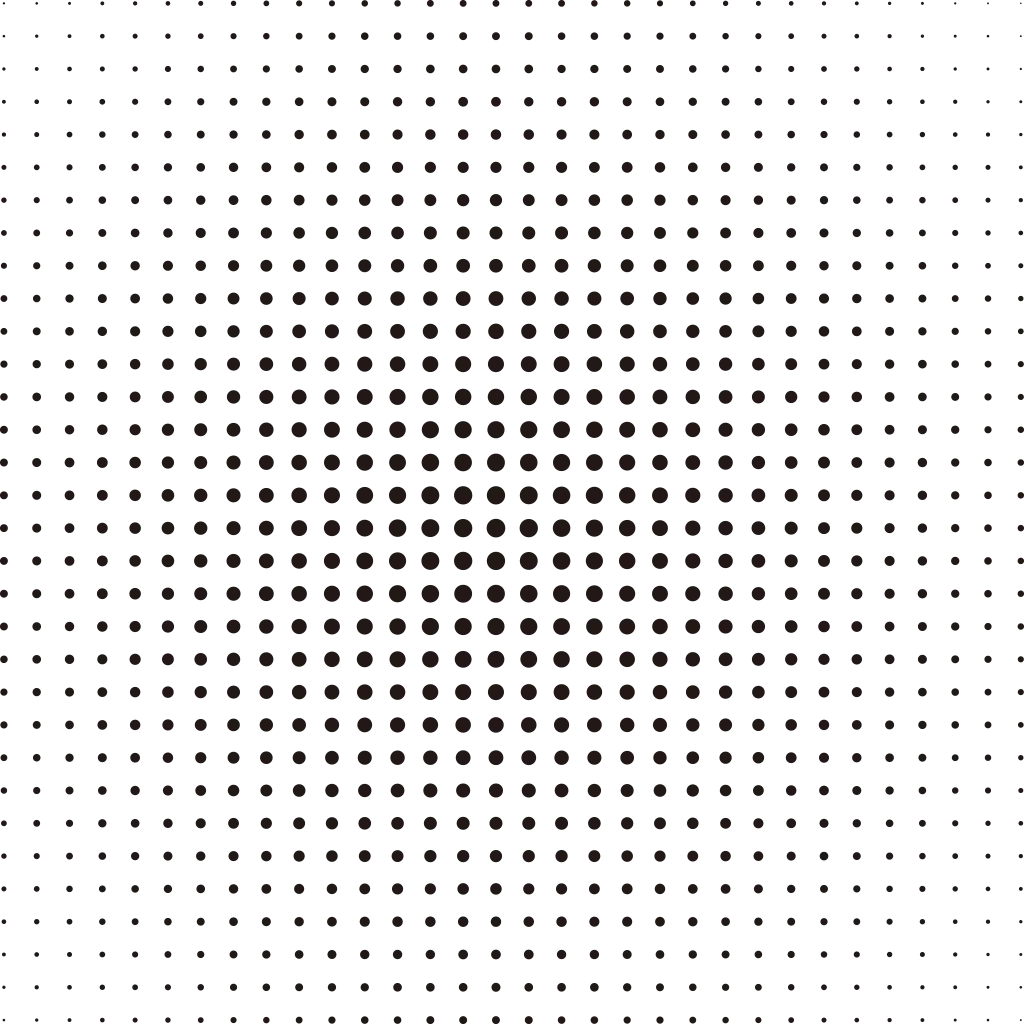
Black circular dots of varying diameters populate a strict orthogonal grid across a white field, creating a radial gradient effect that peaks at the center. The composition relies on precise mathematical spacing, with each dot increasing in size from the outer edges toward the middle before diminishing again toward the periphery. No text, texture variation, or camera perspective distortion interrupts this systematic arrangement of pure geometric forms.
Visual tension emerges from the deliberate modulation of dot scale within an otherwise rigid matrix structure, producing an optical illusion of depth and volume without traditional shading techniques. The halftone-inspired rhythm creates a pulsing focal point that draws the eye inward while maintaining consistent horizontal and vertical alignment throughout. Such controlled gradation demonstrates how minimal variables—solely diameter adjustment—can generate complex perceptual experiences from elementary components.
Print designers might employ this pattern as a screening technique for monochromatic illustrations or to simulate tonal ranges in limited-palette production work. Motion graphics artists could reference the grid's mathematical progression when programming particle systems that require organic yet structured dispersion behaviors. Typography specialists may find value in studying how the dot-size hierarchy establishes visual weight hierarchies applicable to letterform construction or layout density mapping.