Poison Laudanum Vintage Dark Brown Gothic Label Design
Topics
Details
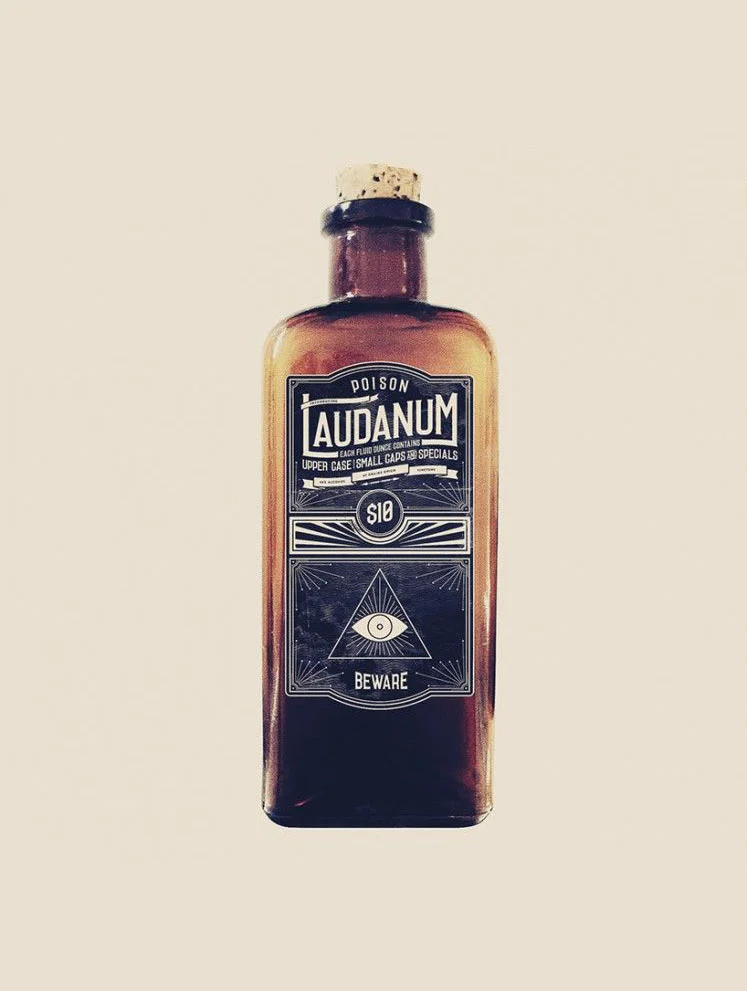
A dark amber glass bottle with a natural cork stopper stands as the central focus, its surface catching light that reveals subtle variations in the brown hue from deep umber to translucent honey at the edges. The rectangular label dominates the front with a black background and white typography, featuring the word 'POISON' in a small arch above the bold, serif 'LAUDANUM' title, while 'UPPER CASE SMALL CAPS SPECIALS' sits just below in tiny lettering. Below a circular 'S10' badge and radiating line graphics, an all-seeing eye peers out from within a triangle, accompanied by the warning 'BEWARE' in clean capital letters, all set against a soft cream backdrop that fades gently into the periphery.
What sets this particular label apart is its masterful blend of Victorian pharmaceutical aesthetics with occult symbolism, creating an immediate sense of dangerous allure through the stark contrast between the clinical poison warning and the mystical eye icon. The typographic hierarchy demonstrates remarkable precision, mixing ornate display fonts for the main title with restrained sans-serif elements for secondary information, while the geometric sunburst patterns add an art deco flair that elevates the design beyond mere imitation. Such careful attention to historical detail—from the slightly irregular cork texture to the weathered appearance of the paper label—gives the composition an authentic antique quality that feels both curated and genuinely aged.
Game developers crafting horror or steampunk environments might reference this bottle when designing in-game consumables or alchemical ingredients that require immediate visual recognition of danger and mystery. Historical fiction authors or tabletop RPG masters could use this visual shorthand to establish atmosphere in their worldbuilding materials without needing extensive textual descriptions. Additionally, prop makers and set designers working on period pieces or gothic productions would find the specific combination of typography, symbolism, and material texture invaluable for recreating believable 19th-century apothecary artifacts.