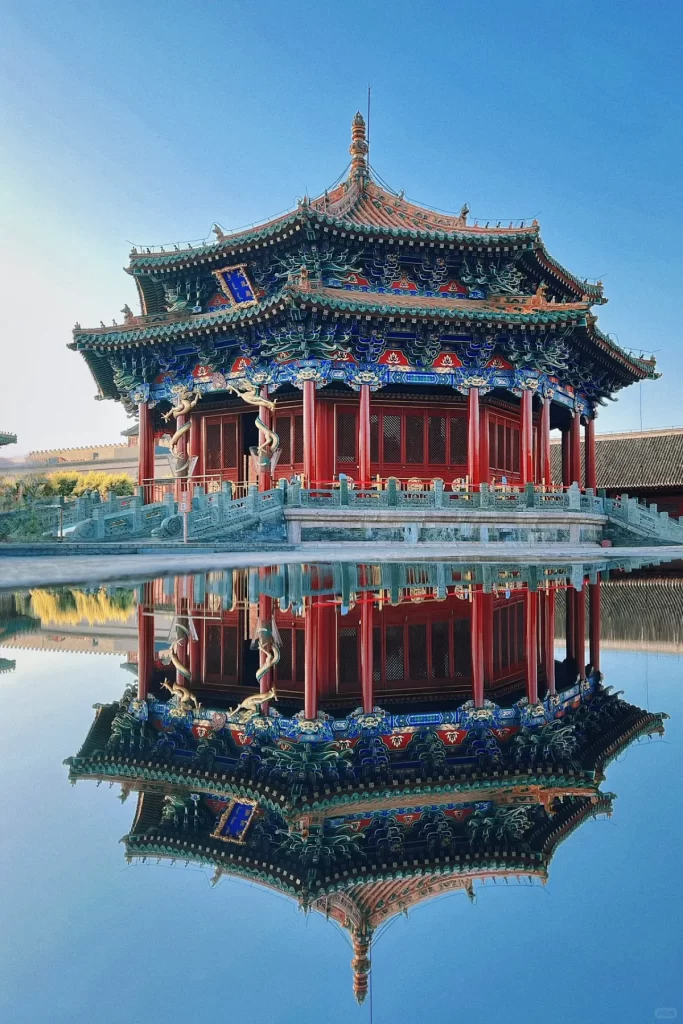
Traditional Architecture Pagoda Reflection Blue Sky
Topics
Details
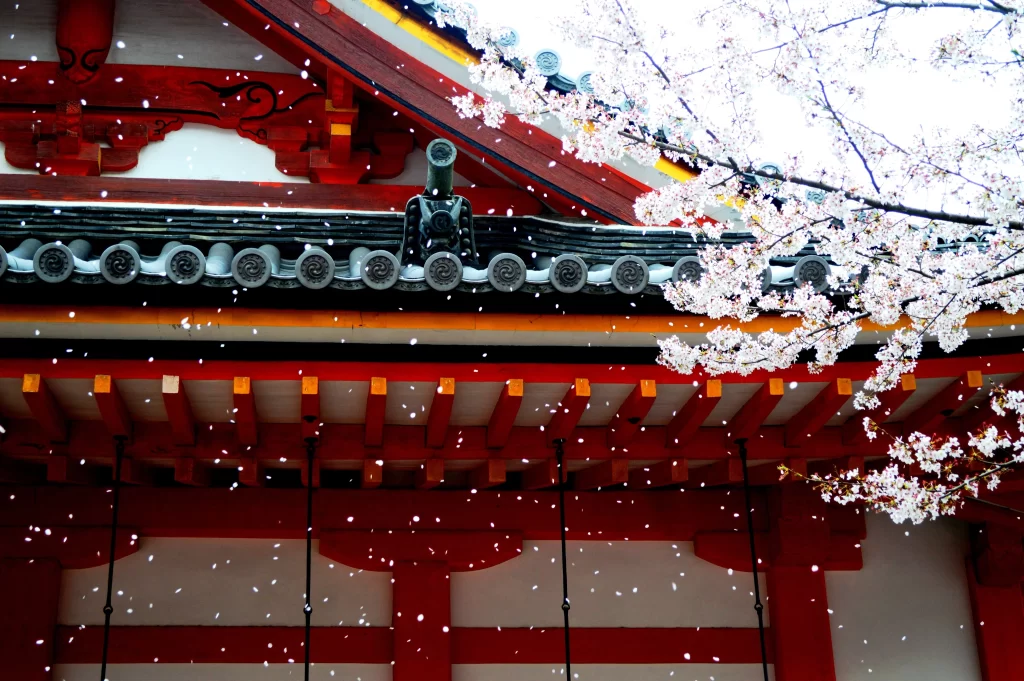
Vermilion lacquered columns support a triple-eaved roof clad in emerald and azure glazed tiles, with the uppermost ridge terminating in a gilded finial. Intricate blue-and-gold bracket sets (dougong) span the lintels, while carved stone dragons coil around the entrance pillars above a grey balustrade. A rectangular blue plaque with gold characters hangs beneath the top eave, and the entire structure sits before a mirror-like pool that duplicates every architectural detail against a cloudless cerulean sky.
The octagonal pavilion achieves visual density through its layered roof planes, each receding at a distinct pitch to create rhythmic shadow lines across the facade. Symmetrical reflection doubles the compositional weight, transforming the water surface into a second architectural plane that anchors the floating mass of the building. Chromatic contrast between the saturated red timber frame and cool-toned ceramic roofing generates a tension that draws the eye upward along the vertical axis toward the spire.
Environment artists constructing historical East Asian game levels could study the proportional relationships between column height and eave overhang to ensure accurate scale in 3D models. Concept illustrators working on fantasy cityscapes might reference the specific color palette and ornamental density when designing ceremonial structures for imperial courts. Architectural historians documenting Qing dynasty pavilion typologies would find value in the clear visibility of decorative motifs such as the dragon carvings and painted beam patterns.