Woman Walking Dog
Topics
Details
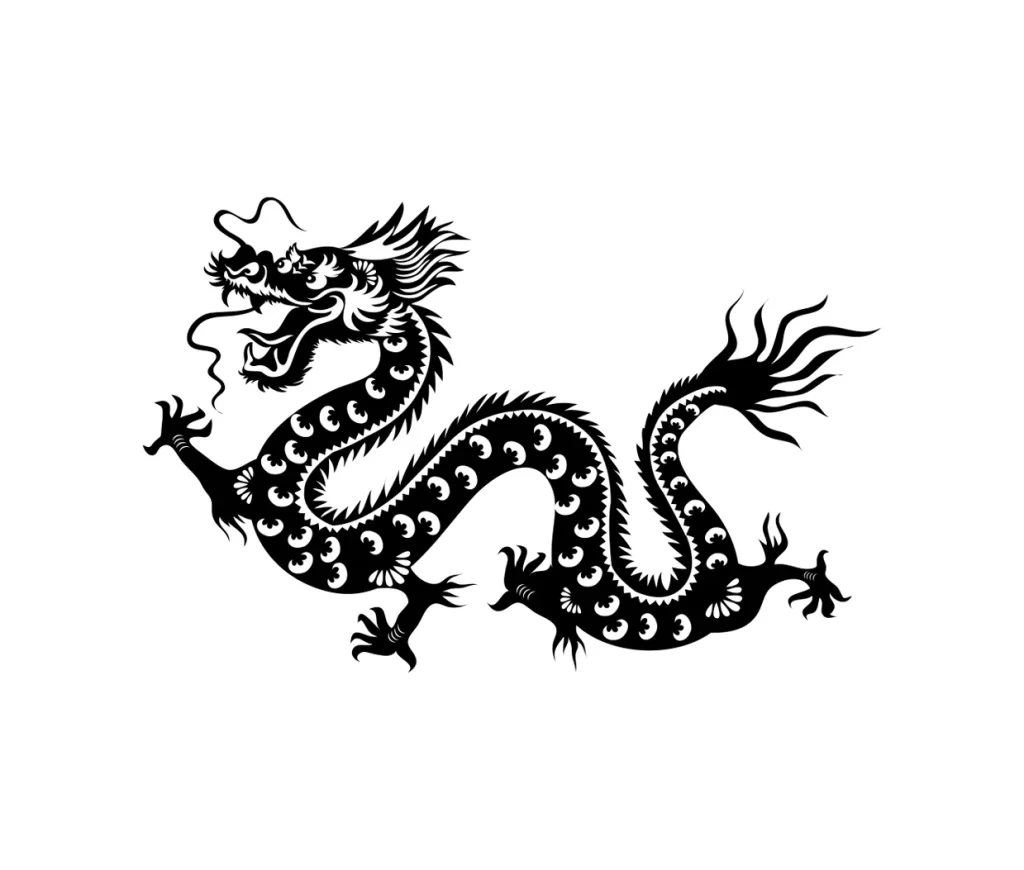
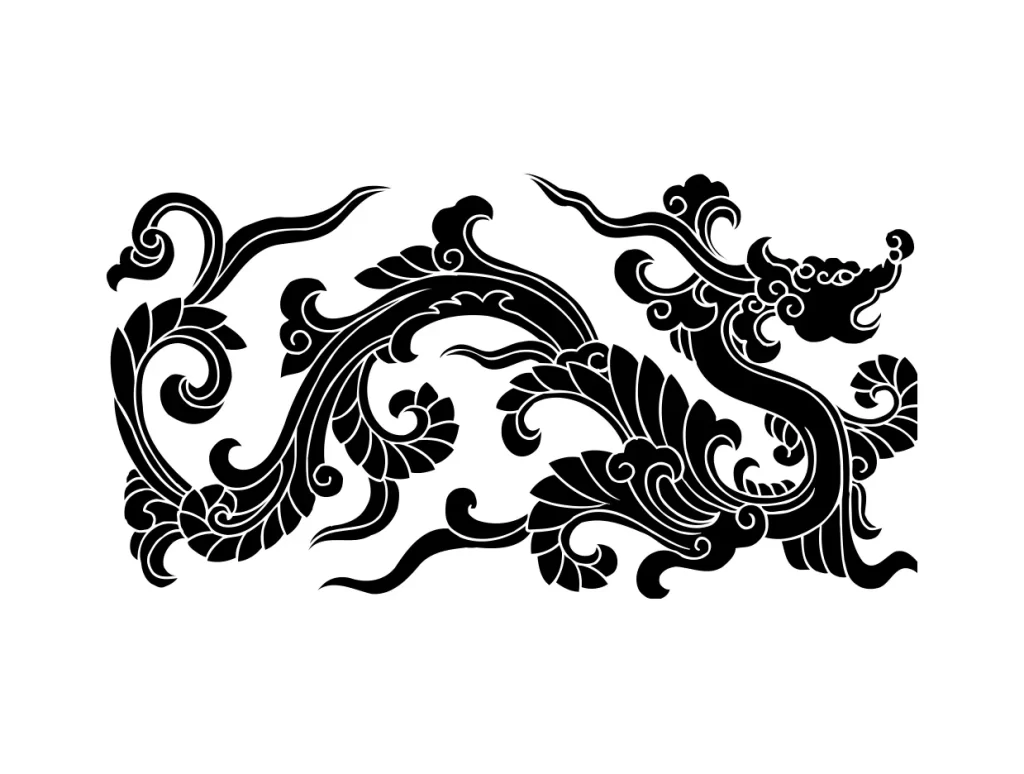
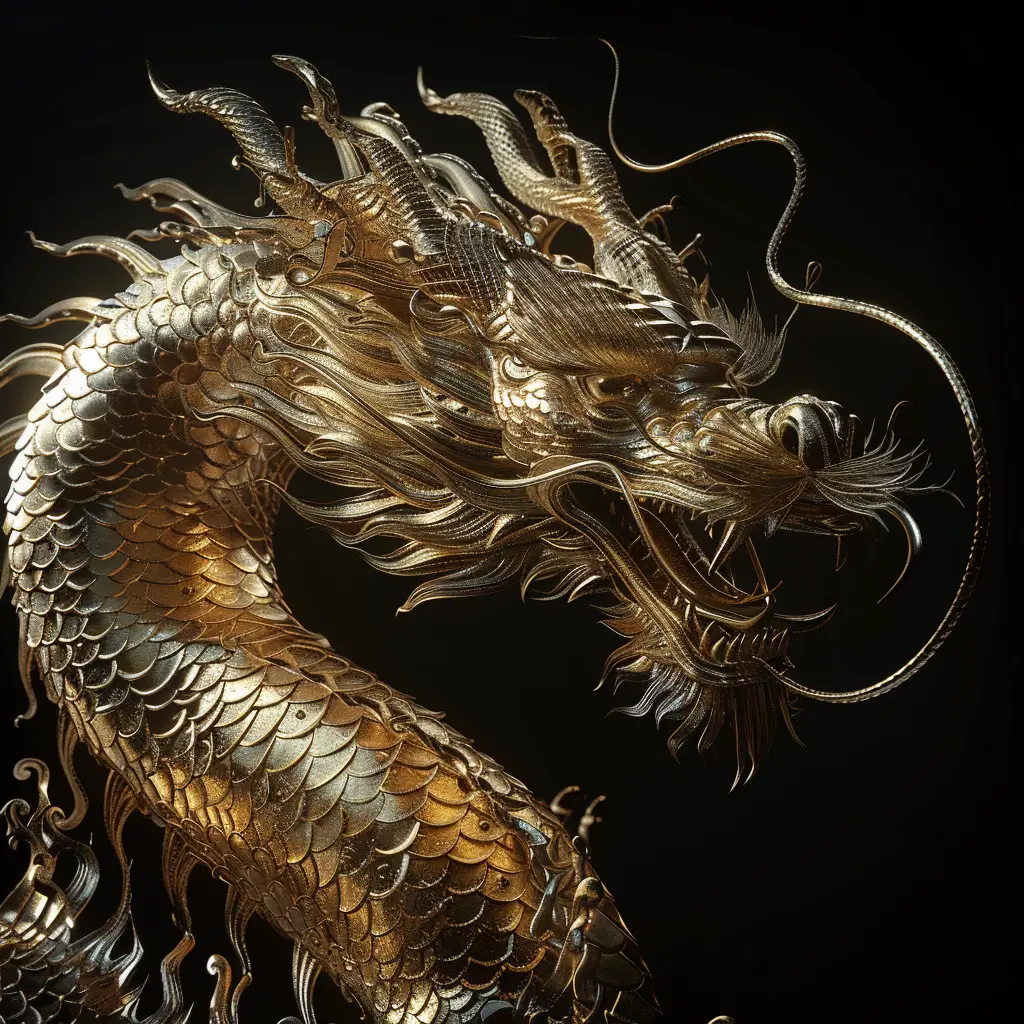
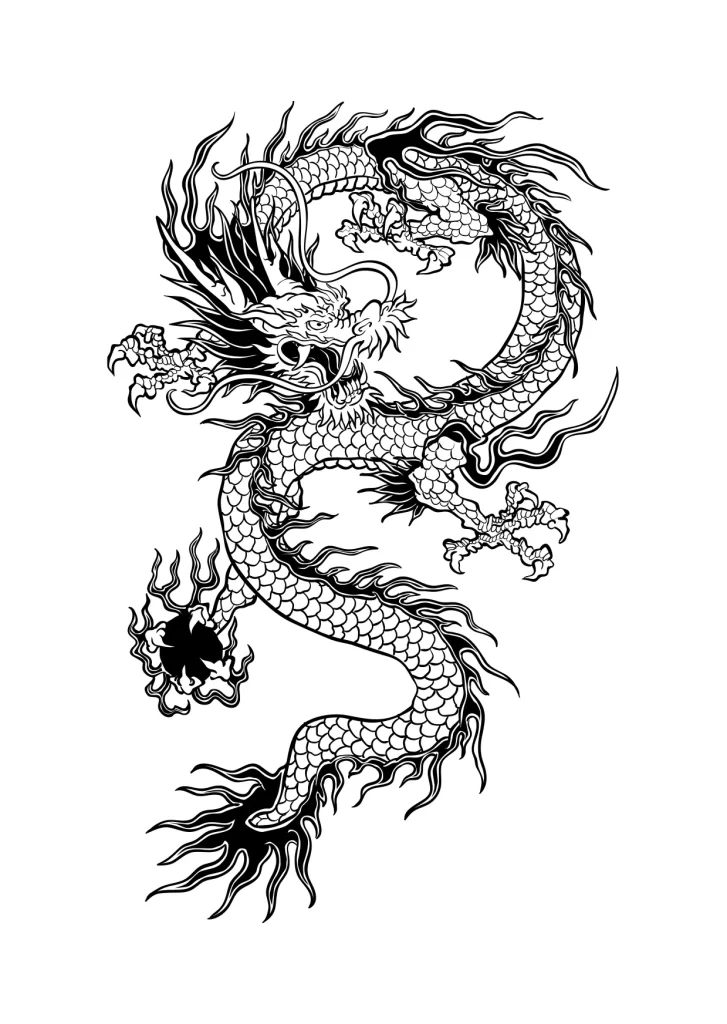
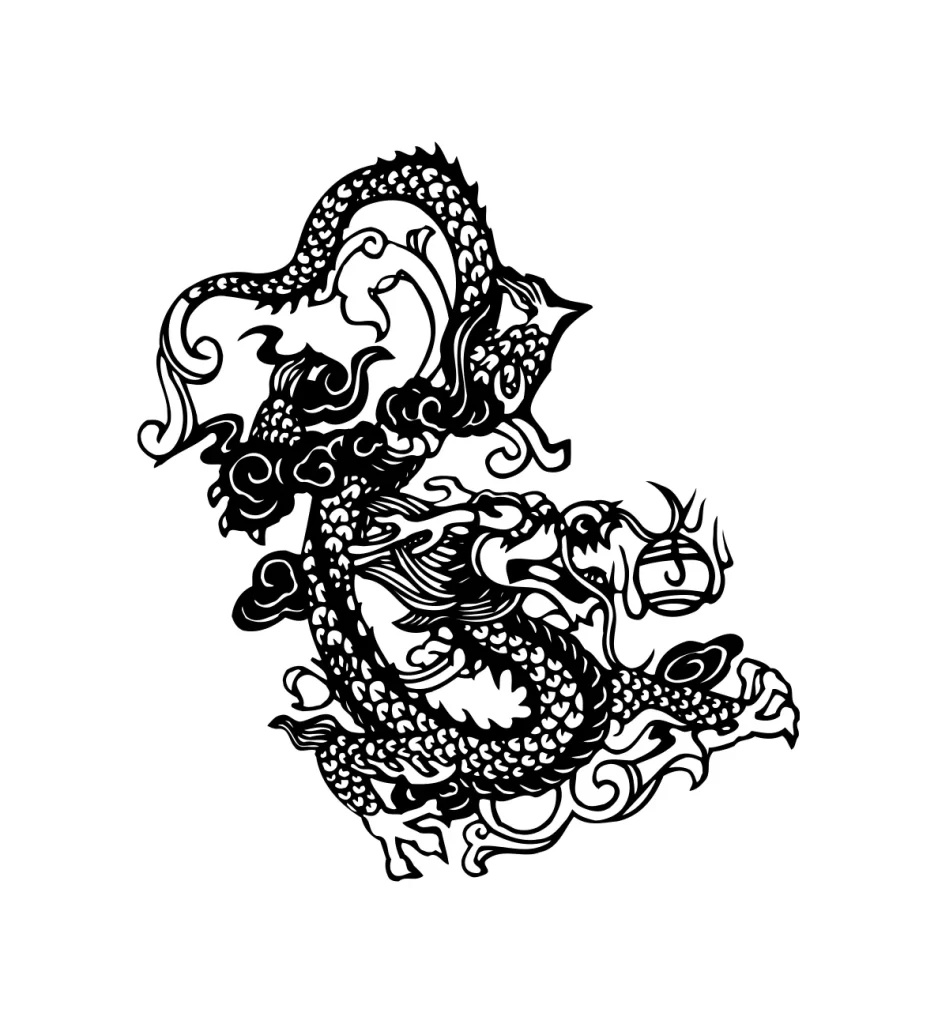
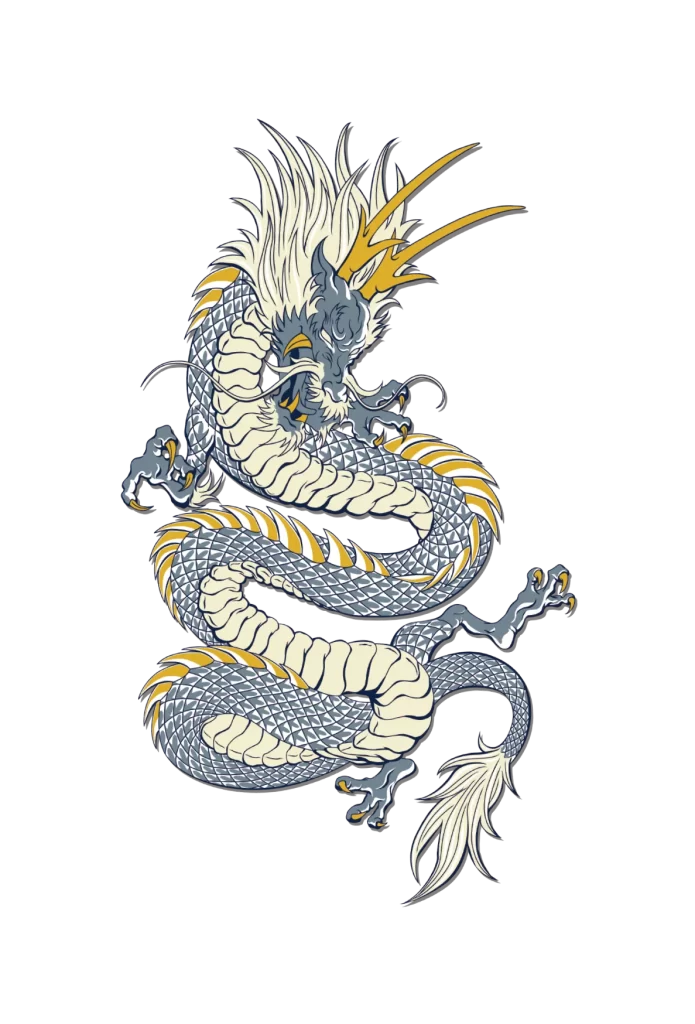
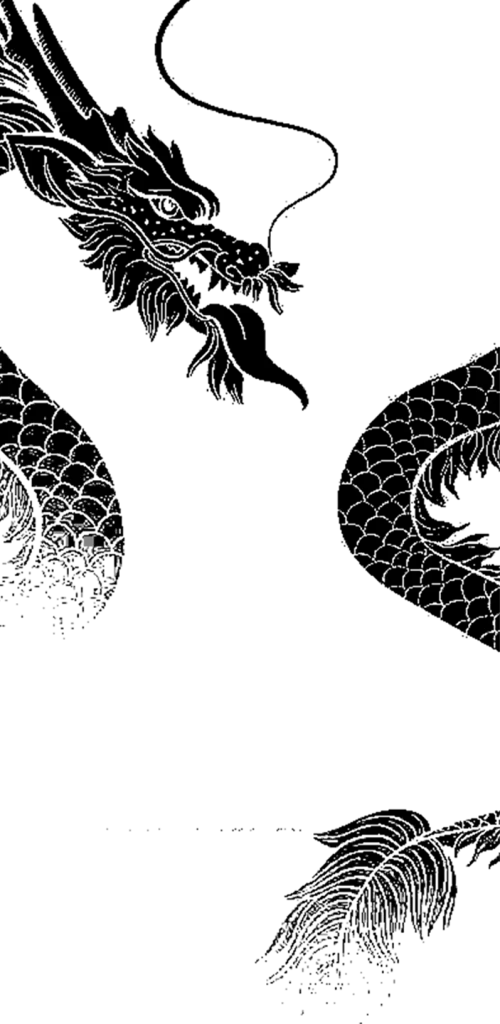
Black ink forms a serpentine dragon head in the upper left quadrant, its scales rendered as overlapping semicircles and its mane composed of sharp, flame-like tendrils. Two curved body segments with identical scale patterning occupy the lower left and right portions of the frame, while a feathered or leaf-like element rests at the bottom right. The composition floats on an unprinted white surface, with a thin, curving line extending from the dragon's snout toward the upper center.
Visual tension emerges from the high-contrast interplay between solid black fills and negative space, creating a woodcut or linocut aesthetic that emphasizes graphic clarity over tonal gradation. The fragmented presentation—showing only disconnected anatomical parts rather than a complete creature—invites viewers to mentally reconstruct the full form while appreciating each segment's intricate textural detailing. Scale patterns transition from dense, dark clusters to lighter, stippled edges, suggesting depth through varying ink density alone.
Tattoo artists might reference the scale rhythm and whisker curvature when drafting traditional oriental body art compositions. Textile designers could adapt the repeating scale motif for border prints on fabric or wallpaper, while printmakers study the efficient use of positive and negative space to convey complex organic forms with minimal line work. Illustrators working on fantasy book covers or game assets often seek such high-contrast mythological fragments to build larger composite creatures without starting from scratch.