
Free Baimiao Botanical Line Drawings: 90 Chinese Ink Artworks for Study and Inspiration
Baimiao (白描, literally “white drawing”) is one of the most refined techniques in Chinese art — a method of drawing using nothing but clean, flowing ink lines on white paper. No color, no shading, no shadows. Every petal, leaf, and stem is described purely through the quality, rhythm, and weight of the brush line. Mastering Baimiao is considered the foundation of Chinese gongbi (工笔) painting, and its principles of line control influence everything from calligraphy to contemporary illustration.
This week’s free collection features botanical Baimiao line drawings spanning peonies, lotuses, cherry blossoms, plum blossoms, camellias, magnolias, irises, hydrangeas, and many more. All images are available for free download — ideal for art students studying Chinese brush technique, painters looking for reference outlines, botanical illustrators seeking cross-cultural inspiration, and anyone who appreciates the quiet beauty of pure line art.
What Is Baimiao? The Art of the Pure Line
Baimiao emerged during the Tang dynasty (618–907) and reached its golden age in the Song dynasty (960–1279). The technique was originally used for figure painting — artists drew precise outlines that would later be filled with color. But masters soon realized that the line drawings themselves were complete artworks. Without color to hide behind, every stroke had to be perfect. The line alone had to communicate texture, volume, weight, movement, and spirit.
The key principles of Baimiao are:
- Line as structure — Each stroke defines the object’s form. There is no cross-hatching, no stippling, no tonal shading. The line IS the form.
- Pressure variation — Thick lines indicate heavy or structural elements (stems, main veins). Thin lines indicate delicate elements (petal edges, fine veins). This pressure variation is controlled entirely by the brush hand.
- Rhythm and flow — Lines are never mechanical. They breathe, accelerate, and decelerate, mimicking the natural growth energy (qi) of the plant.
- Liubai (留白) — Empty space is not “blank” but an active part of the composition. The unpainted areas give the subject room to breathe and invite the viewer’s imagination.
Gallery: Botanical Baimiao for Study and Practice
The Peony — King of Flowers
In Chinese art, the peony (牡丹) is the symbol of wealth, honor, and beauty. Its dense, ruffled petals make it one of the most challenging Baimiao subjects — a single flower may require hundreds of individual strokes to define every petal layer.
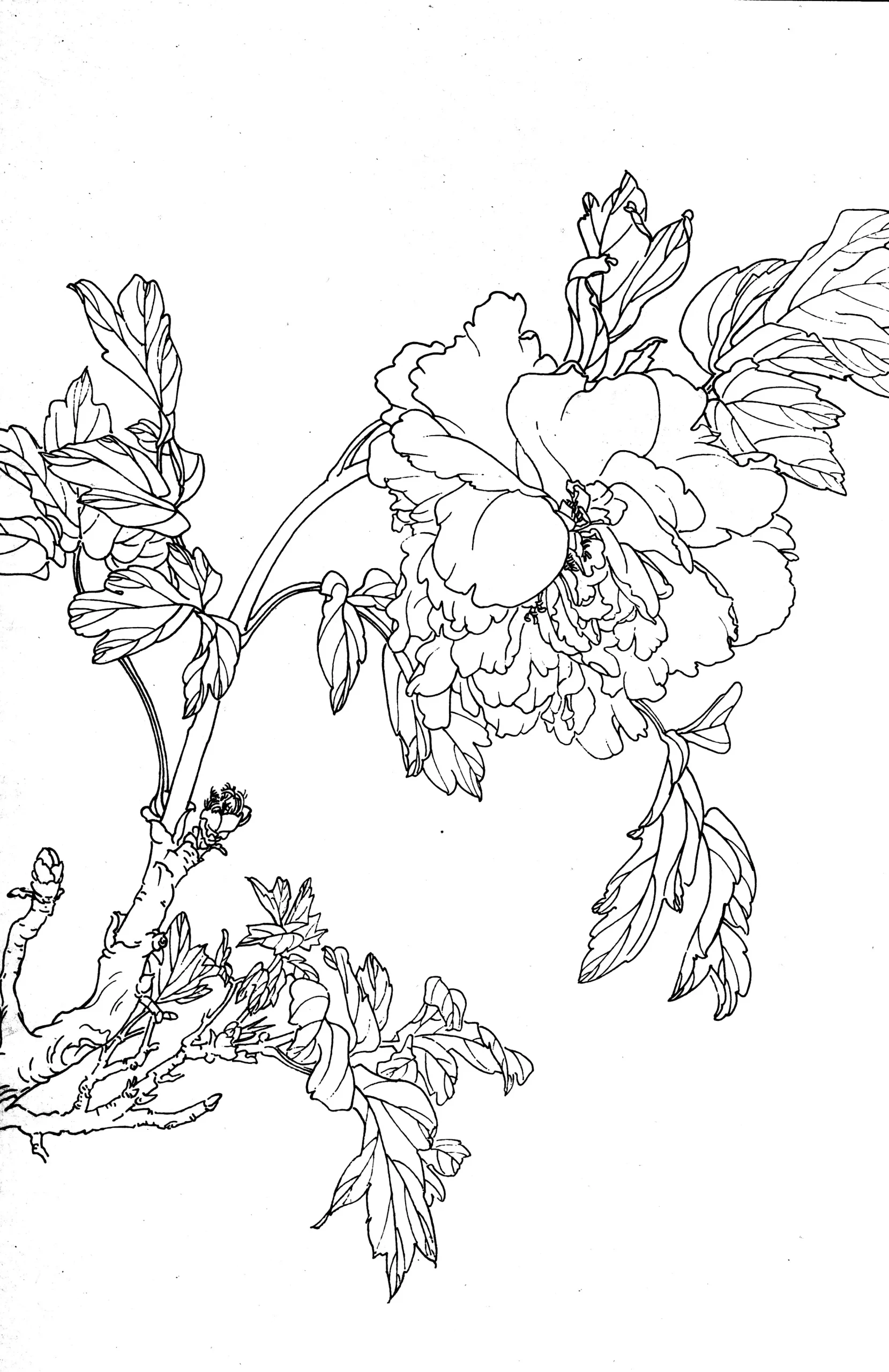
Notice how the thick stem lines convey structural strength while the thin, trembling petal outlines suggest fragility. The leaves are drawn with swift, confident vein strokes — each line slightly different in pressure, creating an organic, living quality that no mechanical outline could achieve.
The Lotus — Purity and Enlightenment
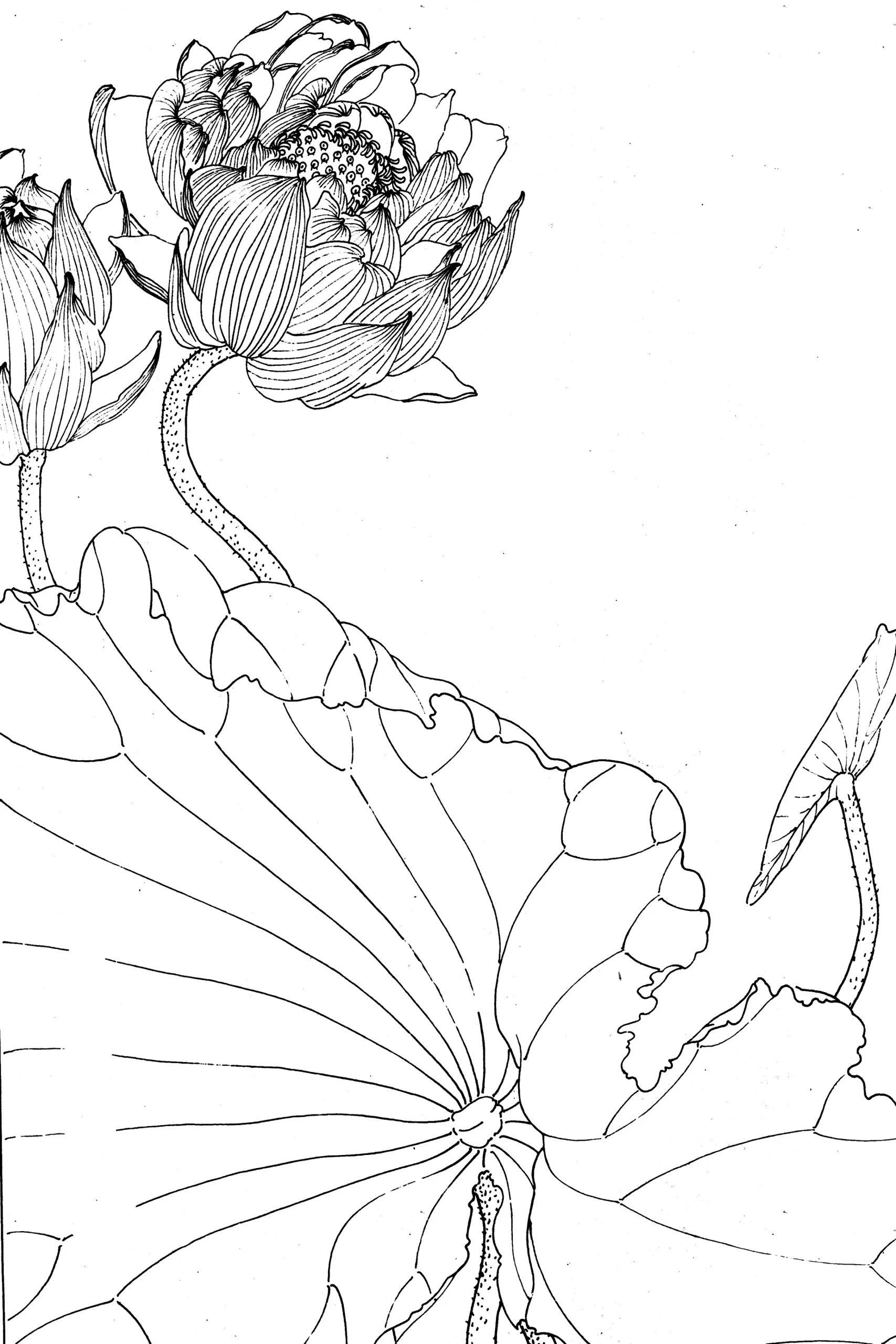
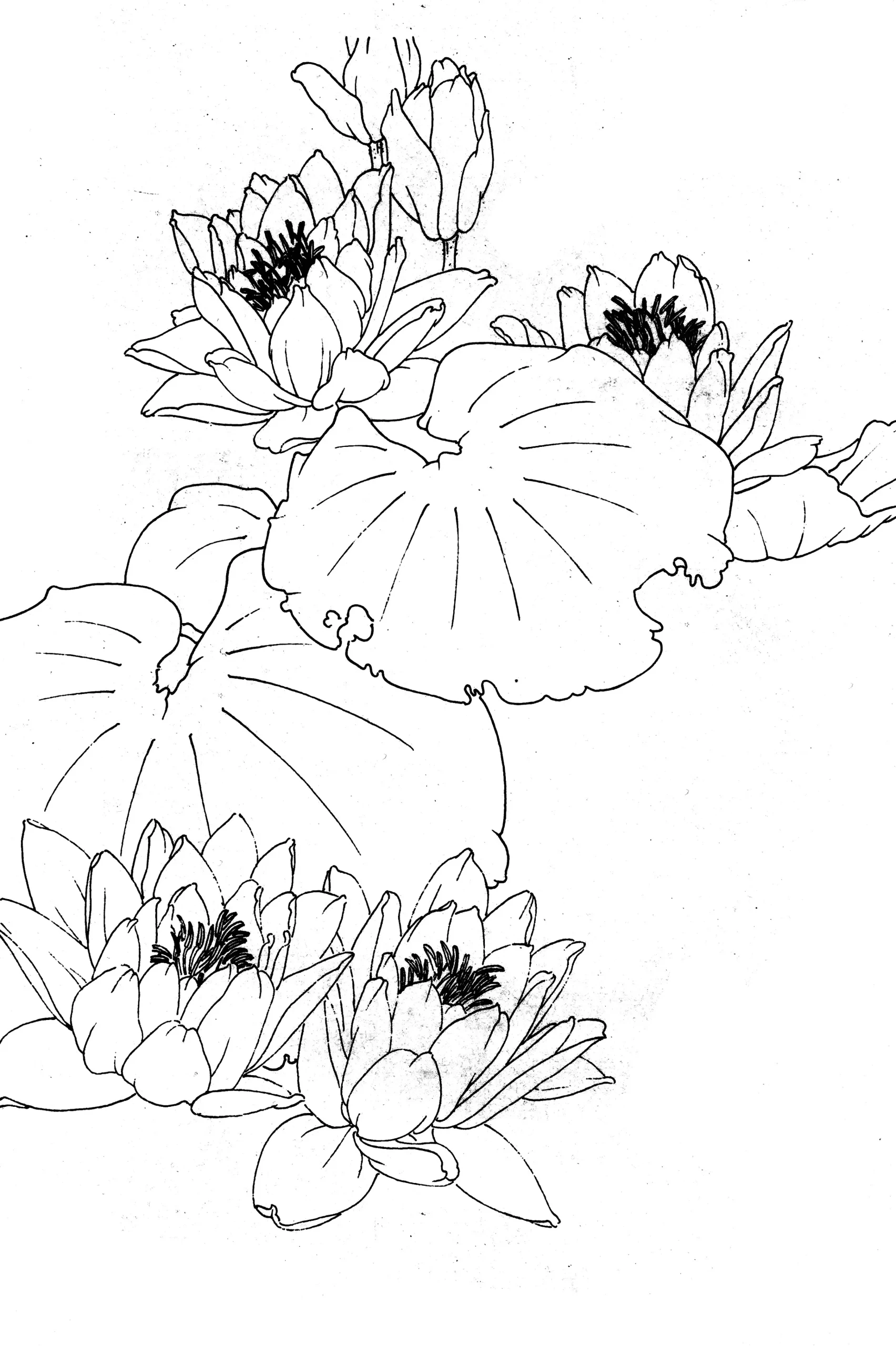
The lotus (莲) holds profound meaning in Chinese culture — rising from muddy water to bloom in perfect beauty, it symbolizes purity, enlightenment, and resilience. The Baimiao lotus is a study in circular composition: radiating petals, perfectly round leaves, and slender stems creating a mandala-like geometry.
The Cherry Blossom — Fleeting Beauty
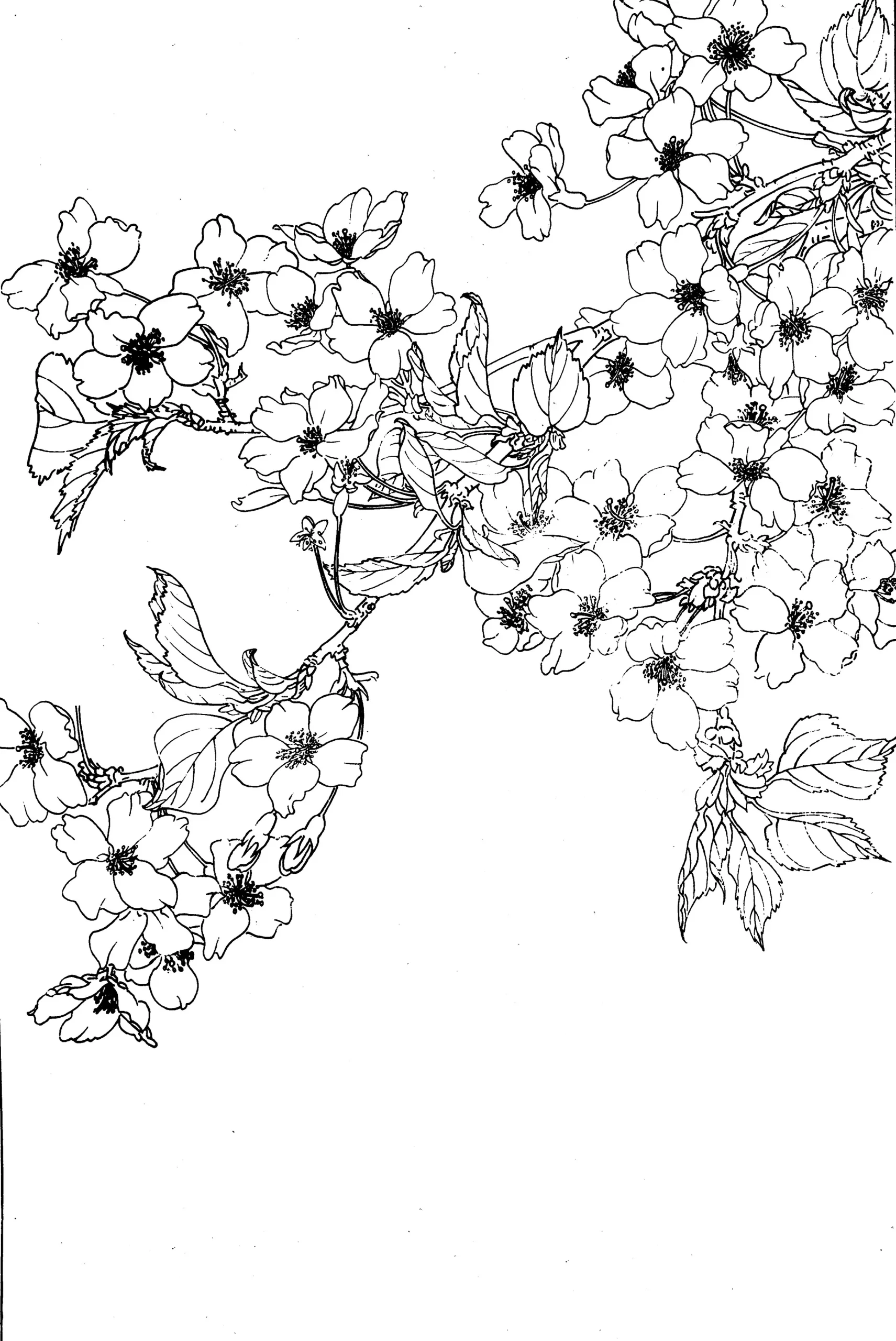
Cherry blossoms (樱花) in Baimiao are drawn with extraordinary delicacy — the five-petal flowers require almost no ink pressure, creating lines so thin they seem to float on the paper. The contrast between the fragile blossoms and the heavier, textured branches creates visual drama within the pure-line medium.
The Plum Blossom — Winter Resilience
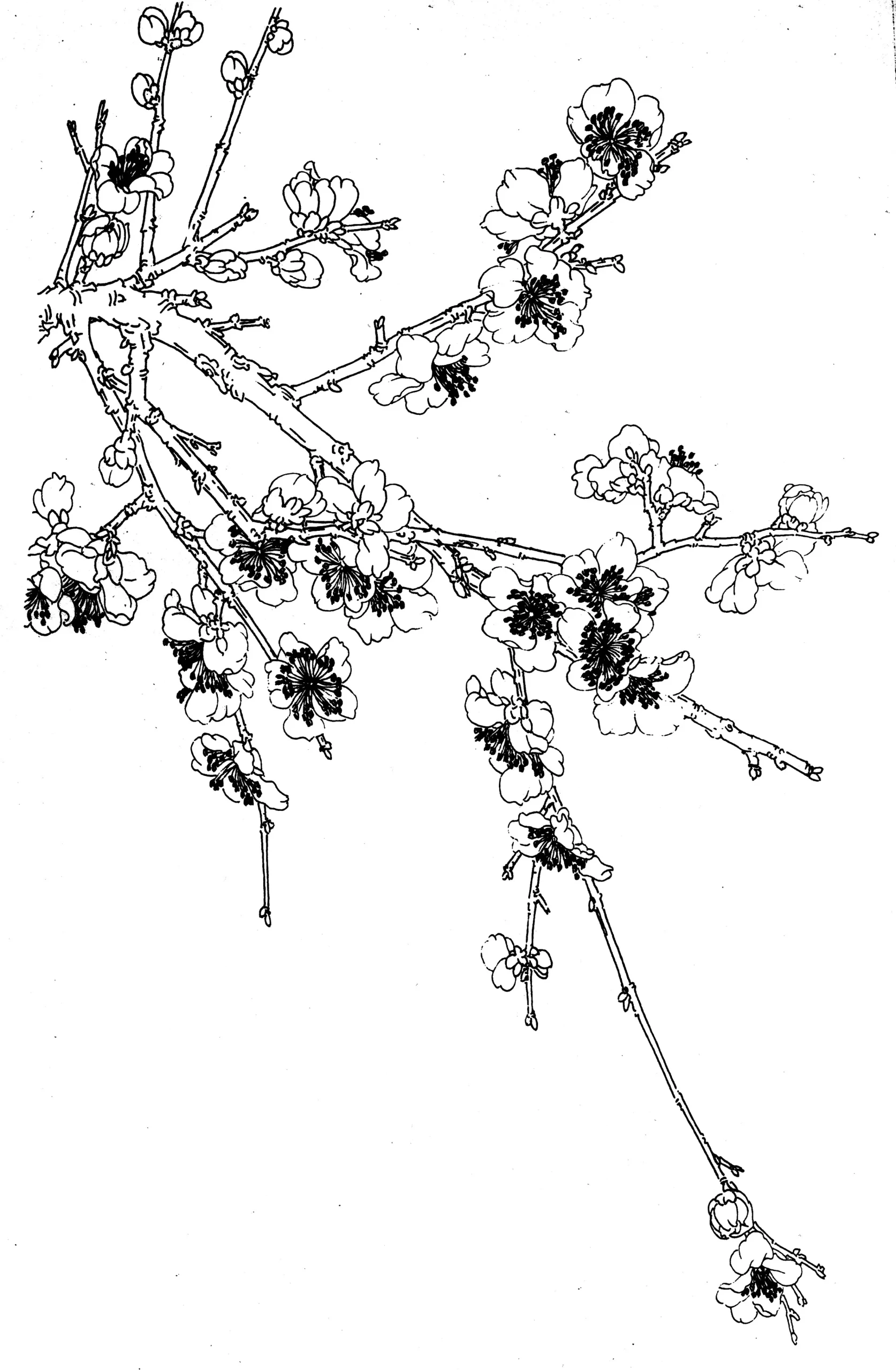
The plum blossom (梅花) blooms in winter, making it a symbol of perseverance and renewal. In Baimiao, the gnarled branches are drawn with bold, rough strokes — almost calligraphic — while the small five-petal flowers are rendered with minimal, precise touches. This contrast between aggressive branch lines and delicate flower lines is the emotional core of plum blossom painting.
The Camellia — Winter Elegance
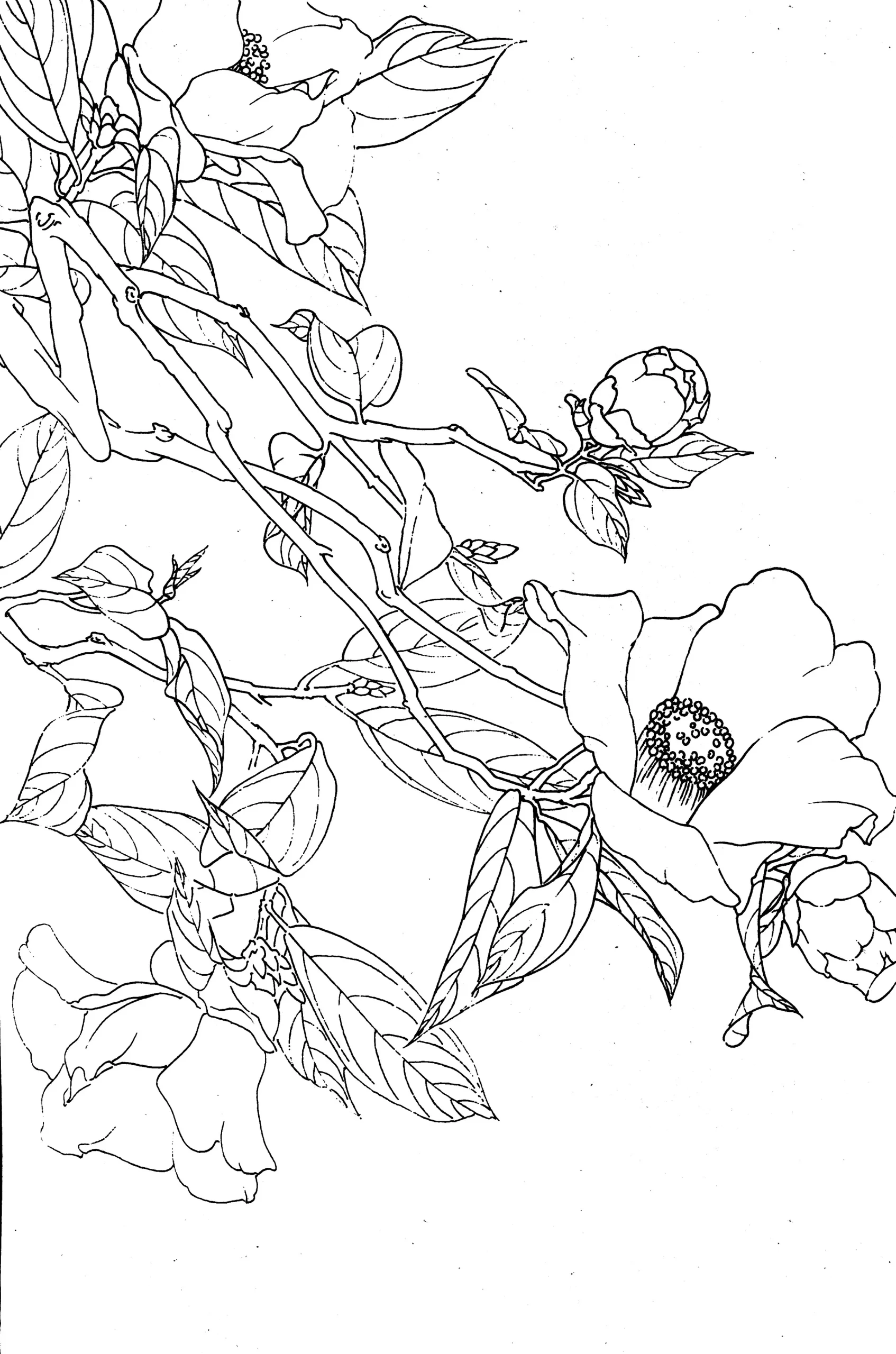
The Hydrangea — Abundance in Repetition
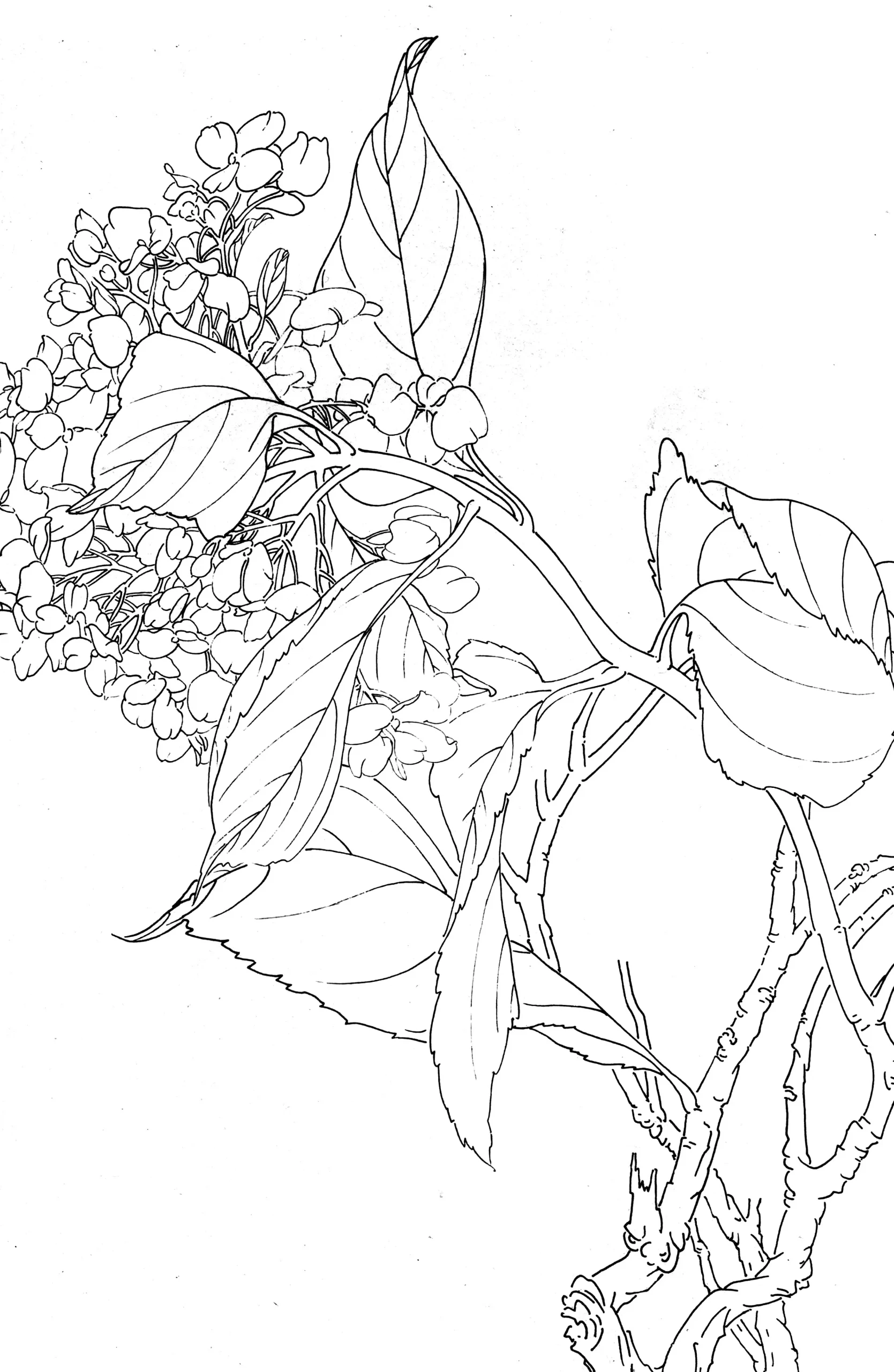
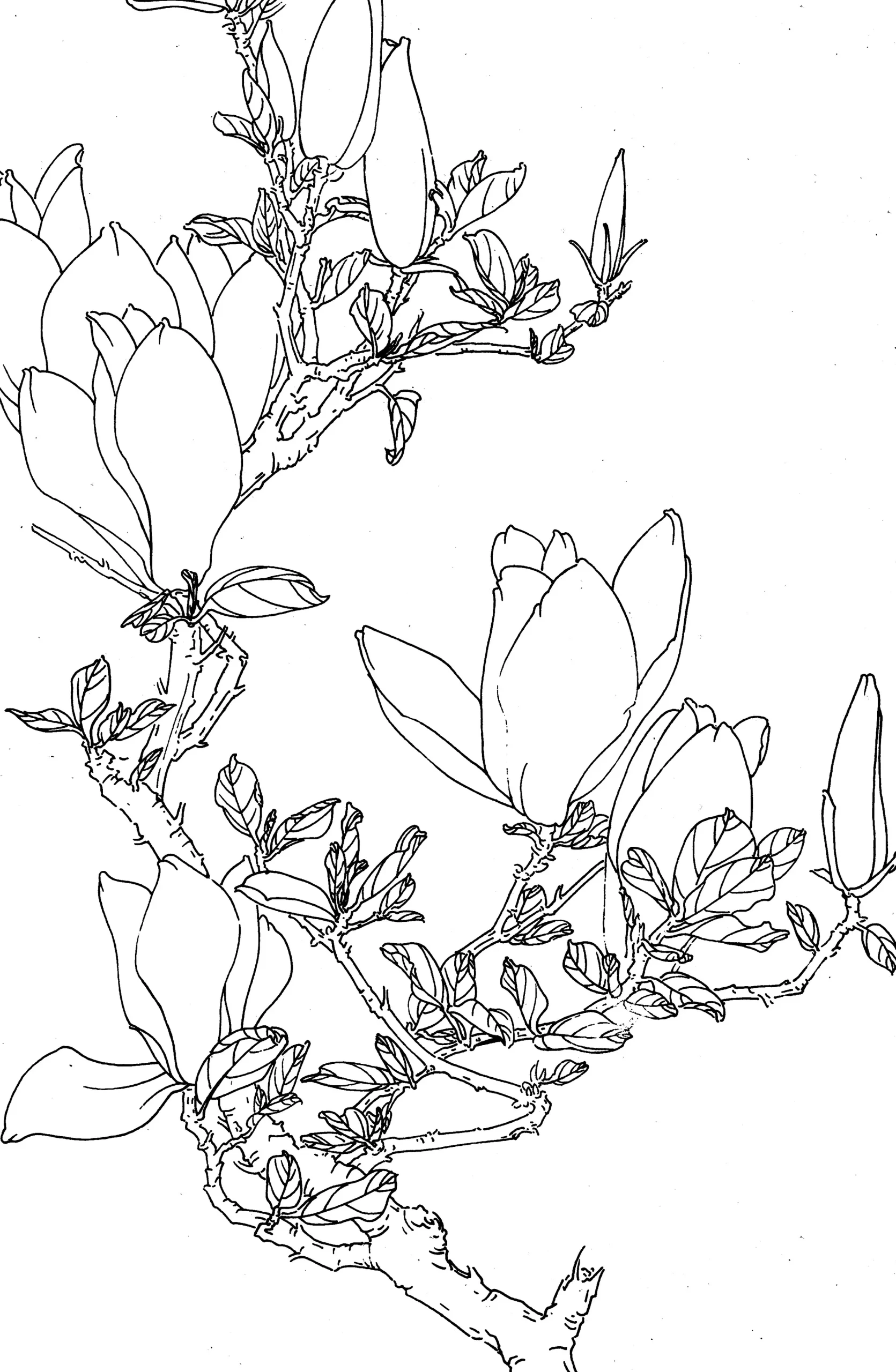
The Iris and the Magnolia
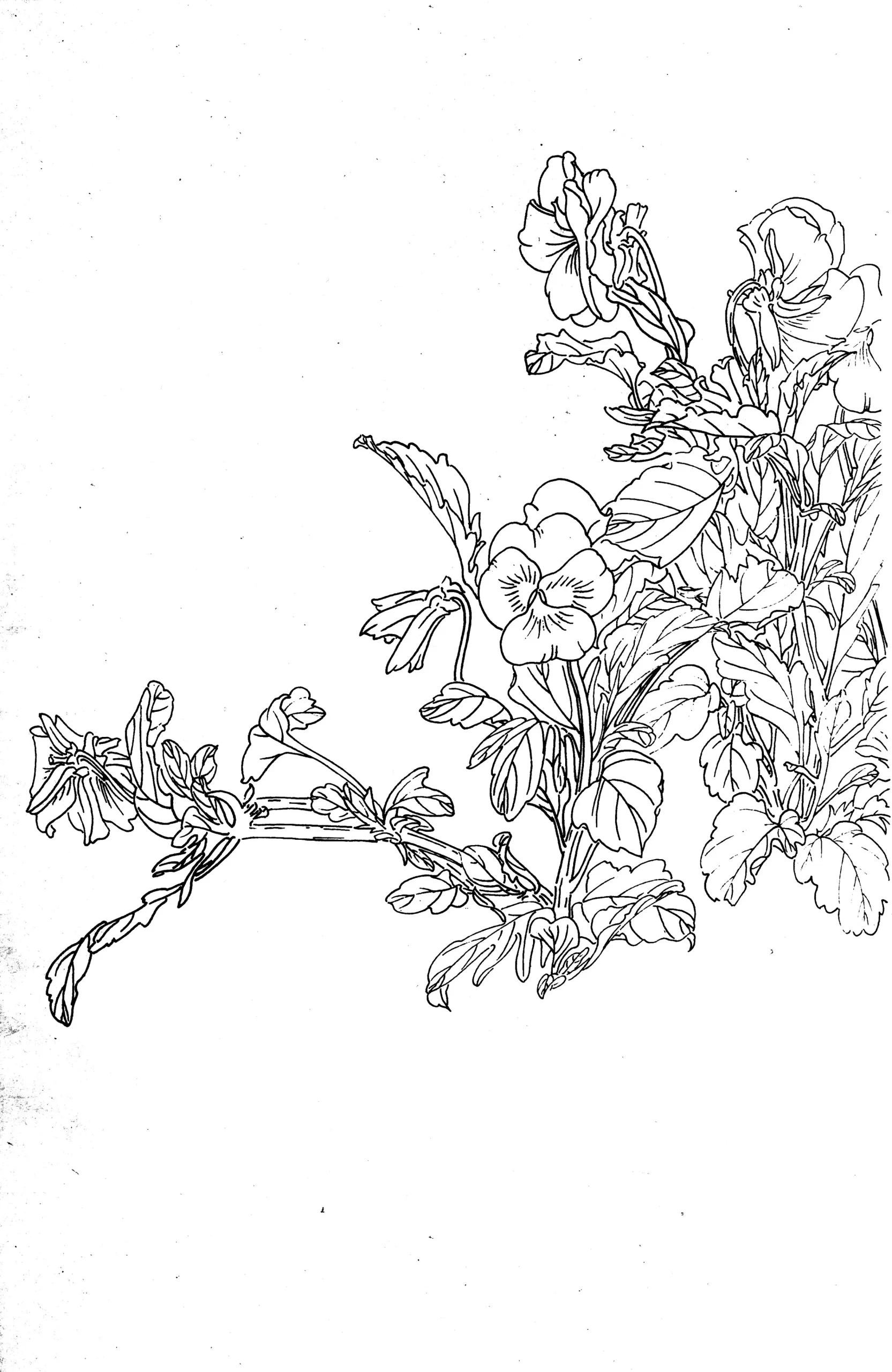
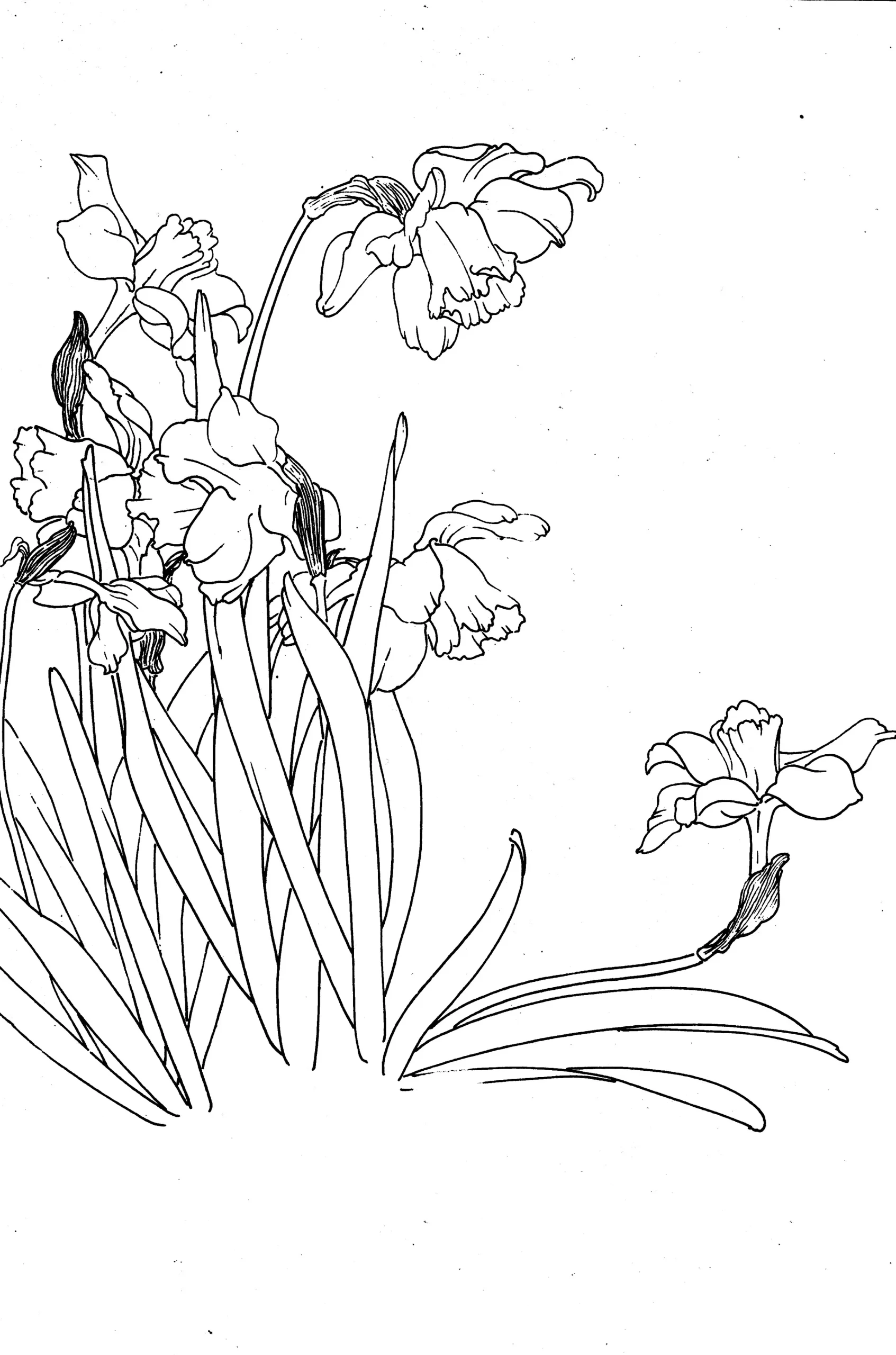
The Daffodil and the Water Lily
Baimiao vs Western Botanical Illustration
At first glance, Baimiao line drawings may resemble Western botanical illustration — both depict plants in scientific detail. But the philosophies are fundamentally different:
- Western botanical art aims for objective accuracy. Every detail is observed and recorded. The artist is a documentarian.
- Baimiao aims to capture the plant’s spirit (shen, 神) and life energy (qi, 氣). Accuracy matters, but expression matters more. The artist is a poet.
- Western lines tend to be even, mechanical, and uniform — the hand disappears behind the subject.
- Baimiao lines are expressive, rhythmic, and visibly hand-drawn — the brush’s energy is part of the artwork’s beauty.
- Western composition centers the specimen for clear study. Baimiao composition uses asymmetry and empty space (liubai) to create poetic atmosphere.
For botanical illustrators and natural science artists, studying Baimiao offers a refreshing perspective: line quality is not just a technical skill — it is an expressive tool. The thickness, speed, and pressure of your stroke can communicate as much about a plant as its physical structure.
How to Use These Drawings for Practice
These free Baimiao line drawings are excellent study resources. Here are practical ways to use them:
- Tracing practice — Print the drawing and trace the lines slowly, paying attention to where the original artist applied more or less pressure. Feel the rhythm of each stroke.
- Coloring practice — Use these as outlines for watercolor, gouache, or colored pencil practice. Fill in traditional Chinese color schemes (peony = pink/red, lotus = white/pink, plum = white/red).
- Digital study — Open in Procreate or Photoshop. Study the line weight variation by zooming in. Try redrawing using a pressure-sensitive stylus.
- Composition analysis — Compare how different flowers are composed. Where does the artist use empty space? How are stems and leaves arranged to create balance?
- Botanical reference — These drawings accurately depict leaf shapes, petal counts, and stem structures. Use them as scientific reference for your own botanical work.
Explore the Full Baimiao Collection
This article features just 10 selections from the full collection. Browse all botanical Baimiao line drawings for free download:
- Baimiao Collection — all botanical line drawings available for free download
- Botanical Art — broader botanical illustration reference gallery