Penne Tomato Spinach Pasta Photography
Topics
Details
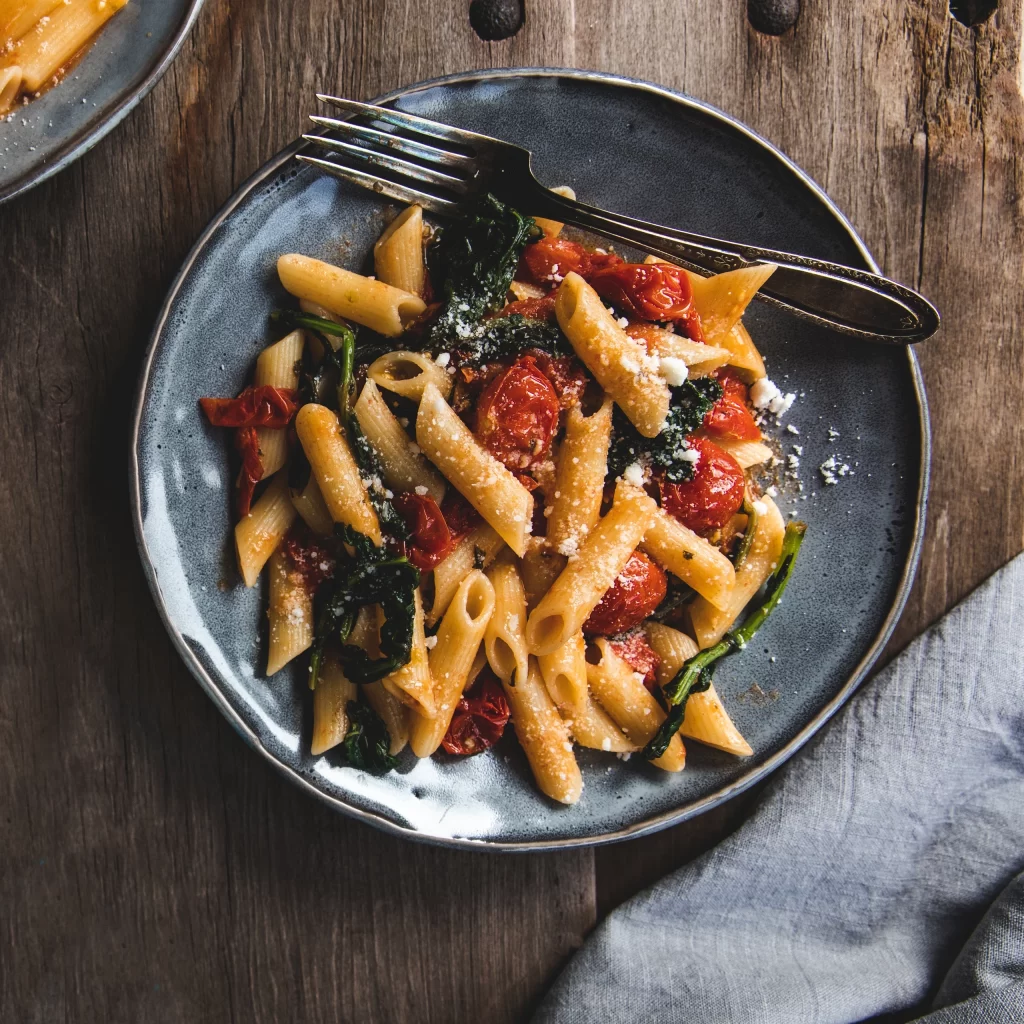
Over a weathered wooden surface with visible grain and dark knots, a matte charcoal ceramic plate holds a generous portion of penne pasta tossed with blistered cherry tomatoes and wilted dark greens. The composition is captured from a direct overhead perspective, where soft directional light casts gentle shadows beneath the curved pasta shapes and highlights the crystalline texture of grated cheese scattered across the dish. A vintage silver fork rests diagonally across the upper right quadrant, its tarnished tines catching subtle reflections, while a folded grey linen napkin occupies the bottom right corner, adding textural contrast to the rustic setting.
Visual distinction emerges from the interplay between the cool blue-grey glaze of the plate and the warm amber tones of the cooked pasta, creating a sophisticated color temperature contrast that draws the eye. The organic arrangement of ingredients—some tomatoes split open to reveal their juicy interiors, others whole and glistening—introduces natural variation that prevents the scene from feeling overly staged or artificial. Textural diversity becomes the focal point, from the smooth metallic sheen of the cutlery to the rough, porous surface of the aged timber table, offering rich detail for studying material interactions in food styling.
Food stylists might study this frame to understand how overhead lighting affects the perception of sauce viscosity and vegetable freshness on ceramic surfaces. Editorial photographers could reference the placement of utensils and napkins when planning compositions for cookbook layouts or restaurant menu imagery. Art directors developing brand guidelines for artisanal pasta companies would find value in analyzing how rustic props complement rather than compete with the main subject.