Yelli Yogurt With Fruits And Nut Jar
Topics
Details
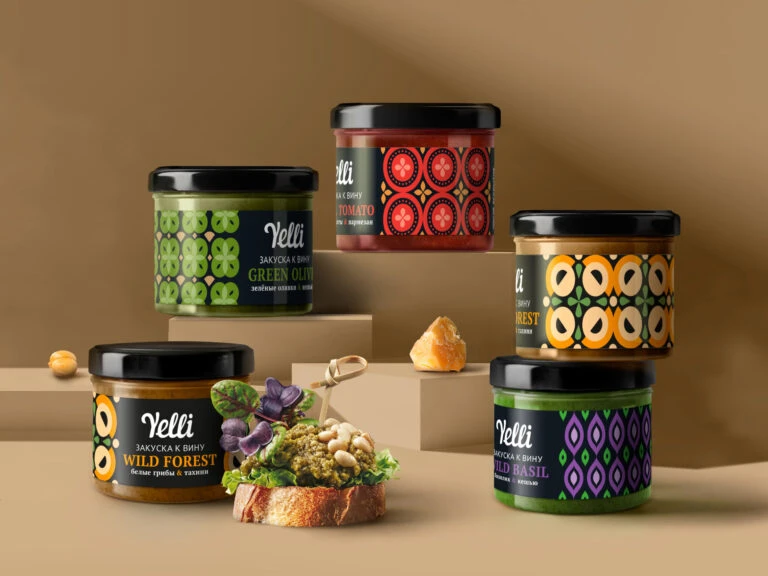
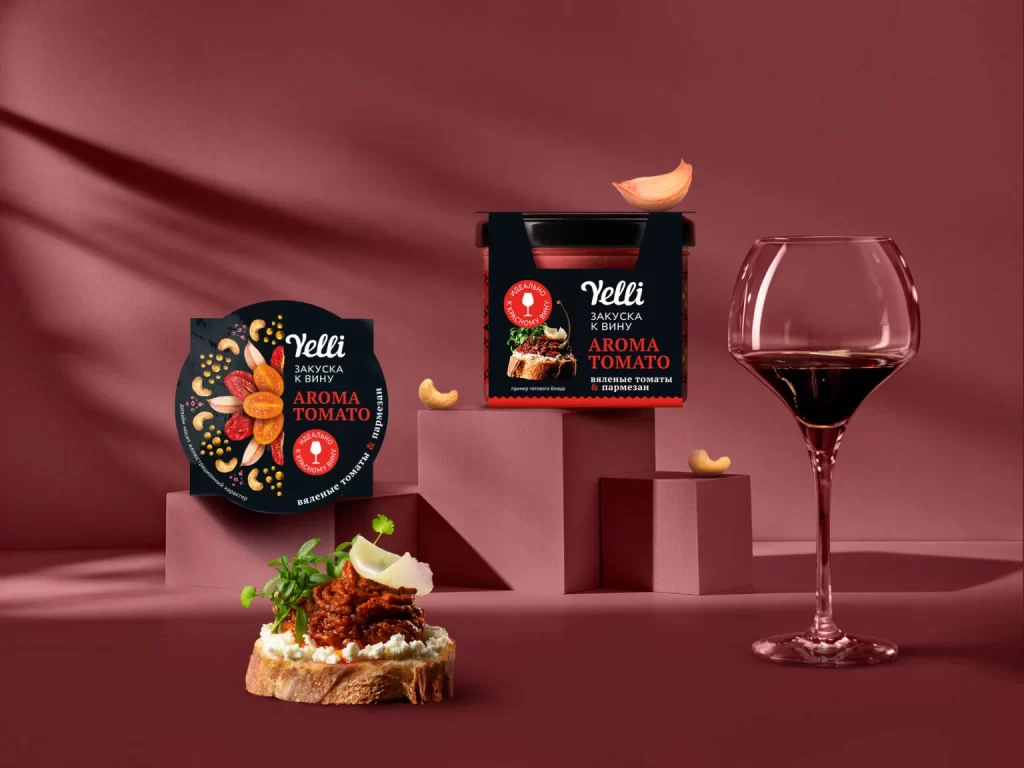
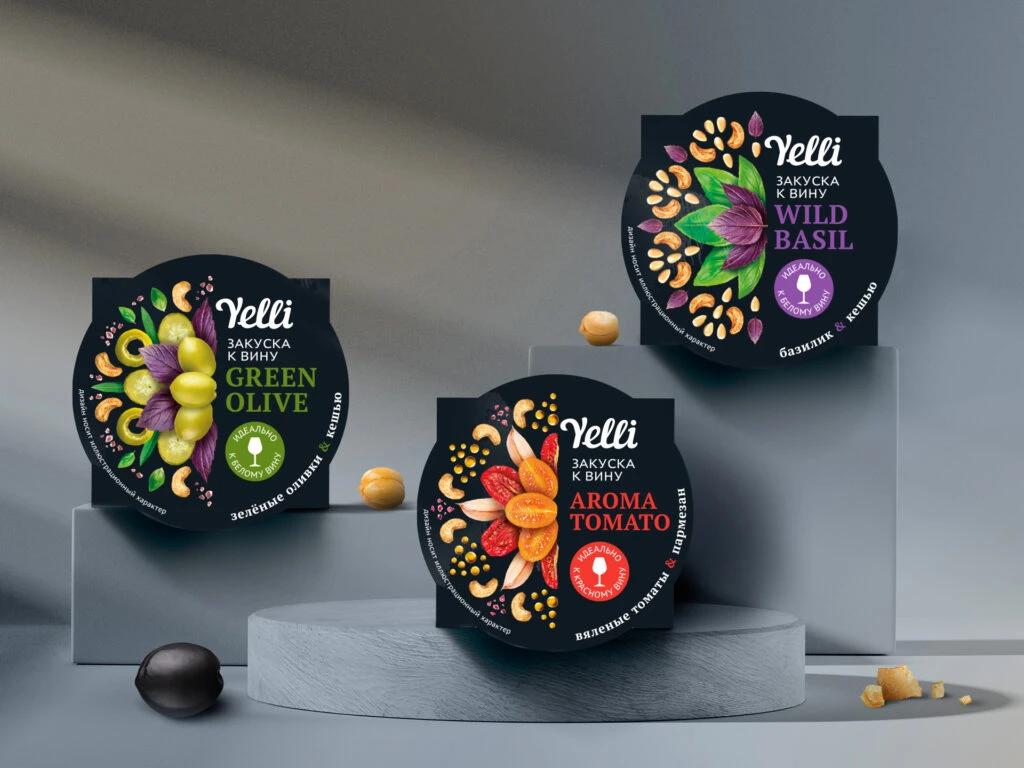
Set against a smooth, gradient grey backdrop that transitions from charcoal to pale silver, three circular black containers are arranged on geometric pedestals of varying heights. Each vessel features a bold, matte finish with the brand name 'Yelli' rendered in a crisp white script above the Cyrillic text 'ЗАКУСКА К ВИНУ' (Snack for Wine). The left container displays vibrant green olives and cashews against a lime-green accent label for the 'GREEN OLIVE' variety, while the center jar showcases sun-dried tomatoes and nuts with a striking red badge for 'AROMA TOMATO', and the right unit presents purple basil leaves and cashews marked by a violet circle for 'WILD BASIL'. Soft directional lighting from the upper left casts gentle shadows across the scene, emphasizing the tactile quality of the packaging and the scattered organic props including a dark olive, a hazelnut, and cheese crumbs resting on the cool-toned surfaces.
Visual distinction emerges from the sophisticated interplay between the deep obsidian backgrounds of the labels and the hyper-realistic botanical illustrations that burst forth in saturated hues. The circular format breaks away from conventional rectangular snack packaging, creating a premium, almost jewel-like presentation that draws the eye inward toward the central flavor indicators. By employing color-coded circular badges—green, red, and purple—the design establishes an intuitive visual coding system that allows consumers to instantly identify taste profiles while maintaining a cohesive brand identity across different product lines.
Brand strategists developing premium appetizer ranges would find this composition invaluable for studying how monochromatic base colors can amplify ingredient photography without overwhelming delicate textures. Packaging engineers might analyze the structural implications of round containers for shelf display optimization and consumer ergonomics in gourmet retail environments. Meanwhile, food photographers could reference the deliberate placement of loose ingredients around the primary subjects to understand how contextual props enhance product storytelling without cluttering the visual field.