Lasagna Pasta Artes Do Sabor Blue Yellow Modern
DownloadTopics
Details
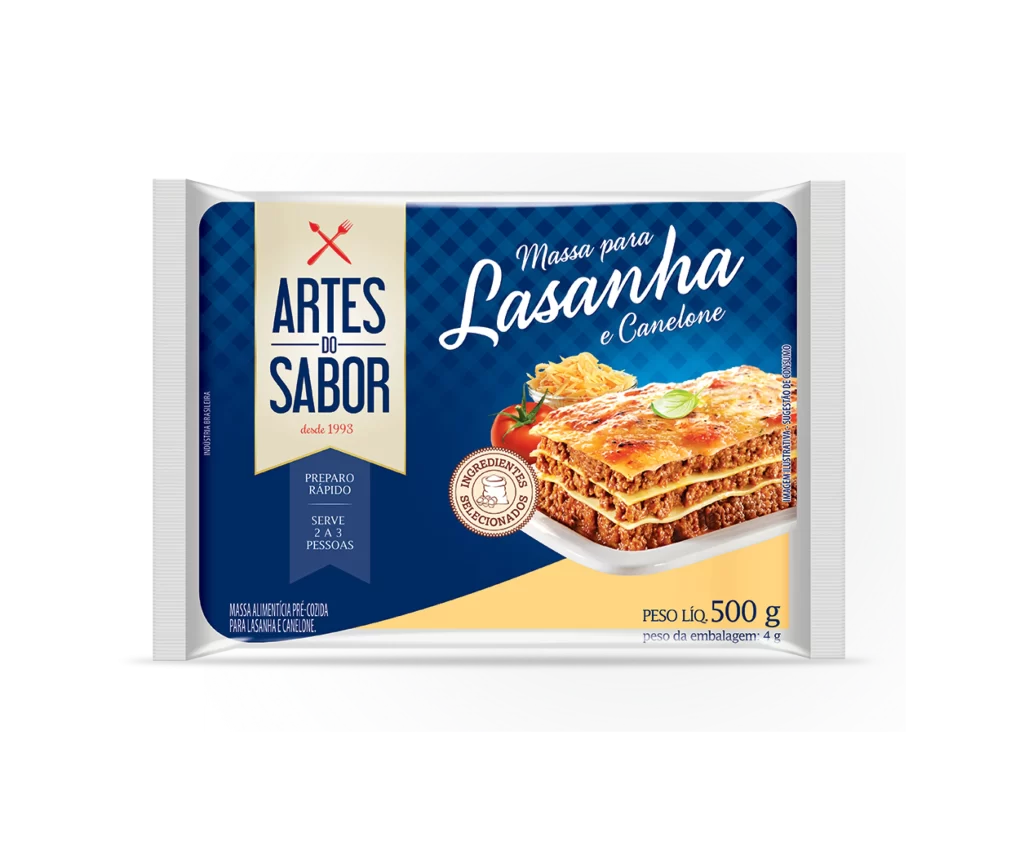
A rectangular plastic pouch of Artes Do Sabor lasagna pasta dominates the frame, its surface split between a deep navy blue field with a subtle diamond pattern and a warm cream-yellow diagonal sweep at the bottom. The left side features a cream-colored vertical banner bearing the brand name in bold navy serif type, topped by a red crossed-fork-and-knife icon, while the right side displays 'Massa para Lasanha e Canelone' in an elegant white script font above a photographic slice of layered lasagna with visible tomato and shredded cheese details. Clean studio lighting eliminates harsh shadows across the glossy packaging, which indicates a net weight of 500g and notes that the pre-cooked pasta serves two to three people.
The visual tension between the authoritative dark blue upper portion and the inviting golden lower section creates a balanced yet dynamic aesthetic typical of contemporary Brazilian grocery branding. Typography plays a crucial role here, mixing traditional serif authority for the manufacturer's name with fluid, handwritten-style lettering for the product category, while the circular seal emphasizing selected ingredients adds a stamp of quality assurance. Designers studying this composition will appreciate how the food photography anchors the color palette, ensuring the final dish looks achievable and appetizing within the rigid geometric layout of the printed film.
Packaging professionals analyzing South American market trends would find this asset particularly useful for deconstructing effective food-category visual hierarchies and color psychology in mass-market goods. Brand identity specialists could reference the logo lockup and typographic scale when developing similar premium-yet-accessible lines for pantry staples, noting how the 1993 establishment date lends heritage credibility without appearing dated. The complete high-resolution file is accessible at no cost for those needing to inspect finer print details or texture rendering on the plastic substrate for their own production work.